Stickers and Decals: Affordable Personalization

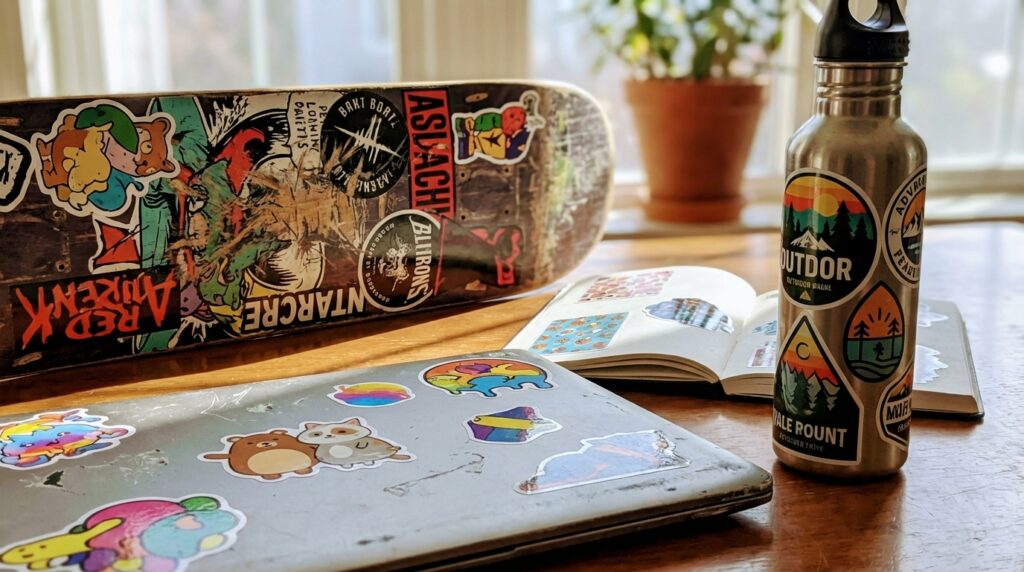
Car customization is experiencing a significant boom thanks to accessible and creative solutions, with stickers and decals leading the way. Offering an economical alternative to more expensive techniques like full wraps, these adhesives allow for targeted and quick customization. From subtle decoration to bold visual statements, they meet a variety of needs, whether for personal use or marketing purposes. By enhancing individual expression or brand identity, these custom stickers are becoming an essential tool in the world of car customization. This enthusiasm is also based on the ease of application and reversibility of these adhesive films, which do not damage the bodywork, making them a popular solution for both novices and experienced wrappers.
Beyond mere aesthetic decoration, stickers and decals actively contribute to the marketing strategy of many professionals. Applying them to shop windows, company fleets, or commercial vehicles significantly increases visibility while keeping costs under control. The rise of digital tools and specialized printers has greatly expanded creative possibilities, paving the way for original finishes, from matte to satin, including textures inspired by carbon fiber or leather, for an unprecedented personalized look. In short, this cost-effective personalization approach redefines the relationship between style, cost, and efficiency. It perfectly illustrates current trends, where mobility goes hand in hand with creativity and adaptability.
The economic advantages of stickers and decals for car customization
Choosing stickers and decals to customize your vehicle is a particularly economical solution, especially when compared to other personalization techniques like full vehicle wraps. These targeted adhesive films allow you to limit your investment to the bare minimum without sacrificing visual impact or perceived quality. This method is perfect for enthusiasts who want to add distinctive aesthetic touches to specific bodywork elements, such as the doors, hood, or rims. Another major advantage is the ability to frequently update your style without breaking the bank, which perfectly aligns with the expectations of users seeking constant novelty.
The initial cost of stickers is often less than €100, while a full vehicle wrap generally ranges from €1,000 to €3,000 depending on the materials and finishes. Furthermore, decals require minimal maintenance and are quite durable, especially if you choose high-quality films. Their application doesn’t necessarily require a professional, which further reduces the cost. For those who want to try it out without a significant investment, ready-to-apply kits with detailed tutorials are available, particularly on specialized platforms. This allows for greater independence while achieving a near-professional result.
A variety of applications at low prices
Stickers and decals can serve several specific purposes in car customization. For example, subtly decorating badges or small logos allows a vehicle to stand out without damaging its paint. Furthermore, customizing rims or headlight surrounds with colored or textured decals is among the most popular options. This approach aims to give a car a fresh look or adopt a unique visual identity, a phenomenon widely illustrated on the website showcasing a complete portfolio of before-and-after projects impressive.
From a marketing perspective, these adhesive items can also be used to display a company logo on the bodywork of a vehicle, a commercial vehicle, or even windows. This solution is not only affordable but also easy to update at any time. It thus contributes effectively to mobile communication, particularly for company fleets operating in urban areas.
Application techniques and practical tips for successfully applying stickers and decals
Effective customization requires a rigorous mastery of adhesive application methods. Success depends as much on the quality of the films as on the techniques used. To begin, proper surface preparation is essential: the vehicle must be perfectly clean, free of dust, grease, or any other residue. This ensures optimal adhesion and prevents the formation of air bubbles, which are often the bane of installers, both novice and experienced.
There are two main methods for applying stickers: dry application and wet application. The dry technique involves sticking the sticker directly onto the surface, which is generally suitable for small formats. In contrast, wet application uses a spray bottle containing soapy water to allow the sticker to slide back before drying, offering more flexibility for precise positioning. This method requires more precise skills and is preferred for large surfaces or complex shapes, as detailed on this dedicated website. advanced installation techniques.
Finally, for custom-made decals, it’s advisable to use appropriate tools: flexible plastic scrapers, precision cutters, and sometimes a heat gun to facilitate adaptation to the bodywork’s curves. Patience and meticulousness are key to success. Don’t forget to check the durability afterward, depending on the quality of the materials chosen.
List of essential tips for optimal installation
- Clean the surface thoroughly with a suitable degreaser.
- Work in a dust-free and draft-free environment.
- Use specific tools to avoid marks or tears.
- Apply a quality film, adapted to the curvature of the bodywork.
- Patiently remove the air bubbles using a scraper.
- Allow to dry for several hours before any exposure to water or washing.
The different materials and finishes for stickers and decals: aesthetics and performance
While the range of stickers and decals is vast, everything hinges on the quality of the materials used. Adhesive films can incorporate various technologies, from classic PVC to high-performance polymers, including special matte, glossy, satin, or even carbon fiber imitation finishes. This wide selection allows for a broad spectrum of needs, from simple decoration to high-end customization. Durability is a crucial criterion and depends directly on the type of vinyl used and its UV and scratch resistance. For a premium or sporty look, innovative textures inspired by vehicle wrap finishes are recommended, such as those featured in the article on… covering texture brushed leather and velvet.
The diversity of formats and colors also allows for precise customization, meeting specific requirements, whether for advertising signage or artistic decoration. Moreover, high-end digital printing now guarantees exceptional color fidelity, whether for distinctive logos or complex designs, an evolution supported by recent technological advancements.
| Material type | Visual appearance | Average durability (years) | Recommended use |
|---|---|---|---|
| Standard PVC vinyl | Matte, glossy | 3 to 5 | Temporary decoration, events |
| Polymer vinyl | Satin matte, glossy | 5 to 8 | Long-lasting marking, commercial vehicles |
| High-definition printable vinyl | Custom printed | 3 to 6 | Intricate custom designs |
| Textured vinyl (carbon, leather) | Special effects | 6 to 10 | High-end customization |
Marketing impact and visibility: stickers as an effective mobile communication tool
For businesses, stickers and decals represent a cost-effective and efficient marketing tool. Placed on vehicles traveling in urban areas, they constitute mobile advertising, often less expensive than traditional campaigns. Customization allows for adapting the message, graphic design, and contact information to the target audience and context, with the option to regularly update the design. This flexibility proves particularly useful for temporary promotions or product launches.
Within a company fleet, these decals reinforce visual consistency and brand identity, ensuring immediate recognition. A recent study confirms that a well-decorated vehicle captures attention more effectively and retains information better than static advertising. Their quick application and easy removal also allow for targeted campaigns for specific events, while keeping the vehicle’s bodywork completely undamaged. To delve deeper into this commercial aspect, it is worthwhile to explore the different additional options associated with successful customization.
This mobile communication method, which combines aesthetics and practicality, is suitable for all types of vehicles, from commercial vehicles to personal cars and motorcycles. The variety of formats and the relative ease of application extend its use to enthusiasts wishing to promote their business or assert a unique visual identity. Thus, stickers have become an essential pillar of any automotive visual marketing strategy, combining cost-effectiveness, personalization, and efficiency.
What is the average lifespan of car stickers?
The average lifespan of stickers depends on the material: standard vinyl lasts approximately 3 to 5 years, while high-quality polymer films can last up to 8 years. Exposure to the elements and maintenance also affect this lifespan, as explained in our article on the durability of the covering.
Can you apply decals to your car yourself?
Yes, applying stickers and decals can be done by amateurs with a little patience. Proper surface preparation and using the wet application technique are essential for easier positioning, especially on large surfaces. Tutorials and kits are available to help beginners.
Are there any standards or certifications for sticker installers?
Although sticker application is less regulated than full vehicle wraps, it is recommended to use certified professionals who have the necessary skills and equipment. Certifications guarantee a clean and durable job, as detailed in our guide on… approved installers.
Do the stickers damage the vehicle’s original paintwork?
If the stickers are of good quality and applied correctly, they will not damage the original paintwork. On the contrary, they can temporarily protect the bodywork from chips and scratches. Removal must be done carefully to avoid any risk, making sure to heat the adhesive if necessary.
What is the difference between a sticker and a decal?
Technically, a sticker is a printed decal on a self-adhesive backing, often simple, while a decal involves transferring ink onto a surface after immersion or pressure. However, in everyday language, these terms are frequently used interchangeably in the field of car customization.