Heating and Thermoforming: Sculpting the Film onto the Bodywork

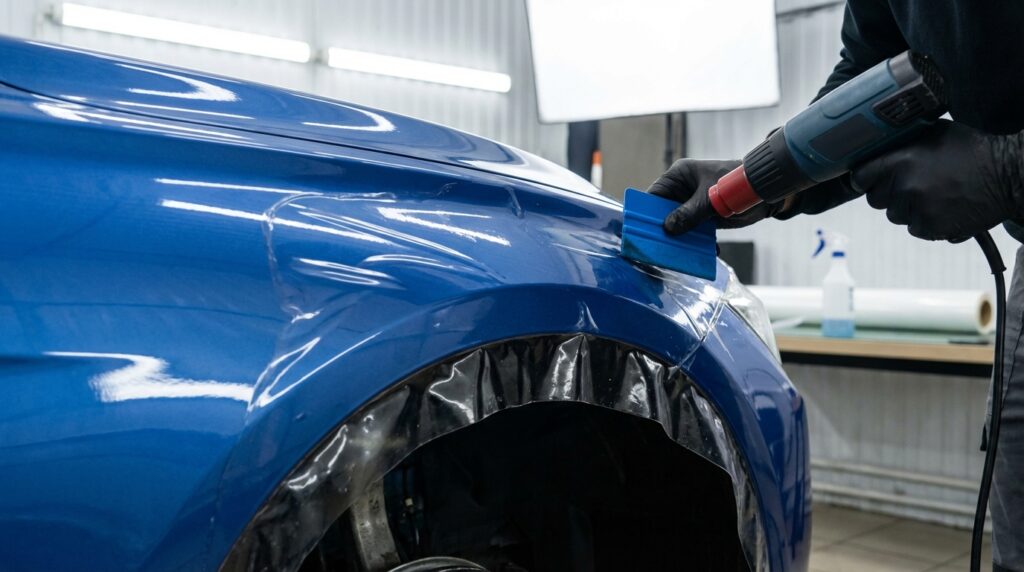
Automotive wrapping is revolutionizing the way vehicles are enhanced and protected, thanks to the expert use of high-tech plastic films. Among the most crucial techniques for perfectly adapting these films to the complex curves of any car body, heating and thermoforming play an essential role. Through precise hot forming, the plastic film becomes malleable, allowing for stretching and sculpting of the vehicle wrap, ensuring controlled thermal deformation. These processes rely on the thermodynamic properties of the plastic used, opening up an incredible range of possibilities for both professionals and knowledgeable enthusiasts. Whether for aesthetic or functional applications, understanding how to master hot thermoforming is the key to a durable and aesthetically pleasing result.
In this article, we break down the principles of heating adapted to vehicle wrapping, the intricacies of thermoforming, and the interaction between the plastic material and the vehicle body during the forming process. Each step is examined in detail to demystify the technique and maximize the performance of the film wrap. For those looking to deepen their expertise or for professionals wishing to validate their methods, a complete technical immersion is offered, supported by concrete examples and in-depth analyses. Vehicle wrapping is not simply the application of adhesive film: it is a true art of thermoforming, a technical exercise in thermal sculpting within reach of those who are willing to put in the effort.
The fundamentals of heating in the thermoforming of plastic film for bodywork
Heating is the first critical step in the thermoforming of a plastic film applied to a vehicle body. Without precise temperature control, the film will not undergo the thermal deformation necessary for a perfect fit to the vehicle’s contours. Adhesive films used in vehicle wrapping are composed of heat-sensitive plastics, often polymers such as PVC or polyurethane, which become plasticized under heat. When a suitable heat source is applied, the film enters a phase where its malleability increases exponentially, making it possible to stretch it without tearing.
The traditional hot forming process involves using a heat source, often in the form of heat guns or infrared elements. The ideal temperature depends on the type of film but is generally between 60°C and 110°C, allowing sufficient flexibility while preventing degradation of the plastic components. Each type of plastic film has an optimal temperature range. For example, a matte film will often have a higher heating threshold than a glossy film, in order to preserve its visual and tactile properties.
An important point to consider is the even distribution of heat. Uneven heating can lead to uneven deformation, creases or blisters, or even irreversible damage to the film. For this reason, professional installers recommend using constant, crisscrossing movements during heating, as well as pausing to allow the film to “breathe” and stabilize its stretch before the final application.
Finally, controlled heating also facilitates film adhesion to the bodywork by activating the sticky properties of the underlying acrylic adhesive. When the film is heated, the adhesive becomes more active, helping it to perfectly conform to all the nooks, crannies, curves, and complex surfaces of the vehicle without creating internal stresses or air bubbles. This is crucial for enhancing the durability of the automotive wrap while maintaining a flawless aesthetic finish.
Differences between infrared heating and heat guns for thermoforming
Two main techniques exist for heating plastic film before thermoforming: infrared heating and heat guns. Each method has its specific advantages and limitations, influencing the final result and ease of application.
Infrared heating produces even heat over a large area, ideal for large flat or slightly curved surfaces. The temperature rise is gentle and controlled, reducing the risk of overheating. However, this method requires a higher technical investment: specific lamps, fixed installation, and is often used in workshops.
The heat gun, on the other hand, offers greater mobility and precise control of the heat flow. It is particularly well-suited for complex areas with pronounced contours, such as spoilers, wheel arches, or multiple inserts. The operator can target specific points by modulating the distance and temperature. However, this method requires more expertise to avoid burns or localized overheating of the film.
Choosing between these heating methods depends on the type of vehicle wrapping project, the nature of the bodywork, and the film used. Familiarizing installers with these nuances is essential to optimize heat forming and guarantee a professional result.
The science behind thermoforming: precise adaptation to the contours of the bodywork
Thermoforming is a physical process by which a heated plastic film is stretched to perfectly conform to the three-dimensional shape of the bodywork. This thermal sculpting requires a thorough understanding of the film’s mechanical properties as well as the dynamics of the substrate it will be molded into.
When a plastic film is heated, it enters a phase where the flexibility of the polymer chains allows for plastic deformation without breakage. In effect, the film is no longer simply a rigid coating but becomes a malleable plastic material that can be stretched, twisted, and adjusted. This thermal deformation is key to covering complex surfaces such as curved fenders, contoured rocker panels, or curved bumpers.
The aim is to avoid any excessive shrinkage or mechanical tension that could, in the long term, lead to premature degradation of the film or the formation of unsightly creases. The thermoforming process must therefore combine precise heating and gradual stretching, often aided by the expert hands of the installer. These installers also use a heated spatula or roller to improve the compression and shaping of the film on the substrate.
One often misunderstood aspect is the concept of “film stretching” in the direction of the plastic fibers. Depending on the application direction, the plastic material can stretch more easily horizontally or vertically, which influences the film’s orientation during application. This precise control is a determining factor in the aesthetic result and durability of the wrap. To delve deeper into the differences between traditional painting and wrapping applied using these techniques, it is advisable to consult specialized resources such as this technical analysis.
Impact of the film’s thermal properties on installation
Modern films used in vehicle wrapping incorporate additives that optimize their thermal performance. These additives improve resistance to thermal deformation, UV resistance, and adhesion to the vehicle body. Each film has its own specific characteristics: carbon fiber effect, matte, or satin finishes require different heating protocols to respect their temperature-sensitive molecular structure.
Manufacturers often provide specific recommendations regarding temperature ranges for hot forming to avoid compromising the finish. A practical example: a very dense carbon-effect film will require more intense but shorter heating to maintain its textured surface and prevent loss of contrast. Conversely, a matte film will require a slow temperature increase to avoid any unwanted glossy effect on the bodywork.
Poor thermal management can lead to undesirable effects such as localized film shrinkage or color distortion. The formation of imperfections or bubbles is also often linked to failures in thermal deformation. Therefore, understanding the specific behavior of plastic under heating is fundamental for a uniform and durable result.
Practical steps to achieve perfect thermoforming in automotive wrapping
Applying plastic film using hot forming requires a rigorous methodology. This discipline involves a series of precise steps that every professional must master to sculpt the automotive coating flawlessly.
- Preparation of the support: The bodywork must be perfectly clean, free of all dust, grease or wax. A smooth and dry surface is essential for good film adhesion.
- Approximate film breakdown: The initial dimensions are adapted, leaving sufficient margin for shaping.
- First heating: Using a heat gun to soften the film over major curved areas.
- Progressive forming: The film is stretched and positioned manually, aided by specific spatulas or rollers.
- Drying and stabilization: Moderate heat is maintained to fix the final shape and activate the glue.
- Cutting and finishing: Removal of excess material and treatment of details (joints, edges).
This technical process ensures that the thermal deformation of the film is uniform, eliminating the risk of creases. It is also important to emphasize the importance of timing in each phase: excessive or too rapid heating can impair flexibility, while overly abrupt stretching creates micro-cracks that are initially invisible but detrimental in the long run.
This protocol becomes a mastered art form, where patience and attention to the film’s behavior are rewarded with optimal visual quality and longevity. This expertise is explained in detail in certain specialized training in roofing, highly recommended for anyone who wants to move from simple DIY to a high-performance industrial process.
Innovations and future prospects in the thermal forming of adhesive films for bodywork
The vehicle wrapping market is constantly evolving, and heating and thermoforming technologies are also undergoing significant advancements. By 2026, plastic films will incorporate smart formulations that react more quickly to heat, thus optimizing film stretching while preserving color and texture. These high-performance materials reduce application times and prevent defects related to overheating or underheating.
Furthermore, the development of more sophisticated heating tools is underway. We are seeing the emergence of electronically controlled heat guns capable of maintaining a personalized, constant temperature, as well as targeted induction heating systems. These innovations enable thinner and faster hot forming, even on particularly complex areas.
Furthermore, 3D modeling software now assists installers in predicting future thermal deformations. This digital simulation is a valuable tool for anticipating the handling of the plastic film before application, becoming a key factor in reducing waste due to improper application. In this way, vehicle wrapping, combined with thermal and digital science, is becoming more precise and accessible.
Finally, raising awareness among enthusiasts about these advanced techniques is also important. For those who wish to learn or deepen their knowledge of the role of heating in wrapping, it is advisable to consult technical resources dedicated to automotive customization, such as this comprehensive introduction to coveringwhich establishes a link between material, method and aesthetic result.
| Stage | Description | Practical advice |
|---|---|---|
| Preparation | Thorough cleaning of the bodywork | Use a specific degreaser and microfiber cloths. |
| Initial heating | Soften the film with a heat gun | Maintain a distance of 15 cm to avoid overheating |
| Forming | Gradual stretching of the film over the curves | Use plastic spatulas to avoid scratches |
| Drying | Stabilize the shape by maintaining moderate heat | Let it rest for a few minutes, do not overheat. |
| Finishes | Precise cutting and removal of excess material | Use a sharp utility knife and check the edges |
Why is heating used in film thermoforming?
Heating makes the plastic film more flexible and malleable, allowing it to be stretched and precisely adapted to the complex shapes of the bodywork, without tearing.
What are the risks of poorly controlled heating?
Overheating or uneven heating can cause creases, bubbles, or even degradation of the film, affecting its durability and the final aesthetics of the covering.
How to choose the right heating temperature for a movie?
The optimal temperature depends on the type of plastic film and its finish; manufacturers provide recommended ranges that must be strictly adhered to in order not to damage the film.
Is it possible to learn how to thermoform plastic film yourself?
It is possible to start as a self-taught learner, but complete mastery requires precise technical training, often provided in specialized professional courses.
What is the difference between automotive paint and film wrapping?
Wrapping uses a heated and thermoformed plastic film to visually transform the bodywork without removing the original paint, whereas painting modifies the surface by applying liquid layers.