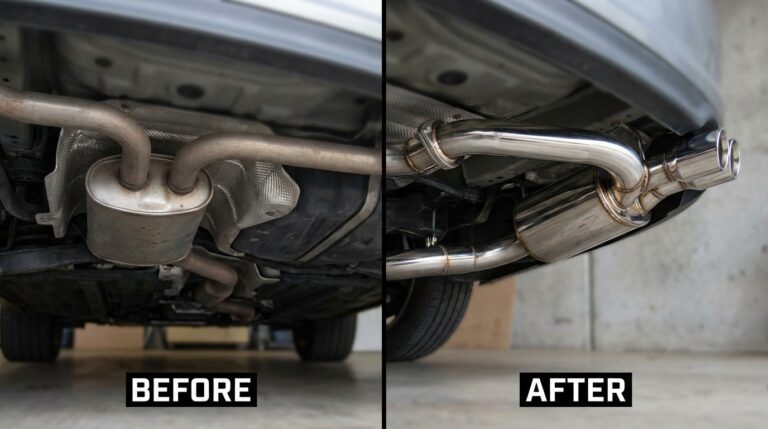
A45 AMG Tuning: Stage 1 to Stage 3


Car tuning, particularly of the Mercedes-Benz A45 AMG, has become a thriving industry for performance enthusiasts. The A45 AMG, already renowned for its 2.0-liter turbocharged four-cylinder engine delivering impressive power as standard, offers an exceptional foundation for advanced modifications. Adopting a Stage 1 to Stage 3 tuning package allows for the progressive extraction of even more power and performance from this compact sports car, thanks to carefully considered technical modifications.
The evolution of tuning on an A45 AMG relies on a progressive strategy that begins with software adjustments followed by mechanical modifications, ensuring better utilization of the engine and onboard electronics. Progressing through the various stages optimizes engine response, torque, and maximum power, while maintaining appropriate reliability based on the extent of the modifications. These precise steps illustrate a progression in performance, ranging from a simple gain to a radical transformation of the driving experience.
Stage 1: Improve engine performance without compromising the manufacturer’s warranty
Stage 1 often represents the first step in tuning the Mercedes A45 AMG. It is primarily a ECU reprogramming targeted vehicle performance. This software intervention involves modifying engine management parameters to optimize combustion, turbo pressure, fuel injection, and valve timing. The main advantage of Stage 1 is to maximize the performance and power without altering the physical components of the car.
Typically, a Stage 1 ECU remap can increase power from 387 horsepower to approximately 420-430 horsepower, with a proportional increase in torque. This significant improvement results in more responsive handling, better acceleration, and enhanced driving pleasure. Since the engine remains unchanged, this upgrade is compatible with almost all manufacturer warranties, provided the installation is performed by a qualified professional.
Another essential aspect is theengine optimization For controlled fuel consumption despite increased performance, engine remapping has calibrated thresholds to prevent excessive fuel consumption and enhance durability. For example, improved turbo boost management allows for a better balance between power demand and engine wear.
Furthermore, Stage 1 tuning doesn’t always require additional mechanical modifications. However, some enthusiasts choose to combine it with performance exhaust systems or high-flow air filters to improve engine breathing, complementing the gains offered by the remap. This also enhances the car’s sound, which is highly valued in the tuning world.
Here is a list of typical advantages of Stage 1 tuning on the A45 AMG:
- Visible increase in engine power (approximately +10-12%).
- Improved torque for better acceleration.
- Preservation of the manufacturer’s warranty in general.
- Improved throttle response and smoother driving.
- Reasonable cost and quick installation without major mechanical modifications.
Stage 2: Transition to mechanical modification for a significant power gain
Stage 2 goes further by combining ECU reprogramming with… auto modifications Targeted mechanical modifications. This stage involves modifying the vehicle’s physical components to best utilize the new engine parameters. Typical Stage 2 elements include the installation of a complete sports exhaust system, a more efficient intercooler, and sometimes an upgraded turbocharger.
This development allows us to push the performance to a higher level with power gains reaching 480-500 horsepower depending on the configuration and the quality of the installed parts. The goal is to optimize gas flow, engine cooling, and boost pressure. Improving the intercooler is essential to efficiently dissipate the heat generated by the turbocharger, thus preventing power loss due to overheating.
In terms of reliability, a well-executed Stage 2 tune involves using high-quality, compatible components to maintain engine robustness. This requires more complex engine control calibration while managing the increased mechanical stresses. Some owners also opt for modifications to the air intake to maximize the volume of fresh air drawn in.
Another crucial point lies in thermal management: a reinforced radiator and optimized management of the cooling circuit are strongly recommended to preserve durability in the face of higher temperatures.
As part of stage 2, here is a list of the main mechanical interventions:
- Installation of a full or partial sports exhaust system to reduce back pressure.
- Intercooler replacement or upgrade for better cooling of compressed gases.
- Optimization of the air intake system, often by adding sports filters or optimized ducts.
- Turbocharger tuned or slightly oversized for more boost pressure.
- ECU adaptation via advanced reprogramming to integrate these modifications.
| Component | Function | Impact on performance |
|---|---|---|
| Sport exhaust | Reduces exhaust gas backpressure | Improves power and sound |
| Improved intercooler | Reduces the temperature of compressed gases | Improved reliability and power |
| Sport air intake | Increases airflow in the engine | Optimizes combustion and power |
| Upgraded turbocharger | Increases boost pressure | Significant increase in power |
Stage 2 requires advanced technical expertise and meticulous adjustment to ensure the harmony of all systems. Each modification must be calibrated and dynamometer-tested to guarantee optimal performance while preventing failures.
Stage 3: The ultimate quest for power and extreme performance
Stage 3 represents the most advanced stage of A45 AMG tuning. It differs significantly from previous stages through the integration of major modifications to both the engine and the electronic management system. Often reserved for demanding enthusiasts or even semi-professional use, this phase transforms the sporty compact into a true track beast.
The improvements typically include the complete replacement of the turbo engine with a more powerful or heavily modified model, the adoption of a high-performance injection system, and a complete and customized calibration of the ECU. The latter incorporates precise parameters to manage extreme boost pressures, air/fuel mixture richness, and increased thermal limits.
The use of a specific exhaust system, often made of titanium or high-grade stainless steel, coupled with optimized manifolds ensures maximum gas evacuation. Reinforced internal engine components such as forged pistons, high-strength connecting rods, and adapted valves are essential to handle the increased power.
Besides the considerable power gains, which can reach or even exceed 600 horsepower, Stage 3 requires meticulous attention to safety and regulations. Thermal management is drastically revised with larger radiators and additional cooling systems.
Piston presses and strokes are often modified to accommodate high engine speeds, while the ECU mapping offers flexibility for adjusting different configurations. These vehicles also require frequent maintenance, as the accumulated mechanical stresses are very intense.
Main components and interventions of stage 3:
- Tuned engine or oversized turbo hybrid.
- High-pressure injection and fully customized engine management.
- Complete exhaust system made of lightweight and high-performance materials.
- Reinforcement of internal mechanics (pistons, connecting rods, valves).
- Advanced thermal optimization with radiators and additional systems.
| Modified item | Role | Effect on the car |
|---|---|---|
| Modified engine or turbo hybrid | Drastically increases maximum power. | Power exceeding 600 horsepower is possible. |
| High-pressure injection system | Allows for optimal air/fuel mixture management. | High and stable engine performance. |
| Custom ECU box | Custom electronic management for power and reliability. | Precise control of engine parameters. |
| Reinforced cooling | Ensures heat dissipation under high stress. | Increased reliability in extreme driving conditions. |
How to choose between stage 1, 2 and 3 for tuning your A45 AMG?
Selecting the right training course should be based on several important criteria, including your performance objectives, your budget, but also the frequency of use and maintenance requirements. Each stage corresponds to a different type of user and level of requirement.
Stage 1 This is ideal for those who want a power boost without compromising reliability and warranty, while maintaining a near-stock configuration. The budget is limited, and the mechanical risks are minimal. You get a more dynamic and responsive vehicle in all conditions.
THE stage 2
Finally, the stage 3
To better illustrate, here is a comparative table of the characteristics and constraints of each internship:
| Characteristic | Stage 1 | Stage 2 | Stage 3 |
|---|---|---|---|
| Approximate power | 420-430 horsepower | 480-500 horsepower | 600+ horsepower |
| Mechanical modifications | No or very limited | Intermediaries | Important |
| Estimated cost | Moderate | Pupil | Very high |
| Maintenance | Standard | Reinforced | Intensive |
| Recommended use | Daily route | Track and dynamic driving | Competition, advanced track |
The choice between these training courses should therefore be carefully considered, taking into account your user profile, but also compliance with local regulations and technical inspections. Guidance from a recognized specialist provides security and peace of mind.
The impacts of engine optimization on vehicle durability and economy
Engine optimization through tuning, especially on a high-performance car like the Mercedes A45 AMG, is not limited to simply increasing power. It also raises major questions about sustainability and fuel consumption, directly impacting the overall profitability of the project.
At the heart of the issue lies the management of mechanical wear in the medium and long term. A careful ECU remap, such as that performed in Stage 1, takes advantage of the margins left by the manufacturer without jeopardizing the mechanical components. This last table shows that a poorly calibrated remap or an improvised Stage 3 can prematurely degrade internal components.
However, when combined with components designed for cooling, exhaust, or turbocharging (stage 2 and 3), engine optimization can be achieved while minimizing degradation. Precise control of temperatures, air/fuel mixture, and turbo pressures is essential for preserving engine longevity. Additional sensors and continuous electronic monitoring then become indispensable.
Fuel consumption often increases from Stage 2 onwards, due to the increased stress on the engine. However, certain intelligent adjustments can limit this impact by adapting engine management to actual driving needs. For example, progressively cutting the turbocharger at low load can minimize fuel consumption without sacrificing smoothness.
Here is a list of the main impacts to consider:
- Accelerated wear pistons, rings and turbos in case of uncontrolled tuning.
- Fuel consumption which can increase by 5 to 15% depending on the configuration.
- More frequent preventative maintenance with oil changes, checks and early replacements.
- Enhanced thermal control is needed to prevent overheating.
- Changes to recommended intervals for spark plugs and filters.
| Appearance | Impact Stage 1 | Impact Stage 2 | Impact Stage 3 |
|---|---|---|---|
| Engine durability | Low alteration | Moderate with enhanced maintenance | Severely affected without precautions |
| Fuel consumption | Slight increase | Notable increase | High consumption |
| Maintenance frequency | Standard | Increased | Frequent and thorough maintenance |
| Complexity of settings | Simple | Average | Advanced, with continuous monitoring |
Choosing the engine optimization best suited to your needs and budget therefore comes down to a compromise between performance, reliability, and running costs. Proper tuning results in a vehicle that offers both driving pleasure and robustness.
What is stage 1 in A45 AMG tuning?
Stage 1 essentially consists of an ECU reprogramming without major mechanical modifications, offering a power gain with preserved reliability.
What components were modified in stage 2?
Stage 2 includes mechanical modifications such as a sports exhaust system, an improved intercooler, an optimized air intake and sometimes a raised turbo.
Is stage 3 suitable for everyday use?
Stage 3 is reserved for intensive use or competition. It requires rigorous maintenance and is not recommended for daily road use.
Can the manufacturer’s warranty be retained after a tuning job?
Stage 1 tuning often allows you to maintain your manufacturer’s warranty if the reprogramming is performed by an authorized professional. More advanced stages may void it.
What is the impact of car tuning on fuel consumption?
Tuning generally increases fuel consumption, especially from stage 2 onwards, but intelligent adjustments can limit this increase.