Reversible Wrapping: Restore Your Original Paintwork

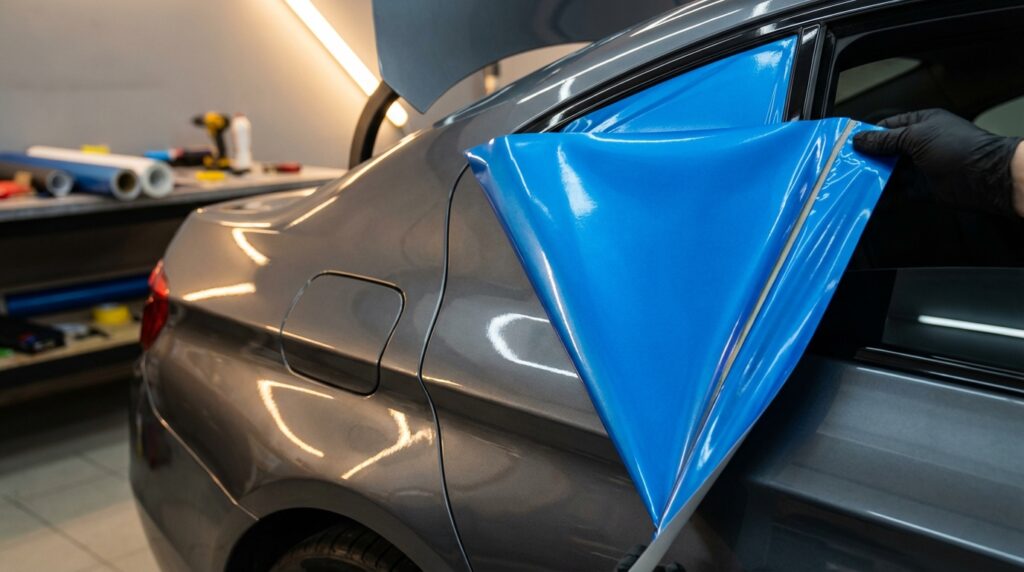
Vehicle wrapping is increasingly popular with drivers who want to transform the look of their vehicle without compromising its original integrity. This technique involves applying an adhesive film that covers all or part of the bodywork, offering a wide range of aesthetic possibilities while providing effective protection. One of the major, and sometimes underestimated, advantages of vehicle wrapping lies in its reversibilityUnlike a traditional painting, the film can be removed at any time, thus revealing the original paint intact and unaltered. This is a decisive argument for those seeking a temporary or evolutionary metamorphosis, without a definitive commitment.
In a context where the bodywork protection As everyday hazards – scratches, UV rays, bird droppings, or pollution – become a key concern, vehicle wrapping emerges as an innovative and practical alternative. However, the reversibility of the film requires specific precautions during application. take-off covering, in order to preserve the quality of the underlying surface. Furthermore, this process facilitates the painting restoration because it avoids the frequent need for aggressive sanding or a new coat of varnish.
In this article, we will explore in detail the mechanisms, techniques, and challenges related to the reversibility of the covering How to restore your vehicle’s original paintwork in the best possible condition, what the quality criteria are for adhesive films, what mistakes to avoid during removal, and finally, the concrete benefits for optimized vehicle maintenance. Vehicle wrapping isn’t just about changing its appearance; it also guarantees an elegant solution for reverting to the original look whenever you want.
The fundamental principles of reversible vehicle wrapping: understanding the role of the adhesive film
Vehicle wrapping relies on an adhesive film specially designed to adhere perfectly to the bodywork while remaining easily removable. This film, available in several finishes – matte, glossy, satin, or even carbon fiber effect – serves a dual purpose: modifying the appearance of your vehicle and protecting the original paintwork from external damage.
Reversibility stems directly from the film’s composition and adhesion technology. Unlike paint, which penetrates the surface, the film rests on the surface, creating a physical barrier. This layer can therefore be removed without leaving any residue, provided the process adheres to certain strict rules. The film’s quality is crucial here: a film that is too adhesive risks damaging the paint and complicating the process. take-off covering, while a film designed for the bodywork protection combines durable hold and ease of removal.
For example, films from well-known brands incorporate a micro-structured acrylic adhesive system that ensures adhesion without exceeding a certain rigidity threshold. This process allows the film to adapt to the contours and geometry of the vehicle body without distorting the underlying paint. Furthermore, UV resistance ensures that the film ages well, preventing discoloration or loss of elasticity that would complicate removal.
Adhering to the application conditions also affects reversibility. Applying a film to a clean, grease-free, and dry surface reduces the risk of excessive adhesion or air bubbles. Temperature plays a role: applying the film at a suitable temperature prevents tension that could later hinder removal.
The table below presents the essential characteristics to look for in an adhesive film that guarantees a optimal reversibility :
| Criteria | Importance for reversibility | Example of concrete benefits |
|---|---|---|
| Micro-structured acrylic adhesive | Allows for perfect adhesion without damaging the paint | Removal without residue or damage |
| UV resistance | Maintains the film’s elasticity and integrity for several years | Facilitates removal even after prolonged exposure |
| Flexibility and elasticity of the film | Adaptation to the complex shapes of the bodywork | No cracks were observed during removal. |
| Ease of repair (patches) | Allows for local repairs without having to redo the entire wrap | Extends the lifespan of the vehicle wrap |
Understanding these technical principles is essential for better control of the change process or painting restoration related to the covering. The ultimate goal is a balance between aesthetic performance, car maintenance Ease of use and lasting protection.
Removing the vinyl wrap: techniques and precautions to preserve the original paintwork
The timing of adhesive film removal is critical to ensure that the original paint remains intact and perfectly protected. One take-off covering Improper application can lead to damage: peeling of the varnish layer, glue residue, or even micro-scratches. It is therefore essential to follow a rigorous method, adapted to the current conditions.
First, never attempt to remove the adhesive when it’s cold. Heat is a valuable ally as it softens the adhesive, making it easier to peel off. Using a heat gun or infrared lamp is recommended to gradually heat the surface. The ideal temperature is between 40 and 60°C. Above this temperature, be careful not to damage the paint, especially if it’s fragile or old.
Next, the film must be peeled off slowly and steadily, pulling at a shallow angle to avoid excessive tension. The shallower the angle, the easier it is to peel off without forcing or tearing the protective layer of the bodywork. High-quality technical films, with their specific adhesive, facilitate this step by removing with minimal resistance.
Here is a list of recommended steps for a successful takeoff:
- Heat the targeted surface using a heat gun.
- Begin peeling from a corner, slowly pulling the film at a low angle.
- Regularly reheat the area to keep the adhesive pliable.
- Use a soft cloth and a suitable cleaning product to remove sticky residue.
- Inspect the paint after removal to detect any anomalies.
This approach is also key to better understanding why the initial quality of the installation is fundamental to ensuring the reversibilityFurthermore, certain more difficult areas, such as tight curves or plastic elements, require even more vigilance to avoid deforming or damaging the bodywork.
To learn more about the specifics of vehicle wrapping and how to choose the right film for you, consult this explanatory article. what is vehicle wrappingFurthermore, it’s also important to understand the advantages of changing your car’s appearance without paint, as explained here: change covering.
Protection and restoration: when the reversibility of the wrap becomes an asset for the maintenance of your car
Vehicle wrapping isn’t just about changing the look of your vehicle. It’s also a tool for bodywork protection Highly effective, it helps preserve the original paintwork over the long term. This additional barrier limits the impact of superficial scratches, incipient corrosion, and environmental damage. This makes maintenance all the easier. painting restoration, since the original layer remained preserved.
In practice, cars fitted with wraps retain a higher resale value. Automotive professionals and collectors are particularly sensitive to this preservation, which means less work is required to restore the vehicle to its original factory condition. The adhesive film thus becomes a temporary shield, which can be replaced or removed as needed, without any lasting damage.
The table below illustrates the main differences between traditional paint and vehicle wrapping in terms of impact on maintenance:
| Appearance | Classic painting | Covering (adhesive film) |
|---|---|---|
| Protection against minor scratches | Limited, often requires polishing or touch-ups | Very effective, replaceable film |
| Easy to clean | Moderate, prone to fouling | Smooth surface, water-repellent depending on the finish |
| Impact on vehicle value | Decrease in case of wear | Better preservation thanks to the protection |
| Complexity of the restoration | Often requires painting or polishing work | Film removal, cleaning, and possibly a new wrap |
In case of wear and tear on the covering, the change covering is therefore a relatively simple and non-invasive operation. Rather than undertaking a costly repaint, a new film can be applied after cleaning, thus keeping the original paintwork perfectly protected. This adds a new dimension to the concept ofcar maintenancewhich becomes fast, economical and aesthetically pleasing.
Finally, it is worth mentioning the different finishes available, which also impact overall resistance and visual appearance: satin, matte, glossy, metallic, or textured allow the covering to be adapted to specific tastes and needs, without compromising the __________.bodywork protection.
Limitations and precautions related to the reversibility of vehicle wrapping: what you need to know before starting
Despite its many advantages, the reversibility of vehicle wrapping is not absolute and has certain limitations. These restrictions are mainly related to the quality of the film, the application time, and the care taken in maintaining the wrap throughout its lifespan. Understanding these factors is essential to avoid unpleasant surprises.
First, a vehicle wrap that has been applied for too long becomes difficult to remove without leaving residue. A film left on for more than 5 to 7 years undergoes chemical and mechanical changes that complicate removal. The adhesive may degrade, become more firmly attached, or the film may become brittle, risking crumbling during removal. In these cases, the painting restoration sometimes proves unavoidable.
Furthermore, certain environmental conditions accelerate film deterioration: continuous exposure to sunlight, extreme temperature variations, or chemical attacks can cause premature damage. Therefore, thecar maintenance specific to the covering, including appropriate cleaning with non-abrasive products and regular checking of the film’s condition.
Finally, certain vehicles or specific components, such as domed hoods, complex mirrors, or rims, do not always allow for ideal application. These areas are more susceptible to creases, tears, or premature detachment, jeopardizing the reversibilityIn this case, technical expertise is recommended before any application.
To better assess these factors and potential drawbacks, it is helpful to consult this comprehensive guide on What are the disadvantages of vehicle wrapping?This allows you to prepare your project with full knowledge of the facts, taking into account effective preventative advice.
A list of best practices to optimize reversibility:
- Have the vehicle wrap installed by an experienced professional.
- Choose a quality adhesive film known for its durability and ease of removal.
- Prioritize regular maintenance, including gentle washing and frequent inspection.
- Schedule the replacement of the covering before the critical period of 5 to 7 years.
- Never use abrasive products or excessively powerful high-pressure cleaners.
Restoring the original paintwork after a wrap: impact on value and customization options
The reversibility of the wrap allows car owners to revert to the original design at any time. original paintThis is a strategic advantage, especially when reselling or when changing tastes. This transformability means the vehicle can be returned to its original condition without any aesthetic or mechanical compromises, which is often a major selling point for discerning buyers.
Residual value is therefore higher when the wrap is removed properly, without damage. The ability to revert to the original paint also reassures owners concerned about regulatory compliance and the manufacturer’s warranty. In some cases, an owner may even choose to alternate between several wraps, playing with a variety of styles, while retaining the freedom to quickly return to the original paint.
This aesthetic modularity, however, raises questions about personalization. Vehicle wrapping opens up an infinite range of possibilities at a lower cost: color changes without painting, special effects, original designs—everything is conceivable. When the time comes to remove the film, the painting restoration is minimal, often limited to simple cleaning or light polishing. This cycle creates a perceptible dynamic of evolution on the vehicle, enhancing the notion of adaptive style.
To explore this aesthetic and functional dimension further, you can consult the complete comparison between adhesive film and traditional paint on this specialized website: difference between a paint job and a wrap.
In summary, restoring the original paintwork offers:
- Better preservation of the vehicle’s value.
- A flexibility to personalize according to current desires.
- A guarantee reinforced by the initial protection offered by the film.
- A procedure of change covering simplified to refresh the appearance.
This process is often illustrated by professionals or enthusiasts who share their experiences in video, facilitating learning and success in both applying and removing the product correctly.
Does the wrap damage the original paintwork?
When applied and removed correctly with a quality film, vehicle wrapping does not damage the original paintwork. However, improper removal or the use of a low-quality film can leave marks or damage.
Can you apply a wrap to paint that’s already damaged?
It is possible to apply a wrap to slightly damaged paintwork, but it is advisable to carry out a repair or a painting restoration prerequisite to guarantee optimal adhesion and an impeccable aesthetic result.
How long can a vehicle wrap stay on a vehicle?
The average recommended lifespan for a vehicle wrap is 5 to 7 years. Beyond that, the adhesive film can lose its properties and become more difficult to remove without damaging the paintwork.
Does vehicle wrapping improve the protection of the car body?
Yes, the wrap acts as a protective shield against light scratches, UV rays and other daily aggressions, which helps to preserve the original paintwork.
What are the main criteria for choosing a film for a reversible wrap?
An adhesive film with a micro-structured acrylic adhesive, good UV resistance, high elasticity to follow the shape of the vehicle, and ease of local repair or replacement should be preferred.