Fender Wrapping: Accentuate Your Car’s Lines

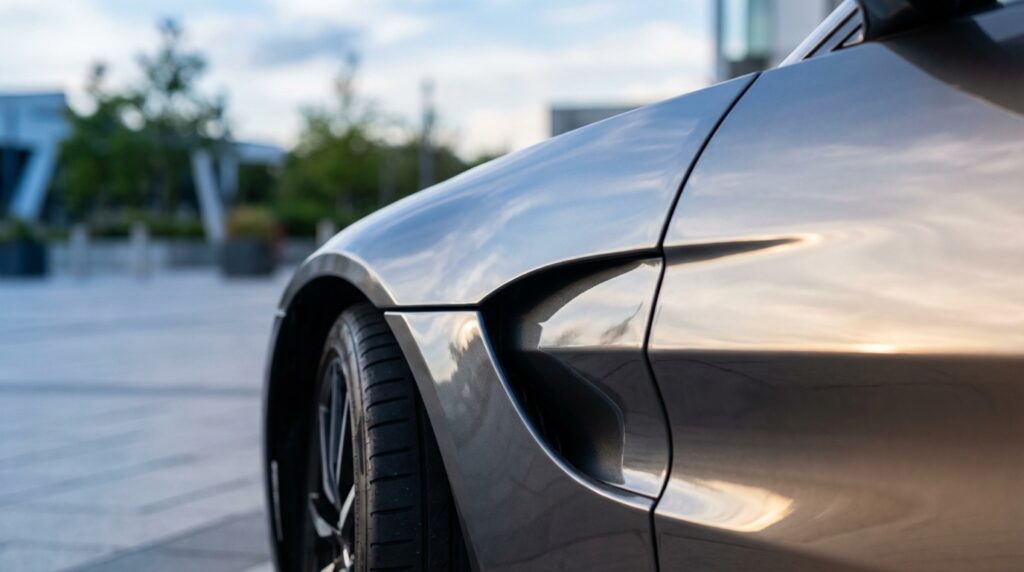
Fender wrapping has become a major trend in car customization, offering automotive style enthusiasts an effective way to transform their vehicle’s appearance while optimizing paint protection. Beyond mere aesthetics, this technique plays a crucial role in highlighting the car’s lines, subtly revealing its silhouette and providing a personalized finish that can be tailored to even the most specific desires. The wide variety of automotive adhesive films available on the market, ranging from matte finishes to carbon fiber textures, now allows both enthusiasts and professionals to reinvent car design with unprecedented precision and quality.
Applying fender wraps is a technical art that demands precision and expertise. By focusing on key vehicle elements, this car tuning method highlights the shapes, curves, and volumes of the fenders, often overlooked yet fundamental to the aesthetic balance of the bodywork. Many drivers choose this aesthetic modification not only for the visual appeal but also for the impact protection offered by the specialized films, which shield the bodywork from chips, scratches, and damage associated with everyday use.
The possibilities offered by fender wraps are opening up new perspectives in the field of automotive design, skillfully combining style and functionality. Whether it’s a sophisticated matte effect, a dynamic glossy finish, or a carbon fiber-look coating evoking performance and sportiness, these automotive adhesive films are powerful tools for establishing a strong visual identity. Various industrial and artisanal examples demonstrate how, through precise fender wrap application, a car can be transformed from a standard style into a true work of art on wheels.
Mastering application techniques for a perfect fender wrap
Accurate application of fender wraps remains a key technical challenge. First, you must select an automotive adhesive film perfectly suited to the specific surface of fenders, which are often curved and have complex contours. A common mistake, especially for beginners, is not preparing the bodywork properly, leading to air bubbles or creases that detract from the final appearance. To learn more about solutions to these problems, read the dedicated article on… How to avoid air bubbles when applying the vehicle wrap is essential.
The application process requires following several steps rigorously: meticulous cleaning, degreasing, precise cutting, and gradual application of the film while avoiding excessive tension. One of the major technical challenges lies in adapting the film to the often irregular contours of the fenders. Here, the technique of localized heating proves particularly useful, as it softens the film and allows it to perfectly conform to every curve. Furthermore, professionals recommend paying particular attention to the edges, as this is where the film is most susceptible to peeling. For more information on these aspects, see the article on the finishes and edges in covering.
Let’s take a closer look at the cutting and fitting of the film, which is a key step in the success of fender wrapping: a well-executed cut not only prevents unsightly effects but also the risk of dirt or water seeping under the film, thus guaranteeing optimal bodywork protection. Professional techniques in this field vary, but all rely on careful observation and specific tools for a flawless finish. Mastering these tools is explained in detail in the professional guide on [website/platform name]. cutting and adjusting the covering film.
The different types of adhesive films to enhance wing wrapping
Choosing the right adhesive film is crucial for successful fender wrapping. A wide range of films is available on the market, each offering distinct technical and aesthetic characteristics tailored to the specific needs of car customization. Among the most popular finishes are matte, gloss, satin, and carbon fiber. These textures offer a variety of visual effects and integrate seamlessly into car tuning strategies, subtly or radically altering the vehicle’s style.
Matte film, prized for its discreet and modern finish, adds depth to the fenders, accentuating the car’s lines without creating a glossy effect. It’s particularly useful for vehicles aiming for a refined yet elegant look. Glossy film, on the other hand, intensifies the vibrancy of colors and commands attention, making it ideal for a more dramatic aesthetic transformation. Satin film, meanwhile, strikes a balance between reflections and smooth surfaces, a look very popular with contemporary styles.
Finally, carbon fiber effect film stands out thanks to its textured pattern that simulates carbon fiber, an iconic material in the world of high-performance automobiles. This choice not only accentuates the car’s lines, but also lends a technical and sporty look, rich in symbolism for car design enthusiasts. Choosing the right film therefore requires considering not only the desired aesthetic but also technical properties such as UV resistance, scratch protection, and ease of application.
| Movie Type | Appearance | Benefits | Disadvantages |
|---|---|---|---|
| Mast | Discreet, with no reflection | Subtly modernizes, hides imperfections well | Less shiny, may show fingerprints |
| Bright | Very bright, vivid | It catches the eye and energizes the design. | Susceptible to scratches, requires more delicate care. |
| Satin | Soft, semi-gloss texture | A balance of aesthetics and practicality | Less common, sometimes more expensive |
| Carbon effect | Structured, athletic | Enhances the tuning style, high resistance | It can seem ostentatious if poorly paired |
In addition to the appropriate style, the durability and protective properties offered by these films must also be considered. Fender wraps, besides being an aesthetic enhancement, act as a true barrier against micro-impacts, chemical damage, and UV rays. This dual functionality transforms the wrap into an active tool for preserving the vehicle’s bodywork. To learn more about the protection provided by wraps, feel free to consult the complete guide on [website/platform name]. bumper covering which shares similar principles.
Advanced car customization: leverage fender wraps for a unique style
Fender wraps allow you to bring bold ideas to life in car customization and promote the expression of a distinctive automotive style. Because each vehicle has its own unique lines, fender wraps can be used not only to protect but also to accentuate or even alter the perception of its shape. The combinations of colors and textures create visual contrasts that energize the overall look, adding a touch of originality without affecting the mechanical components.
A concrete example is a sports car with carbon fiber wraps on its fenders, highlighting its aggressive and technical character, while a chic sedan might opt for a satin finish for an elegant, understated look. Adding graphic elements in vinyl or printed film can also provide an extra layer of originality, sometimes coordinated with other areas such as the roof or trunk, as illustrated in the guide on the trunk covering.
In the customization process, working on small surfaces like fenders allows for precise car tuning, capable of attracting attention while maintaining a harmonious look. Professionals emphasize the need to consider the overall design from the outset to avoid common mistakes, particularly regarding the consistency between different parts of the vehicle. More information on this topic can be found at [website address]. common mistakes in vehicle wrapping.
Maintenance and quality control after wing wrapping application
Preserving the beauty and integrity of fender wraps requires rigorous maintenance and regular post-application quality checks. Despite its technical qualities, the applied film can deteriorate over time due to weather conditions or heavy use. It is therefore essential to check for proper adhesion, especially at the edges where the risk of peeling is higher, as explained in the report on the post-installation quality control.
To ensure optimal durability, maintenance involves gentle washing without harsh products that could damage the surface. Using microfiber cloths and specific cleaning solutions will enhance the film’s longevity. It is also recommended to monitor for any micro-scratches and make precise touch-ups to prevent gradual deterioration.
Furthermore, the drying and hardening time of the wrap is another crucial factor. A waiting period before significant exposure to external elements ensures better stability of the adhesive film. Professionals estimate this period to be between 24 and 48 hours, an essential detail explained in the resource on the drying and hardening time of the coating.
Here is a summary list of best practices after installation:
- Regularly inspect the edges for any signs of detachment.
- Opt for hand washing with suitable products.
- Avoid prolonged exposure to sources of intense heat.
- Do not rub with abrasive materials.
- Perform any necessary repairs under the supervision of a professional if there is any wear and tear.
What is the average lifespan of a fender wrap?
A high-quality, well-maintained fender wrap can last between 5 and 7 years before needing replacement. Durability also depends on usage conditions and exposure to the elements.
Can you install fender wraps yourself?
It’s possible to apply fender wraps yourself, but it requires good technical skills and specific tools. For a flawless finish, it’s best to hire a professional.
Does wing wrapping damage the original paintwork?
No, the adhesive films used generally leave the paintwork intact and even protect it from external damage. Removing the film should not damage the surface if done correctly.
What are the best films for durable fender wrapping?
Polyurethane films with UV and scratch protection are recommended for their durability and longevity. The choice also depends on the desired aesthetic result.
How to avoid air bubbles during application?
Pre-cleaning, heating the film to soften it, and applying it gradually using a special squeegee are key to avoiding air bubbles.