Transparent Film (PPF): Invisible Protection for Your Paint

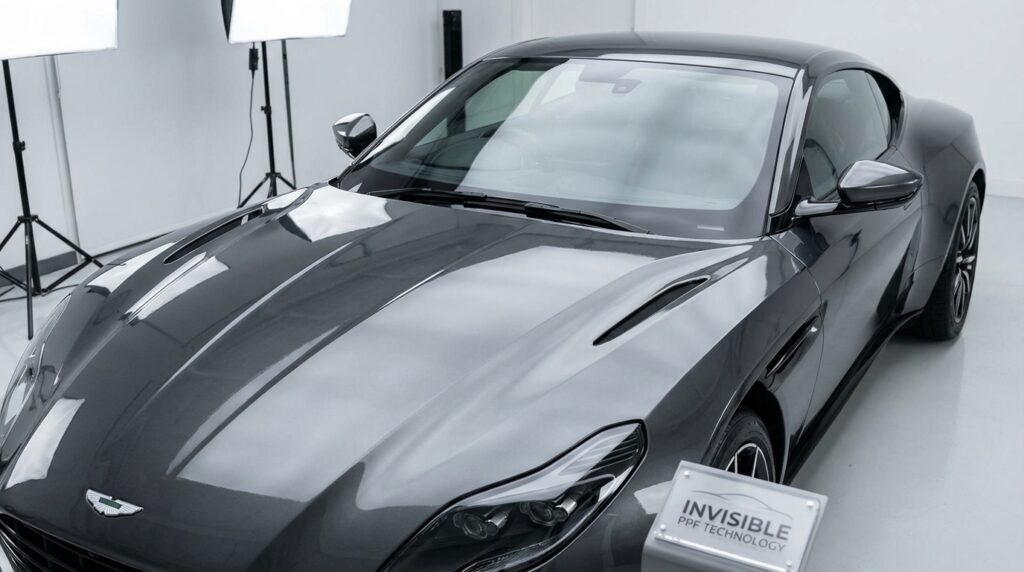
In the ever-evolving automotive world, preserving the shine and quality of the car’s bodywork is a priority for many enthusiasts and professionals alike. Transparent film, also known as PPF (Paint Protection Film), has emerged as a cutting-edge solution offering invisible protection that is both high-performing and aesthetically pleasing. This technical product, far from being a mere accessory, represents a true revolution in the field of car coatings. It not only protects the paintwork from external damage—scratches, stone chips, UV rays—but also helps maintain the vehicle’s value and image over the long term.
This type of protective film incorporates advanced properties, such as self-healing of micro-scratches, self-cleaning behavior, and increased resistance to environmental contaminants. Thus, car body protection with transparent film goes beyond mere aesthetics.
Drawing on extensive technical expertise, we will explore in the following sections the characteristics of PPF films, effective installation methods, field performance, and the trends shaping this market in 2026.
The fundamental technical properties of the transparent film (PPF) for optimal paint protection
Transparent film, or PPF film, is distinguished by its component characteristics, which ensure effective and discreet protection. First and foremost, it is a thermoplastic product generally made from polyurethane. This material gives the film high elasticity, allowing it to conform to the complex shapes of the vehicle body and resist mechanical deformation.
The manufacturing technique incorporates a specially designed adhesive layer to optimize adhesion without compromising the paintwork. It also facilitates film removal without damaging the underlying surface, a crucial factor for vehicle wrapping professionals. By combining this calibrated adhesion with an average thickness of between 150 and 250 microns, the PPF film forms an effective barrier against minor impacts – small stone chips, door dings, or accidental scratches.
Another key aspect concerns the film’s top layer: a UV-resistant and scratch-resistant coating, often enhanced with self-cleaning technology. This revolutionary feature allows rainwater to wash away natural dirt, simplifying maintenance and prolonging the original paint’s shine. This technical specification is a major advantage compared to other solutions. paint protection which do not always offer this level of autonomy in managing dirt.
An illustrative table summarizing the main technical characteristics of transparent protective films:
| Characteristic | Description | Key advantage |
|---|---|---|
| Material | Thermoplastic polyurethane | Flexibility and impact resistance |
| Thickness | 150 to 250 microns | Protection against micro-scratches and chips |
| Adhesive | Calibrated adhesion, without damaging the paint | Easy to install and remove |
| Surface reinforcement | UV and scratch resistant coating | Durable and self-cleaning |
| Self-healing | Removes micro-scratches under heat or sunlight | Extended aesthetics |
For enthusiasts wondering about the durability of these films, it’s worth noting that PPF technology has evolved significantly. When correctly applied under optimal conditions, its lifespan can reach up to 10 years, offering an economical and long-lasting solution for preserving the beauty of a new or renovated paint job. This point is discussed in detail in the article dealing with the lifespan of a vehicle wrap.
Techniques for applying transparent protective film: the keys to effective invisible protection
Mastering the application of PPF film requires a thorough understanding of the technical steps and materials used, as the quality of the result largely depends on the expertise applied. The goal is to obtain a perfectly smooth surface, free of bubbles or creases, and perfectly adapted to the geometry of the vehicle body.
First, surface preparation is crucial. The bodywork must be impeccably clean, degreased, and dry. The slightest trace of moisture, dust, or wax can compromise the film’s adhesion, lead to air pockets, or promote premature release.
Next, the film can be cut either directly on the vehicle using digital plotters, or in a workshop, depending on the dimensions and complexity of the panels to be covered. This step requires millimeter precision to avoid visible overlaps or unprotected areas.
During installation, applying a soapy solution to the back of the film facilitates initial positioning. Once positioned, the film is stabilized by applying progressive pressure with a special rubber squeegee, removing air and any intervening liquid. For curves and significant folds, a heat gun is used to soften the film and ensure perfect, seamless adhesion.
Among the advanced tips for a professional application, we note:
- Systematic inspection of the edges to ensure a watertight seal
- Controlling ambient temperature to optimize film flexibility and durability
- A final check from multiple lighting angles to detect micro-imperfections
Specialized workshops for applying vehicle wraps and protective films strongly recommend against self-application unless you have the proper equipment or specific training, to avoid errors that are sometimes visible to the naked eye. Comprehensive advice on the advantages and disadvantages of professional installation is available in this study on the disadvantages of covering.
Once applied, protective films require simple maintenance, often limited to regular washing with non-abrasive products. Avoid harsh pressure washers or stiff brushes, as these could reduce the effectiveness of the scratch-resistant layer or impair the self-cleaning function.
Performance and durability of PPF film against external aggressions
The transparent protective film meets the high demands of paint protection in a variety of environments, from daily urban driving and long country roads to sporting activities where the bodywork is subjected to frequent impacts. Resistance to micro-scratches is one of its key strengths. Thanks to its self-healing coating, the film can erase superficial scratches in just a few hours, or even minutes, using ambient or solar heat, without any manual intervention.
In real-world tests, several PPF films demonstrated the ability to effectively absorb stone chips while maintaining optimal transparency, without altering the vehicle’s original appearance. This field experience confirms that the film truly protects the base paint, preserving the owner’s initial investment.
Furthermore, the self-cleaning top layer significantly limits the accumulation of dust, pollen, and other particles, which not only reduces the need for traditional cleaning but also helps minimize chemical wear caused by airborne contaminants. This point is crucial for those interested in learning more about different types of covering finish incorporating protective properties beyond simple aesthetic covering.
The following comparative table illustrates the performance of PPF film compared to other paint protection options:
| Type of protection | Scratch resistance | Self-cleaning effect | Visibility on the paint | Average lifespan |
|---|---|---|---|---|
| PPF transparent film | Excellent (self-healing) | Yes | Invisible | 7 to 10 years old |
| Painting with reinforced varnish | Good | No | Visible | Variable |
| Vinyl covering | Average | No | Visible | 3 to 5 years |
In summary, the stroke of genius of the protective film lies in its ability to combine aesthetics with high technology, guaranteeing a level of protection that few other methods can offer simultaneously.
The environmental and economic impact of using PPF film in bodywork protection
Beyond its technical qualities, transparent film is part of a sustainable protection approach that appeals to a growing number of cost-conscious and environmentally friendly consumers. Economically, the film protects the original paintwork, thus reducing the frequency and need for expensive repairs and repainting. This contributes to a more responsible approach to managing car budgets, especially for high-end or high-value vehicles.
Furthermore, preservation with a protective film reduces the need for abrasive chemicals often used to restore damaged paintwork, thus limiting the environmental impact associated with these substances. This approach aligns perfectly with current trends in responsible and sustainable consumption.
A detailed economic analysis shows that, despite sometimes significant initial costs, the cost-benefit ratio is favorable, particularly when considering the extended lifespan of films. To better understand these financial aspects, it is helpful to consult the article on the average price of a vehicle wrap.
Finally, the majority of modern films are made from recyclable or partially recycled materials, and manufacturers encourage take-back and post-use recycling programs, further mitigating the environmental impact of this innovative solution.
Development prospects and innovations in transparent protective film technology
The transparent film market is evolving rapidly to meet the growing demand for increasingly high-performance solutions that are kind to vehicle bodies and the environment. Recent innovations are focused on several key areas.
First, nanotechnology research now makes it possible to integrate active molecules into the film, which not only improve scratch resistance but also self-cleaning properties by more effectively repelling dust and liquids. These advances even allow some films to neutralize polluting microparticles, thus helping to reduce the aggressiveness of air on the paintwork.
Next, the film’s texture is diversifying and adapting to the aesthetics of vehicles. Transparent films with matte, satin, or even carbon-fiber-like textures allow customers to personalize their vehicle’s protection while maintaining its primary function. This development is based on comparisons of different types of wraps—matte, gloss, and satin—the choice of which will now also depend on the specific protection required.
Finally, manufacturers are working on thinner films, while maintaining durability and advanced protection, to improve application ease and reduce tactile sensitivity. These technical improvements will ensure an even more invisible integration of the protective film, thus enhancing the user experience.
To discover spectacular examples of live applications and transformations, I recommend the portfolio of before-and-after examples very illustrative on the subject.
Is PPF film compatible with all types of paint?
Yes, the clear film is designed to adhere to most automotive paints, including those with clear coat finishes. However, professional preparation and application are essential to ensure optimal adhesion and prevent damage.
Can you install a transparent protective film yourself?
Although some kits are offered for amateur installation, it is strongly recommended to use a professional to avoid defects such as bubbles or creases, and to guarantee invisible and durable protection.
How do you maintain a protective film to preserve its self-cleaning properties?
Regular hand washing with a non-abrasive product is recommended. Avoid powerful pressure washers and stiff brushes, which could damage the protective coating and reduce its scratch-resistant and self-cleaning properties.
What is the average lifespan of a transparent film?
High-quality PPF films, properly installed and maintained, can last between 7 and 10 years, depending on the conditions of use and the environmental elements to which the vehicle is exposed.
Does the transparent film protect against deep scratches?
The film is effective against micro-scratches and minor chips thanks to its self-healing properties. However, it does not guarantee complete protection against deep scratches or severe impacts requiring bodywork repairs.