Tuning Approval France: Complete Procedures


In the dynamic and often complex world of car tuning in France, mastering the legal aspects of homologation is an essential step. Whether you’re an enthusiast looking to modify your vehicle to optimize its performance or aesthetics, or a professional in the sector, understanding the procedures for obtaining a homologation is crucial. authorisation Compliance is essential. With various modifications, ranging from installing a sports exhaust to fitting specific rims, each intervention may require rigorous inspection to ensure adherence to current standards. regulation specific to France imposes strict constraints in order to guarantee user safety and environmental compliance, particularly during the transition to technical inspection.
Get a certification Type approval is more than just an administrative document: it guarantees that your vehicle remains legal to drive after any modifications. The administrative process can seem daunting, requiring interaction with the Regional Directorate for the Environment, Planning and Housing (DREAL), specific tests, and sometimes mandatory inspection by an approved testing center. However, each step can be managed and planned in advance to make the tuning experience as smooth as possible. The stakes are high: compliance with emissions standards, structural integrity, braking safety, and lighting quality, among others.
This comprehensive guide breaks down the main points in detail procedures tuning homologation in FranceThe technical elements to check, as well as the possibilities offered to both amateurs and professionals, are essential. A thorough understanding of the legal implications is crucial to avoid any disputes and to take advantage of permitted innovations, such as the installation of additional options like… tinted windows, special rims and brake calipersTuning does not necessarily rhyme with illegality; on the contrary, France offers a framework that promotes safe and responsible modifications.
Administrative procedures for the homologation of a tuned vehicle in France
Undertaking modifications to a vehicle intended for use in France requires following specific procedures.approvalThese steps begin as early as the design or transformation project and continue until validation by the competent authorities.
The first step usually involves informing the DREAL (Regional Directorate for the Environment, Planning and Housing)This is the designated body for modified vehicle registration certificates. This notification is crucial for any major changes, such as engine or body modifications, or the installation of a custom sports exhaust. In some cases, individual vehicle approval (RTI) will be mandatory, particularly for rare or heavily modified vehicles, ensuring that the vehicle meets safety and environmental standards.
Once the application is submitted, the owner must provide a complete file including the precise technical specifications of the modified parts, sometimes accompanied by certificates of conformity from the manufacturers, as for the selection oftuning rims in the appropriate dimensionsThis file will serve as the basis for laboratory or road tests. The DREAL or an authorized body will then carry out a detailed inspection.
For example, an enthusiast who chooses to install higher-performance, lighter bucket seats will need to present specific homologation for these seats, as well as a technical manual explaining the installation and safety features. Since safety is the priority, the inspection also includes a thorough examination of the braking system, suspension, and lighting. Following this phase, further modifications may be required to obtain full vehicle homologation.
These procedures may differ if the modification concerns only aesthetic aspects without affecting the engine or safety: treatments such as wrapping, tinted windows, or the addition ofadditional aesthetic options are often simpler to validate. But their conformity remains subject to strict regulations on the transparency of the glazing and the width of the rims, for example.
Processing times vary depending on the complexity of the changes, ranging from a few weeks to several months. In 2026, the use of online platforms significantly accelerates the process, but it remains essential to prepare your application thoroughly to avoid back-and-forth exchanges that delay obtaining the [document/approval].approval.
Essential technical criteria for the certification of modified vehicles
There regulation French regulations concerning car tuning impose strict and precise technical standards to ensure that no modification compromises safety or the environment. A thorough understanding of these requirements is essential for success.approval and benefit from its legal approval.
Among the essential technical criteria, structural integrity is paramount. Any modification to the bodywork, such as the addition ofApproved tuning fender flares or aerodynamic kits, must be made with materials conforming to standards and fixed in such a way as not to compromise mechanical strength. These elements must also respect the maximum permitted dimensions to avoid increasing the risk of accidents.
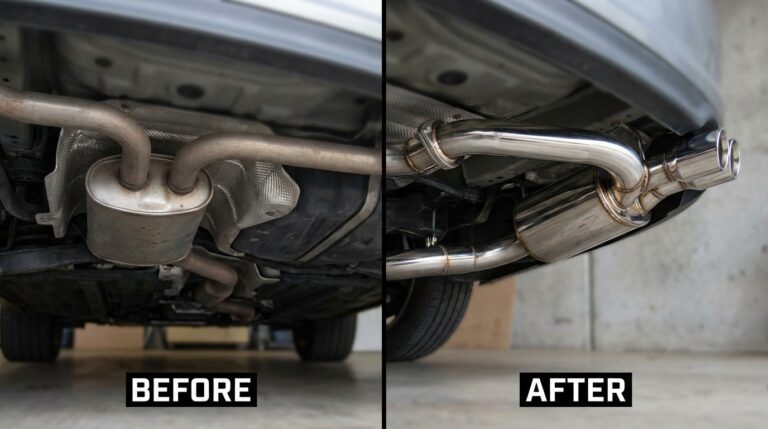
Engine modifications, particularly through electronic reprogramming or the installation of a sports exhaust, must comply with the emissions limits defined by Euro 6 or Euro 7. Engine tuning, such as that detailed in specialist guides on the Engine remapping: price, gains and risksThe system must be validated by an emissions test carried out according to official procedures. A non-compliant exhaust system may result in the rejection of the type approval application.
Braking systems must also be reviewed when power is increased. Installing more powerful calipers or high-performance brake pads is often mandatory to ensure deceleration adequate for the increased power, preventing any risks during road use. The conformity of these parts is a point checked in detail during the vehicle inspection.
Lighting is another important category. Headlights must be approved, and their colors regulated to avoid dazzling other road users. Modifications to integrate LED systems or additional lights often require re-approval if their position or intensity changes.
| Modified item | Technical criteria | Approval requirement |
|---|---|---|
| Bodywork (wheel spacers, kits) | Compliant materials, secure fixing, limited dimensions | Yes |
| Engine (reprogramming, exhaust) | Compliance with emission standards, laboratory testing | Yes |
| Braking (calipers, pads) | Power adaptation, certified performance | Yes |
| Lighting (headlights, LEDs) | Regulated color and intensity, specific approval | Yes |
| Aesthetics (tinted windows, rims) | Adherence to the color percentages and dimensions of the rims | In some cases |
A well-executed and compliant car tuning project contributes to maintaining road safety while offering a personalized experience for the owner. This respect for technical constraints and the regulation is the key to success for a smooth approval process.
Legal optimization: what tuning modifications are allowed in France?
France has a precise regulatory framework that defines what is permitted and what is not in terms of vehicle tuning. The distinction between tolerated and illegal modifications is often subtle, but it essentially rests on the technical and safety impact of the changes made.
THE legal changes commonly include:
- Changing the rims to a compatible size, respecting the requirements of the registration certificate, as explained in this guide on Choosing tuning rims in France ;
- The addition of tinted windows within the limits of the rates authorized by law, provided that the visibility necessary for road safety is respected;
- Fitting a homologated sports exhaust, which improves the sound without excessively increasing noise or worsening emissions, is possible; a complete list is available on [website address]. 2026 sport tuning exhaust brands ;
- The installation of additional aesthetic options, such as approved bucket seats, the classification and price of which can be checked here: homologated tuning bucket seats ;
- Reasonable engine remapping, which must not exceed the permitted emission and power limits, as well as the associated risks, are detailed here: Engine remapping: price and risks ;
Conversely, some modifications are strictly prohibited or severely restrict the circulation of the modified vehicle:
- The excessive increase in power without adaptation of safety equipment;
- Excessive modifications to the structure/chassis that could compromise integrity in the event of an accident;
- The illegal lowering of ground clearance which reduces safety and the preservation of the vehicle’s dynamic properties;
- Changing exhaust codes that harmfully alter the screaming or noise pollution;
To better understand the limits governing car tuning in France, official documents published in 2026 reiterate that any modification must be controllable and reversible to comply with the legal framework. This approach encourages innovation while protecting users.
Vehicle inspection and its role in vehicle tuning approval in France
The transition to technical control This represents a crucial step in validating the type approval of modified vehicles. Since 2024, legislation has imposed specific phases in the technical inspection for cars with external or internal modifications.
The vehicle inspection meticulously examines several key points, with a particular focus on tuning modifications. This includes checking elements such as:
- Compliance of lighting and signaling systems, including additional headlights and LED lights;
- The condition of the rims and tires, checking the dimensions in accordance with the initial or modified homologation;
- The proper functioning of the braking system and its ability to handle the vehicle’s altered power;
- The safety and secure attachment of the seats, especially when bucket seats have been installed;
- Compliance with standards concerning pollutant emissions, directly linked to any engine reprogramming or exhaust modification.
A detected defect may result in a required re-inspection, obliging the owner to correct the faults or restore the vehicle to its original configuration. The role of the vehicle inspection is therefore also preventative, ensuring that any modification does not endanger the driver or other road users.
Note that, for the most complex cases, a detailed technical report, issued by a certified expert, may be requested during the audit. This report will support the application forapproval or to prove that the transformations comply with regulations.
Several approved centers in France have specialized in the inspection of tuned vehicles and provide their expertise to support owners during these sensitive stages.
Practical tips to facilitate obtaining tuning approval in France
Success in obtaining theapproval Modifying a vehicle in France requires rigorous preparation and a thorough understanding of the regulations. Here are some practical tips to help you complete this process:
- Document the changes precisely : keep all invoices, technical notices, and certifications of parts, essential to compile a complete file for the authorities.
- Hire professionals Whether it is for the installation of the parts or for the design of the administrative file, their expertise avoids the frequent errors that delay obtaining the certificates.
- Comply with the standards upstream Choose approved and compatible parts, such as fender flares, rims, or exhaust systems listed on reliable and up-to-date sources. French-approved fender flares.
- Simulate the vehicle inspection : to anticipate any non-conformities, a preliminary check in a specialized center allows the necessary adjustments to be prepared.
- Stay informed about legislative developments Regulations change regularly, which can impact validity or homologation conditions. Following up-to-date specialist sources keeps your file current.
Finally, patience is a virtue in this often lengthy but essential process. Forums for enthusiasts and practical guides, such as this one, can help. A complete guide to car tuning in 2026These are valuable resources for anticipating pitfalls and optimizing one’s approach.
What is tuning homologation?
Tuning homologation is an official validation that guarantees that the modifications made to the vehicle comply with the safety, environmental and technical standards in force in France.
What types of modifications require approval?
Major changes such as engine reprogramming, the installation of a sports exhaust, the fitting of wider rims or homologated bucket seats require a homologation process.
What happens during the vehicle inspection after tuning modifications?
The technical inspection verifies that the modifications comply with French standards, including lighting, braking, pollutant emissions and seat safety systems.
Is it possible to get a car approved with fender flares?
Yes, but they must comply with standards, be designed with suitable materials and installed correctly to ensure safety.
Where can I find reliable information on tuning homologation?
Specialized sites like Car tuning: the 15 legal modifications in France offer detailed and up-to-date resources.