Finishes and Edges: The Details That Make the Difference in Vehicle Wrapping

In the world of vehicle wrapping, every detail counts. Finishes and edges, often perceived as mere accessories, are actually the fundamental elements that ensure the aesthetic and technical quality of an adhesive application. Whether you’re a passionate individual or a professional, mastering the art of finishing guarantees an impeccable result, improved film durability, and extensive design customization. Precision in the treatment of corners, seams, and edges reveals expertise and distinguishes an amateur wrap from a meticulous job. Today, the growing importance of matte, gloss, and satin adhesive films, combined with innovations in thermoforming, underscores the need for a deeper understanding of edges for a successful application.
Beyond purely aesthetics, proper finishing is also a technical challenge. It ensures maximum protection of the bodywork against external damage, while preventing premature film degradation. Specific methods for cutting, adjusting, and sealing films have evolved, incorporating meticulous tools and preparation steps. These practices prevent air bubbles, guarantee better adhesion, and contribute to a seamless final look. In parallel, the market now offers a diverse range of textures and patterns, with borders that complement the vehicles’ visual identity: carbon fiber, brushed leather, velvet, or matte and satin finishes that enhance shapes and lines.
By exploring in greater detail the nuances and techniques essential for finishes and edges, this article aims to be a practical and technical reference. It helps identify common mistakes to avoid, understand the interactions between film quality and application method, and better grasp the impact of aesthetic choices on the overall vehicle design. Rich in precise advice, concrete examples, and material profiles, it also addresses recent innovations that are transforming vehicle wrapping into a modern, accessible, and highly customizable discipline. From surface preparation to the final adjustment of corners, each step requires meticulous attention to detail to showcase the finished product.
The Fundamentals of Finishing Techniques in Vehicle Wrapping: Techniques and Materials
The quality of a vehicle wrap isn’t measured solely by the color or design chosen, but primarily by the execution of the finishing touches. A well-applied adhesive film with precise edges completely transforms the appearance of a vehicle, enhancing its aesthetics while effectively protecting the bodywork. Several elements are essential for achieving this: precise cutting, adhesion to curves, clean seams, and securing exposed edges. Each step requires meticulous attention to detail, appropriate tools, and a thorough understanding of the film’s properties.
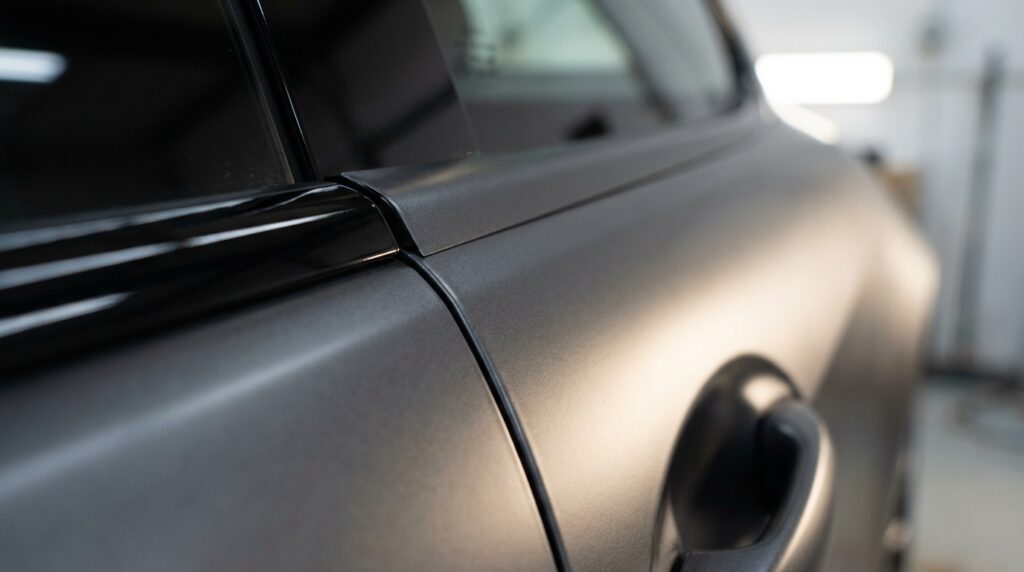
The choice of film material is the first determining factor. There are three main categories: matte, satin, and gloss finishes, each with its own visual and technical characteristics. For example, a matte finish offers a subtle yet sophisticated look, while a gloss finish reflects more light, creating a dynamic effect. Satin falls somewhere in between, with a subtle sheen that preserves the depth of the colors. Depending on the type of finish, the application methods and edge management may vary, particularly due to sensitivity to light and temperature.
An often underestimated step is surface preparation before installation. The surface must be perfectly clean, smooth, and free of grease to prevent air bubbles and peeling. Using a rigorous cleaning protocol This is essential to ensure optimal adhesion. Furthermore, incorporating controlled preheating of the film facilitates its thermoforming, which is crucial for conforming to complex shapes and guaranteeing a clean finish around corners and bodywork elements such as handles or mirrors.
Cutting and edge trimming tools
Tools play a crucial role in achieving precise edges. Ultra-thin blades, precision cutters, and specialized heating tools prevent tearing and ensure perfect alignment. The most common technique is the “flush” cutting method, which involves cutting the film as close as possible to the fold or edge of the bodywork, without excess or imperfections. Professionals also use advanced methods such as laser cutting or plotters, allowing for greater customization and more precise assembly.
The table below compares the main characteristics of tools commonly used for installation and finishing:
| Tool | Main use | Benefits | Disadvantages |
|---|---|---|---|
| Razor blade | Precise manual cutting | Precision, low cost | Risk of cuts, rapid wear |
| Rotary cutter | Rounded cut and curves | Ease of use on complex contours | Less precise over small areas |
| Cutting plotter | Automated precision | Replicability, speed | High cost, requires programming |
| Hot air gun | Thermoforming and adjustment | Film flexibility and improved adhesion | Risk of overheating, possible damage |
Understanding the interaction between these tools and the various adhesive films facilitates the creation of borders that are both strong and aesthetically pleasing, capable of withstanding climatic and mechanical stresses over time.
Edges in Vehicle Wrapping: Aesthetic Impact and Durable Protection
In vehicle wrapping, the edge is more than just a simple cut finish. It plays a crucial role in both the visual appearance and the longevity of the adhesive film. A well-executed edge ensures a seamless transition between the film and the vehicle body, preventing any creases or peeling that could compromise adhesion. These finishes also determine the final perception of the design: a sloppy application with uneven edges instantly detracts from the perceived quality.
The edge treatment method varies depending on the area of the vehicle. On flat surfaces, the edge can simply be tapered, while on complex contours (angles, raised areas), it is essential to use films with high thermoforming capacity, combined with targeted heating. This process allows the film to be “sculpted” around the contours, eliminating tension and creases. The use of a suitable heat gun is essential to achieve this precision and thus avoid the formation of air bubbles or creases.
Aesthetics and continuity of design
For a successful wrap, maintaining visual continuity is paramount. The edges must integrate seamlessly into the overall design, respecting the curves and avoiding any breaks in texture or color. For example, when opting for a textured film like carbon fiber or brushed leather, as presented in this article dedicated to… original finishesThe work on the borders must be impeccable in order to enhance both the relief and the depth of the pattern.
Experience shows that meticulous installation, combined with well-sealed edges, significantly increases the overall aesthetic impact. The installation must also take into account the interplay of light, particularly with matte or satin finishes. choice between these different finishes influences how edges are perceived, as the reflection or absorption of light can either mask or accentuate irregularities.
It is also advisable to allow for safety margins during cutting to compensate for potential errors or mechanical stresses that the bodywork may experience over time. These margins enhance the durability of the wrap without compromising its appearance.
Key Steps for Ultra-Precise and Durable Edging Installation
A perfect finish always relies on careful, step-by-step application. Vehicle wrapping, to achieve a professional result, involves a series of phases, from preparation to the final trimming of the edges. Each phase must be executed meticulously, from the initial handling of the film to the final inspection.
The first phase is the complete bodywork preparationIt is essential to remove all traces of dust, oil, or dirt to ensure lasting adhesion. To optimize this crucial step, refer to a detailed guide such as the procedure described in this tutorial on the 7-step installation is wise. This preparation avoids defects related to trapped air or poor film adhesion, which would impair the quality of the edges.
Next, the step of thermoforming and heating This step is essential on curves to mold the film to the shape of the vehicle body. It aims to optimize flexibility and strength by balancing the heat to avoid damaging the adhesive or the film. Mastering heat is an art, perfectly illustrated by the comprehensive tutorial videos on the subject.
The final step is adjusting and trimming the edges. Using a suitable cutter with a fresh blade ensures clean, precise contours. Carefully calculated margins prevent any lifting and guarantee that the film adheres perfectly to the substrate, even on sharp edges or complex corners.
- Thorough cleaning and degreasing of the surface.
- Application of the film with precise positioning.
- Targeted heating for thermoforming on reliefs.
- Precise edge cutting with appropriate tools.
- Installation control and management of final adjustments.
Finishes and Edges: Extending the Lifespan of the Vehicle Wrap
Beyond the initial installation, the longevity of the finish depends on several factors related to the maintenance and protection of the edges. Indeed, exposed edges are often the first points to be weakened by wear and tear, frequent washing, or natural elements (sun, rain, debris). Adopting a suitable maintenance method is therefore essential to prolong the life of the wrap.
Regular cleaning with mild products suitable for the adhesive film prevents premature peeling or the formation of micro-cracks along the edges. It is also advisable to limit the use of high-pressure jets directly on the edges, as these can lift the film. Furthermore, certain finishing solutions, such as the application of specific varnishes or sealants to the edges, enhance their mechanical and chemical resistance.
From a technical standpoint, regular inspection of the edges allows you to anticipate any deterioration and intervene quickly by touching up or reinforcing the affected area. The initial quality of the application is crucial here, as a poorly executed edge promotes the premature appearance of bubbles, flaking, or lifting. To learn more about these aspects and understand how to avoid air bubbles, here is a very useful resource: avoid air bubbles during installation.
In summary, from the choice of film, the technical mastery of the edges and regular maintenance, every detail must be taken into account to guarantee a covering that retains all its quality, its impeccable finish and its protective power for several years.
Innovations and Trends 2026: Towards Ever More High-Performing and Aesthetically Friendly Edges
The vehicle wrapping market is evolving rapidly, and 2026 is no exception, with innovations raising the bar for the quality of finishes and edges. Adhesive film manufacturers are now offering materials with enhanced properties such as self-healing, dust-repellent, and even antibacterial coatings. These technological advancements facilitate application, improve adhesion, and simplify maintenance.
Furthermore, personalization is enhanced by the ability to create ultra-precise cuts using CNC or laser technology, allowing for the integration of patterns or logos directly into the edges. This trend, which combines technical expertise and creativity, opens new avenues for differentiating vehicles with refined and bespoke aesthetics.
Another key area is the development of original finishes combining sophisticated textures and invisible edges for an effect of depth and continuity. Films with brushed leather or velvet finishes are now combined with low-visibility edge technologies, enhancing the impression of quality and modernity. The adoption of new, faster installation methods, particularly on complex surfaces, also greatly benefits from these innovations. See, for example, how to achieve a fast installation without compromising precision in this article on the speed of installation.
Here is a summary list of the technological and aesthetic trends that are shaping the year:
- Adhesive films with self-cleaning and healing treatment
- Ultra-precise laser and CNC cutting for custom borders
- Finishes combining original textures and invisible edges
- Accelerated installation methods without loss of quality
- Antibacterial coatings for interior and exterior films
The constant evolution of materials and tools now allows for vehicle wrapping services that combine innovative design, impeccable aesthetics, and long-lasting performance. This trend aligns with the concept of controlled automotive wrapping that is both accessible and professional, as presented in this comprehensive analysis on the cutting and adjusting the film.
What constitutes a good finish in vehicle wrapping?
A good finish is characterized by a clean cut, perfect adhesion to the contours, and edges without creases or bubbles, guaranteeing an aesthetic result and optimal longevity of the film.
How to avoid air bubbles around the edges?
Rigorous surface preparation, the use of heating to thermoform the film and precise cutting of the edges prevent the formation of air bubbles during installation.
Which finish should I choose for a harmonious design?
The choice between matte, satin or glossy depends on the desired effect; each finish interacts differently with light and influences how the edges blend into the overall design.
How to extend the lifespan of a vehicle wrap?
Proper maintenance, including gentle cleaning, avoiding high-pressure jets on edges and regular inspection, is essential to maintain the quality of the finishes in the long term.
What’s new for finishes in 2026?
Innovations include self-cleaning films, ultra-precise laser cutting, invisible borders and accelerated installation methods that increase quality and speed of execution.