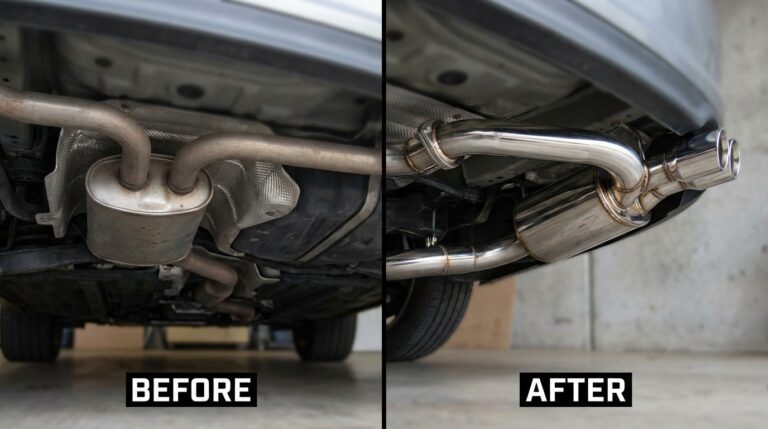
Dump Valve Tuning: Noise and Performance

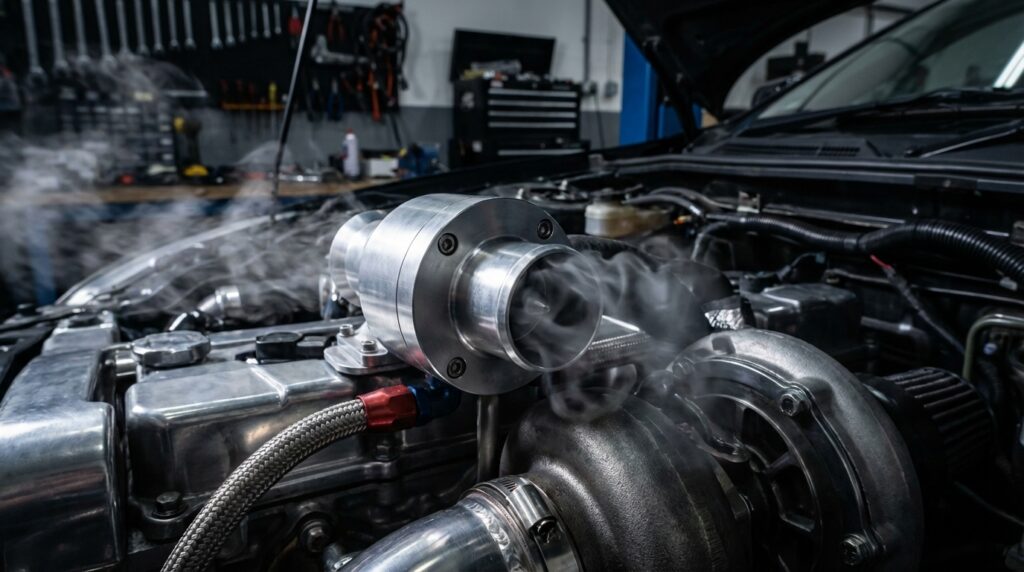
In the world of automotive mechanics, dump valve tuning holds a central place for supercharging enthusiasts looking to combine aesthetics, sound, and engine performance. The dump valve, often called a blow-off valve, plays a crucial role in managing turbo pressure by quickly releasing excess pressure when the accelerator is released. This action produces a characteristic sound, prized by many enthusiasts, but its adjustment also influences overall engine performance. Therefore, understanding how to optimize this essential component can transform both the auditory experience and driving dynamics. Dump valve tuning is not limited to a simple aesthetic modification: it is a true engine optimization that aims to maximize supercharging efficiency while controlling the generated sound. This technical article delves into the intricacies of dump valve tuning, highlighting its impact on turbo pressure, the sound produced, and overall engine performance.
Since the popularization of turbocharged engines, the attention given to the dump valve has evolved considerably. Initially perceived as a simple functional component, it has become a key element for tuners seeking to personalize the sound and improve engine efficiency. However, tuning should never come at the expense of reliability or safety. Every engine adjustment, whether manual or assisted by electronic systems, must take into account the mechanical and thermal constraints specific to each vehicle model. The dump valve must be precisely adjusted to ensure an optimized response during the turbo pressure build-up and de-spool-up phases, two moments that are extremely sensitive to instantaneous performance. This delicate balance between noise and efficiency is at the heart of every optimization process and requires a thorough understanding of turbo mechanics and the influencing parameters.
The essential role of the wastegate in turbo pressure management
The dump valve, or blow-off valve, is a mechanical component designed to quickly release excess pressure that builds up in the intake system of a turbocharged engine. It is particularly stressed during sudden changes in engine load, especially when the driver releases the accelerator. At this precise moment, the turbo pressure remains high, which can lead to a phenomenon called “turbo lag,” or a pressure surge that could damage the turbocharger. The dump valve prevents this surge by temporarily opening and releasing the compressed air to the atmosphere or the recirculation system (depending on the valve type).
This function not only protects the turbocharger but also helps maintain optimal pressure within the system, minimizing the time it takes for pressure to build up again when the accelerator is pressed. In practice, the valve opening pressure setting must be adjusted to balance the speed of decompression with the duration of turbo pressure maintenance, in order to maximize engine responsiveness.
Mechanical operation and variations of dump valves
There are two main types of dump valves used in turbocharging systems: atmospheric pressure valves – which directly expel air from the system – and recirculation valves, which return compressed air to the turbo inlet. These variations directly impact engine sound and performance.
Atmospheric valves generate the legendary “pssshh” sound that appeals to tuning enthusiasts due to the distinctive noise they produce with each discharge. Meanwhile, recirculating valves prioritize better boost stability and reduce unwanted noise, thus improving engine smoothness and longevity.
A comparative study conducted by several specialized workshops in 2025 showed that the precise adjustment of the opening pressure influences both noise intensity and performance. For example, increasing the valve sensitivity reduces reaction time but can increase the discharge frequency, thus increasing the overall perceived noise level.
| Dump Valve Type | Destination of the degassed air | Impact on noise | Effect on engine performance |
|---|---|---|---|
| Atmospheric | Outside | Loud and distinctive sound | Improved short-term responsiveness, but increased risk of turbulence |
| Recirculation | Turbo intake | Silent | Improved pressure stability, enhanced durability |
Taking these characteristics into account allows for targeted engine tuning that is consistent with the tuning objectives, whether they are geared towards sound or performance.
Advanced tuning techniques to optimize engine noise and performance
Tuning dump valves is not limited to simply replacing the component. It extends to fine-tuning parameters related to their operation, such as opening pressure, spring shape and stiffness, and the air evacuation path.
A technical example is the use of adjustable springs that allow the activation pressure to be varied, adapting the valve to different driving styles (road, track, or daily use). The use of custom-designed springs thus makes it possible to precisely adjust the turbo’s response curve, reducing spool-up time and improving boost stability.
Furthermore, some configurations include electronic valves for real-time dynamic control. These systems manage valve opening based on data from the turbo pressure sensor and engine speed, allowing for more precise optimization between performance and noise reduction. This type of regulation is particularly common in high-performance builds where every millisecond counts.
Practical example of optimization
An engine tuning team recently installed an adjustable spring-loaded dump valve on a 2.0L turbocharged engine, calibrated to open at 0.9 bar instead of the original 1.2 bar. The results measured under dynamic conditions showed:
- Reduced turbo lag by 12%
- Improved throttle response time
- A net gain in torque in the mid-range (1500-3500 rpm)
- A more audible and satisfying discharge sound without being excessive
This precise adjustment made it possible to optimize the sound without sacrificing durability thanks to a successful compromise between low opening pressure and increased thermal management.
Each optimization step must be carried out rigorously and respecting the specific characteristics of the vehicle model, from the engine mapping to the characteristics of the turbo and intake system.
Implications of engine tuning on durability and reliability in dump valve tuning
The pursuit of performance through wastegate tuning also involves assessing the risks to the turbocharger and engine’s durability. Inappropriate tuning can lead to premature wear or even serious mechanical failures.
In a turbocharging system, the turbocharger is subjected to extreme temperatures and pressures. A poorly calibrated wastegate that opens too late can cause excessive compression and backfires in the system, damaging the turbine and compressor. Conversely, opening too early can lead to excessively frequent pressure drops, reducing turbocharging efficiency and increasing fuel consumption.
Modern engines often incorporate sensors and electronic management to modulate the dump valve’s behavior, but in tuning projects, these systems are sometimes briefly or completely bypassed. It then becomes vital to adopt a precise mechanical setting adapted to the engine’s actual stresses.
Recommended practices to ensure reliability
Here is a list of recommendations to follow to preserve the mechanics while optimizing the dump valve:
- Respect the maximum pressures recommended by the manufacturer and the tuning shop.
- Use quality components that are certified and adapted to the turbo model.
- Ensure regular maintenance of the turbocharger, including checking for leaks and wear.
- Perform dynamic tests with precise pressure and temperature readings.
- Combine dump valve tuning with a suitable engine reprogramming.
This rigorous monitoring is essential not only to maintain engine performance but also to guarantee controlled sound, avoiding sound saturation effects or unwanted noises that could betray a malfunction.
Comparative analysis of dump valves in different turbocharging configurations
The pneumatic and mechanical optimization of turbo systems relies on a perfect match between the type of dump valve and the engine configuration. Manufacturers and tuners sometimes have radically different approaches depending on their design philosophy: raw performance, acoustic comfort, or premium longevity.
For example, in sports cars designed for the track, naturally aspirated dump valves are preferred for their expressive sound and their ability to promote a rapid return to intake pressure. They also offer a psychological advantage to the driver through their distinctive acoustic signature.
Whereas on sedans or city cars equipped with turbocharged engines, recirculating dump valves are often preferred for their smooth operation, better fuel consumption and reduced wear.
| Vehicle type | Preferred dump valve type | Benefits | Disadvantages |
|---|---|---|---|
| Sports car circuit | Atmospheric | Loud sound and quick response | Faster wear and tear, noise not compliant with urban regulations |
| Touring sedan/sports car | Recirculation | Improved durability, quieter operation, fuel efficiency | Less fun acoustically, slight loss of responsiveness |
This analysis shows how crucial it is to integrate the sound parameter into the overall tuning, with a view to a balanced driving experience.
Engine optimization: future trends in wastegate tuning
By 2026, technological advancements will profoundly change the way dump valves are adjusted. The integration of intelligent electronic systems combined with artificial intelligence now makes it possible to envision adaptive dump valves, capable of automatically modulating their opening according to driving conditions and performance objectives.
For example, some prototypes currently under development use next-generation pressure sensors coupled with fast actuators to adjust the valve opening pressure in real time, limiting both power loss and noise. This dynamic tuning is a revolution in engine optimization, as it combines performance, acoustic comfort, and optimal turbocharger protection.
Future hybrid and turbocharged electric vehicles will also rely on these types of advanced technologies to extend the potential of their internal combustion engines in addition to electric propulsion. Thus, the dump valve will no longer be a simple static mechanical component, but an intelligent component enabling adaptive and customizable performance.
- adaptive electronic dump valves with AI control
- Hybrid systems combining electric motors and turbo boost
- Integrated acoustic management via software modulation
- Real-time optimization of turbo pressure curves
- Improving sustainability through automated preventative measures
What is the major difference between an atmospheric dump valve and a recirculating dump valve?
The atmospheric dump valve expels compressed air to the outside, producing a characteristic loud sound, while the recirculating dump valve reintroduces air into the engine intake, limiting noise and improving turbo pressure stability.
How does adjusting the opening pressure affect performance and noise?
A lower opening pressure setting allows for a faster response and more pronounced noise, while a higher pressure reduces the frequency of discharges, decreasing noise but potentially slowing the turbo’s pressure build-up.
Can modifying the dump valve damage the engine?
If the adjustment is not done correctly, it can cause premature wear of the turbo or mechanical damage due to pressure feedback, hence the importance of precise adjustment and appropriate maintenance.
What are the future trends in dump valve tuning?
The trend is towards the integration of intelligent and adaptive electronic dump valves, controlled by artificial intelligence to optimize in real time the performance, durability and sound of the supercharging.
Should we always prioritize loud noise for performance?
Not necessarily; a loud noise can indicate premature opening but can also lead to accelerated wear. Optimization aims for a compromise between pleasant sound and long-lasting engine performance.