Engine Tuning: 12 Ways to Increase Power

Engine tuning continues to fascinate car enthusiasts eager to improve their vehicle’s performance and power. With the constant evolution of automotive technologies, engine optimization is becoming accessible to a wider audience, offering significant gains without compromising reliability. From classic techniques to modern innovations, there are numerous ways to increase engine power, from simply replacing a component to advanced ECU remapping. These methods allow you to exploit the engine’s full potential by manipulating various parameters such as airflow, combustion, electronic management, and turbocharging. But how do you navigate all the available options? What are the most effective and legal solutions in 2026?
This technical dive into the world of engine tuning reveals the 12 essential ways to increase power and improve torque. From sport air filters to more complex modifications like Stage 1 or custom engine mapping, each technique will be dissected to explain its principles, benefits, and potential mechanical limitations. The approach will be technical, detailed, and supported by concrete examples and expert advice. This resource aims to be comprehensive, focused on promoting responsible car tuning and engine optimization within a legal and effective framework. Explore in detail the performance levers that are revolutionizing sporty driving and car customization in 2026.
Optimizing airflow: sports air filter and exhaust modification to boost engine power
One of the first ways to improve an engine’s power is to upgrade its intake and exhaust systems. The incoming air is a key element of combustion: the purer and more abundant the available oxygen, the more efficient the reaction, thus generating better engine performance. The original air filter, often limited in flow, can be replaced with a performance air filter specifically designed to promote smoother airflow while effectively filtering out impurities. This simple and relatively inexpensive change can result in a noticeable power increase, often around 5 to 10 horsepower, depending on the engine.
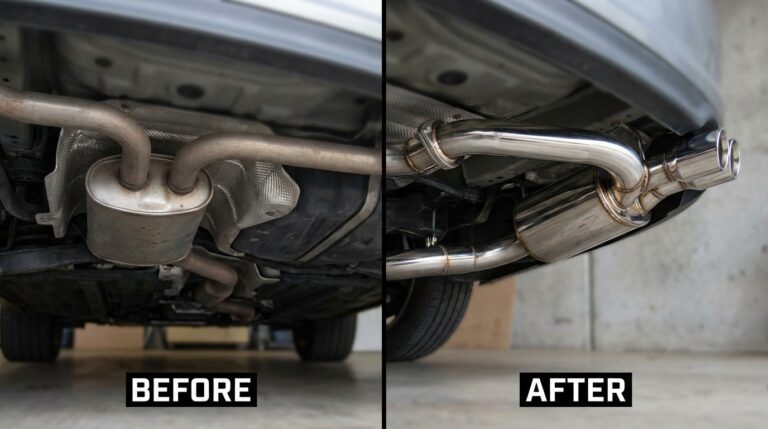
Exhaust modifications complement this air/fuel optimization. By releasing exhaust gases more quickly and with less resistance, a high-performance exhaust system reduces back pressure. The engine “breathes” better, resulting in a noticeable increase in torque and power at high RPMs. Sport manifolds, stainless steel pipes, and complete exhaust systems with matching mufflers are among the most common upgrades. For example, tuning a Golf GTI with an exhaust modification improves the sound while boosting performance, a topic covered in detail in [reference to previous article]. this technical resource.
The synergy between these two improvements—a sports air filter and an exhaust modification—optimizes gas flow and ensures enhanced engine performance. However, it’s crucial to ensure these changes comply with current legislation, particularly regarding noise and emissions. For a comprehensive overview of legal modifications and their effects, consult this guide on legal changes in FranceFinally, these adaptations often serve as a basis for higher steps such as ECU reprogramming.
ECU remapping and engine mapping: advanced techniques for effective power increase
ECU (Engine Control Unit) remapping is undoubtedly one of the most powerful and precise methods for increasing the power of a modern engine. It involves modifying the engine mapping, that is, the electronic parameters that control fuel injection, ignition, boost pressure, and engine management. This allows you to maximize the capabilities of the entire mechanical system without physically modifying the engine.
Optimized engine mapping provides a more consistent overall improvement in torque and power than a simple mechanical modification. Stage 1 tuning, which often incorporates ECU remapping along with a performance air filter and a free-flowing exhaust, is very popular for achieving quick and reliable gains. This type of tuning is detailed in this specialized file which explains precisely the advantages, limitations, and potential risks.
Engine remapping must be carried out by professionals using appropriate tools and carefully testing the new settings. A practical example: on a turbocharged engine, remapping will affect the turbo boost by increasing the blow-off pressure while precisely adjusting the amount of fuel delivered, thus preventing the risk of knocking and preserving the engine’s long-term reliability. Using a dynamometer to validate the modifications is strongly recommended.
However, this optimization requires a thorough understanding of the engine and its structural limitations. An overly aggressive engine map can compromise component longevity or render the vehicle non-compliant with homologated standards. To better understand the economic and technical implications, reading a full article dedicated to the subject is recommended. Engine remapping: price, gains and risks provides valuable expertise.
Controlled supercharging: turbo boost and superchargers increase torque and power
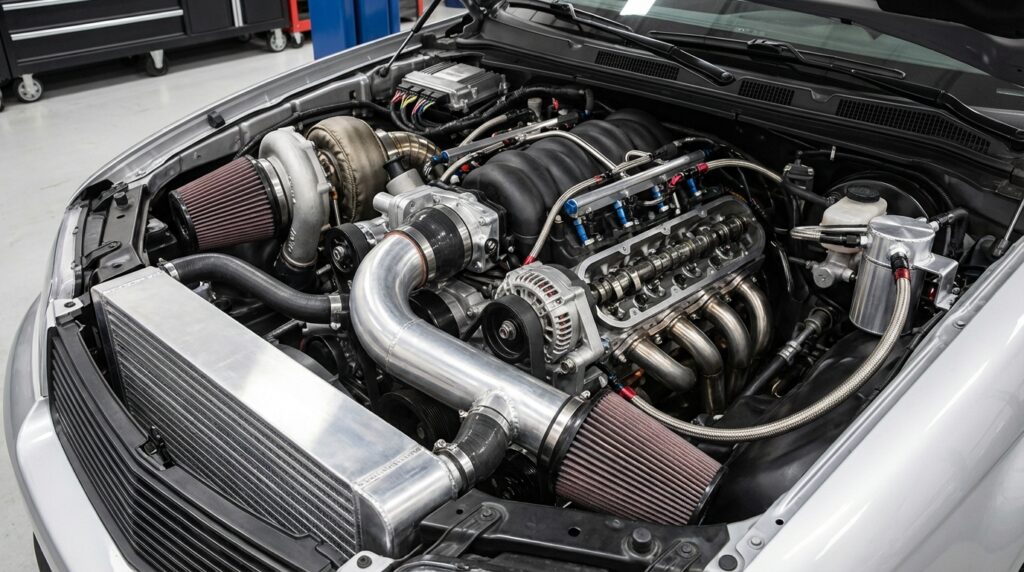
Supercharging is one of the main ways to significantly improve the power of an internal combustion engine. Whether it’s a turbocharger or a supercharger, these devices force a greater quantity of air into the cylinders, increasing the density of the air/fuel mixture and therefore the power developed with each combustion.
Turbo boost, in particular, is highly valued because it uses exhaust gases to spin the turbine, thus improving overall efficiency. Engine tuning through supercharging can involve replacing the stock configuration with a higher-performance turbo kit or electronically adjusting the boost via ECU remapping. This dual approach is often the key to achieving very high power levels without extensive mechanical modifications.
Superchargers, on the other hand, provide an instant boost, altering the driving experience by offering increased torque at low engine speeds. Implementing these systems requires a thorough analysis of thermal and mechanical constraints, as well as often essential modifications to peripheral components: optimized cooling, new engine management system, and appropriate exhaust modifications.
Here is a list of the main advantages and limitations of turbocharging in tuning:
- Benefits : significant increase in power, better engine response, improved torque at low and medium engine speeds.
- Constraints: Increased thermal management, potentially accelerated engine wear, significant installation and maintenance costs.
To learn more about the impact of turbo boost on power, see the complete guide on car tuning 2026 offers a comprehensive approach to the procedures and precautions to be taken.
Mechanical optimization and thermal modification: forged pistons, cylinder head, and high-performance cooling
Beyond electronic and intake solutions, mechanical optimization remains central to engine tuning. Improving performance requires better resistance to the pressure and temperature generated by increased power. The use of forged pistons, reinforced connecting rods, or an optimized cylinder head contributes to strengthening the engine to handle high combustion pressures.
Forged pistons are distinguished by their ability to withstand higher mechanical stresses than standard pistons. By maintaining their integrity even under heavy loads, they prevent breakage and ensure the continued performance gains achieved through turbocharging or engine remapping. These components are particularly prized in racing and extreme tuning, but can also be adapted for high-performance road use.
Furthermore, the modified cylinder head with optimized ports improves intake and exhaust flow, complementing the effect of the exhaust modification. Some tuners perform porting and polishing that further enhances airflow, resulting in a tangible increase in torque and power.
Finally, upgrading the cooling system is essential. The higher temperatures caused by turbocharging necessitate more efficient radiators, reinforced water pumps, and effective fans. Neglecting this step often compromises the engine’s overall lifespan.
| Component | Benefits | Common Use |
|---|---|---|
| Forged Pistons | High mechanical strength, increased durability | Extreme tuning, competition, turbocharged engines |
| Optimized Cylinder Head | Improved air/fuel flow, enhanced combustion | Sport engine tuning, torque improvement |
| Cooling System | Enhanced thermal management, overheating prevention | Heavy-duty use, supercharging, ECU reprogramming |
Electronics and motor control: sensors, management and safety in power optimization
Engine optimization isn’t limited to traditional mechanical and electronic modifications. Sensor monitoring and engine system safety are fundamental to ensuring a controlled and reliable power increase. Pressure, temperature, and knock sensors provide the electronic management system with real-time information on the engine’s condition. Their precise calibration is essential when increasing power through ECU remapping or reinforced mechanical components.
Replacing or upgrading sensors can provide more precise feedback to the engine mapping, particularly for managing turbocharging and preventing premature detonation. Integrating advanced engine management, often controlled by a programmable electronic unit, allows for extremely precise engine control, ensuring both performance and safety. For example, some systems continuously adjust the turbo boost based on environmental conditions, maximizing power while protecting the engine.
Taking environmental and legal standards into account is also essential. Tuners and professionals in the sector now offer solutions compatible with the latest aesthetic, noise, and emissions requirements, allowing for unrestricted daily use. For a comprehensive list of permitted modifications, visit this reference article.
Finally, electronic control also opens the way to innovations such as on-board telemetry, offering the pilot constant visibility into engine operation and early warnings in case of anomalies, thus enhancing safety during intensive engine tuning.
What is the best method to increase power without compromising reliability?
ECU remapping combined with an improved intake and exhaust system offers an excellent compromise between power gains and reliability, especially when carried out by professionals.
Is engine tuning legal in France?
Some modifications are legal under certain conditions, including those listed among the 15 permitted modifications, such as installing a sports air filter or a homologated exhaust system. Always consult local regulations before making any modifications.
What are the risks of an improperly performed ECU reprogramming?
An improperly calibrated remap can lead to overheating, premature engine wear, and reliability issues. It is crucial to entrust this operation to certified specialists.
Is it possible to improve the power of an engine without incurring a large expense?
Yes, solutions such as installing a sports air filter and modifying the exhaust are financially accessible and offer a noticeable improvement in performance.
What role does overeating play in increasing torque?
Supercharging increases the amount of air in the cylinders, allowing more fuel to be injected and generating greater engine torque, particularly effective at low and medium engine speeds.