Durability of the Wrap: How Long Does a Film Last?

Vehicle wrapping has established itself over the past several years as an essential solution for personalizing and protecting your vehicles. However, beyond the aesthetic aspect, the sustainability Adhesive film is a major consideration for all homeowners who wish to invest in this technique. Indeed, the question that frequently arises is: How long does a vehicle wrap film actually last before succumbing to the effects of time and wear? This issue goes beyond the simple duration indicated by manufacturers. It encompasses a multitude of factors related to the quality of the film, exposure conditions, maintenance, and the chosen application methods.
Technological advances in the field of adhesive film have made it possible to significantly increase the longevity While various types of vehicle wraps exist, regional and climatic conditions, as well as mechanical stresses, play a crucial role. A film applied in an urban environment, subjected to pollution, UV rays, and temperature variations, will have a different resistance than a film used primarily in a garage. This distinction is essential for understanding the limitations and attributes of a durable vehicle wrap.
Finally, durability also depends on the primary function sought: is it invisible protection like a transparent PPF film, or an aesthetically pleasing colored or chrome-effect wrap? Technical expertise and meticulous material selection have a direct impact on resistance, appearance over time, and the ease of any future repairs. This article aims to analyze these aspects in detail, using precise data and strategic advice to optimize the lifespan of your vehicle wrap.
The determining factors of the durability of adhesive film for automotive wrapping
The durability of a vehicle wrap film is not a fixed value but results from a complex interaction between several elements. The film’s intrinsic quality, its thickness, the type of adhesive, the surface finish, and the type of pigment are fundamental parameters. These characteristics determine the film’s mechanical resistance, its ability to retain its properties over time, and its resistance to external aggressions.
A high-quality adhesive film, made from innovative polymers and incorporating UV-blocking agents and reinforced layers to limit abrasion, will offer greater longevity. For example, films with a satin or matte finish often have a specific coating that stabilizes the color and prevents premature fading from sunlight. Conversely, more economical films often offer a shorter lifespan and less resistance, resulting in peeling, flaking, or fading after only a few years.
Besides product quality, application conditions also play a crucial role. Installation by a qualified professional, using appropriate techniques such as wet vs dry applicationThis ensures optimal adhesion and prevents the formation of creases or bubbles that would weaken the protective layer. A poorly applied wrap will experience accelerated wear, affecting the overall durability of the film.
Finally, the operating environment significantly impacts durability. A vehicle frequently exposed to extreme weather conditions, such as intense heat or persistent humidity, will see its adhesive film deteriorate more quickly. Similarly, road pollution and daily mechanical friction alter the surface of the wrap, accelerating wear and requiring more demanding maintenance.
The parameters below clearly summarize the key factors of resistance and longevity:
- Film quality and thickness Thicker films, such as PPF, offer better protection.
- Type of glue Some glues offer a strong hold without damaging the paint.
- Finishing : matte, satin or glossy influence the visible wear over time.
- Installation methods : compliance with protocols and conditions of application.
- Climatic conditions : exposure to UV rays, rain, pollution and temperature.
- Regular maintenance Proper cleaning to prevent premature deterioration.
It is on this technical basis that you must rely when choosing your film and assessing its actual durability over time. To deepen your knowledge of the materials and tools essential for durable wrapping, feel free to consult this complete analysis.
Understanding the longevity of different finishes for automotive wrapping
Vehicle wrapping is not a uniform technique: the longevity The performance of a film varies greatly depending on the style and finish chosen. The diversity of effects and materials, such as metallic, satin, or matte films, directly influences resistance and aesthetic appeal, in addition to intrinsic mechanical qualities.
Glossy finishes, for example, offer a very attractive visual effect but can be more susceptible to micro-scratches and marks left by daily wear. They require more rigorous maintenance to preserve their shine and prevent dulling of exposed areas. Conversely, matte and satin finishes are more resistant to micro-abrasions and more effectively conceal minor imperfections. This aesthetic choice has a direct impact on the visible wear and the film’s long-term freshness.
Carbon fiber or chrome effect films are an interesting example when it comes to aesthetic durability. Chrome wrapping offers a spectacular metallic look, ideal for giving your vehicle a premium and distinctive appearance. However, this finish requires more specialized application skills and specific protection to prevent cracking or premature peeling caused by thermal and mechanical stresses. Chrome wrapping is often accompanied by an additional protective layer available to improve resistance and durability. Striking examples can be found via this dedicated gallery.
The transparent PPF (Paint Protection Film), meanwhile, is considered the benchmark in terms of protection And sustainabilityIts primary purpose is not customization, but the optimal preservation of the original paintwork against impacts, corrosion, and potential scratches. A high-quality PPF film, like those detailed on this specialized page, can offer a lifespan of up to 10 years, provided it is regularly maintained and perfectly installed.
The growing expertise in manufacturing modern films also includes self-cleaning and hydrophobic coatings, significantly improving dirt resistance and limiting the adhesion of pollutants to the surface. These innovations play a crucial role in the long-term aesthetic appeal of the vehicle wrap and its ability to maintain a good visual condition for many years.
In summary, longevity varies according to:
- The aesthetic finish (matte, satin, glossy, chrome…)
- The film’s ability to resist micro-scratches and mechanical damage
- The presence or absence of an additional protective layer
- The type of use and care given to the film during its life cycle
Maintenance and factors influencing the resistance and wear of the adhesive film
The durability of the wrap depends not only on the film itself but also, and crucially, on the maintenance practices to which it is subjected. External aggressions combined with deficiencies in vehicle care significantly accelerate thewear of the covering. To maximize longevity, it is essential to adopt a regular maintenance schedule and appropriate methods.
Cleaning should be gentle and done with non-aggressive products specifically designed for adhesive films. Using solvents, harsh detergents, or abrasive brushes can cause micro-scratches or damage the protective coating. Owners should prioritize hand washing and dedicated sprays that respect the surface and enhance UV protection.
Another often overlooked aspect is the speed of intervention in the event of an impact or significant soiling. Dirt deposits or insects that remain stuck to the wrap for several days can cause localized damage. Prompt intervention helps limit the marks and chemical damage.
Beyond weekly maintenance, the operating environment also affects durability. Mechanics recommend parking in the shade, limiting prolonged exposure to sunlight, and frequently checking the film’s condition. The diversity of geographical areas necessitates specific adjustments: a film in a very sunny region will require different care than one in a temperate zone.
Here is a complete list of best practices to preserve the film’s durability:
- Gentle and regular cleaning with dedicated products.
- Avoid mechanical scratches (manual washing rather than automatic rollers).
- Monitoring for folded or poorly laid areas.
- Rapid intervention in case of stains or impacts.
- Store protected from UV rays and weather conditions when stationary.
- Use of specific anti-UV treatments if possible.
Additional advice and technical information are available for anyone wishing to refine their methods and adopt a professional interview approach over the long term; see in particular on [website/link]. This article is dedicated to guarantees and protections..
The limits of coating durability and conditions of accelerated wear
Despite the excellence of current materials and the care taken in their manufacture, adhesive film for vehicle wrapping remains subject to natural and mechanical stresses that can reduce its durability. It is crucial to acknowledge these limitations in order to best manage expectations and anticipate replacement needs.
Major assaults are primarily linked to:
- Prolonged UV exposure : even with effective anti-UV treatments, prolonged exposure leads to progressive chemical degradation which eventually alters the colours and structure of the film.
- Repeated mechanical shocks : the resistance of the film has thresholds, particularly in areas of frequent impact such as bumpers, doors and sills.
- Extreme temperatures Intense cold makes the film more brittle, while excessive heat can cause softening and peeling.
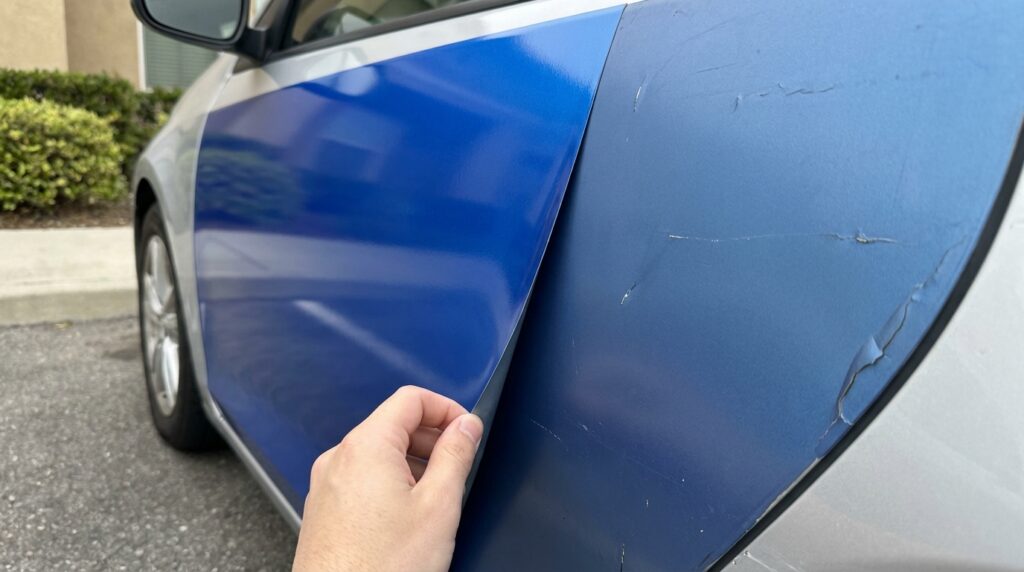
- Bad pose : creases, poorly managed bubbles or a lack of adhesion significantly reduces the lifespan.
High-risk areas require special attention during installation and use. Technical expertise is essential for this, often justifying the use of a certified professional in accordance with the relevant standards. standards in forceChoosing a recognized workshop guarantees not only better durability but also appropriate support in case of defects, as presented in the customer reviews and feedback from experience.
A comparative table summarizes the main wear factors and their expected consequences:
| Wear factor | Impact on sustainability | Recommended solutions |
|---|---|---|
| Intense UV exposure | Discoloration, weakening of the film | Use of films with UV protection, regular washing |
| Repeated impacts and friction | Micro-cracks, tears | Thick PPF-type film, quick repairs |
| Bad pose | Takeoff, bubbles visible | Professional installation validated by certification |
| Extreme weather conditions | Cracking, deformation | Selection of films adapted according to the region |
| Inadequate maintenance | Loss of shine, premature wear | Compliance with cleaning protocols |
Understanding these limits allows us to better anticipate the evolution of the covering and to adapt its maintenance and protection as much as possible, thus guaranteeing a balance between aesthetics and performance over time.
Technological innovations to improve the lifespan of adhesive films
Research and innovation in the field of adhesive films for automotive wrapping have been progressing rapidly for several years. These technological developments primarily aim to maximize the sustainability, there resistance and ease of maintenance while offering an ever-richer aesthetic range.
Among the major advances is the integration of nanotechnology layers into the film composition. These smart coatings increase protection against UV rays, as well as against corrosive agents and micro-scratches. Some films now feature a hydrophobic, self-cleaning finish that effectively repels dust and dirt, thus reducing the frequency of washing and limiting the impact of…effect of time.
Furthermore, manufacturers are increasingly offering films that combine several functions: impact protection, stain resistance, and even infrared ray filtration to limit the temperature rise of the vehicle body. These innovations play a crucial role in the overall durability of the wrap and in user satisfaction.
Digital solutions for monitoring and tracking installed films also optimize long-term maintenance. Thanks to sensors and connected devices, it becomes possible to monitor the film’s condition, assess its wear, and anticipate necessary interventions, thus guaranteeing maximum efficiency over several years.
For those who wish to venture into mastering these techniques, professional training remains key. Deepening one’s skills by following a specialized training allows for perfect control of the issues involved in choosing the film and its installation, systematically improving the longevity of the covering.
Here is an overview of key innovations that promote increased sustainability:
- Nanotechnology coatings that are UV and scratch resistant
- Hydrophobic self-cleaning films
- Multifunctional coveralls (protection, stain resistance, thermal filtration)
- Digital tracking and traceability systems
- Optimization of assisted installation techniques (e.g., homogeneous heating, calibrated pressure)
These innovations are poised to further transform the vehicle wrapping market and push back the boundaries established so far. To discover impressive examples of sustainable projects, visit this portfolio which perfectly illustrates the quality and longevity of the best-made films.
What is the average lifespan of an adhesive film for vehicle wrapping?
The average lifespan generally varies between 5 and 10 years depending on the film quality, installation, and maintenance. High-quality films like PPF can last up to 10 years with proper care.
How can I extend the lifespan of my vehicle wrap?
To extend the life of your vehicle wrap, it is essential to maintain it regularly with suitable products, avoid prolonged exposure to the sun, and have the film installed by a certified professional.
Can the wrap damage the original paintwork?
When properly applied with a high-quality film by a certified installer, vehicle wrapping protects the original paintwork without damaging it. Furthermore, some films protect the bodywork against micro-scratches and impacts.
What is the difference between chrome wrapping and PPF wrapping in terms of durability?
Chrome wrapping is primarily aimed at aesthetics with a lifespan that varies depending on the installation and additional protection, while PPF aims for maximum protection and has a longer lifespan, thanks in particular to its thick and resistant layers.
How to choose an installer to guarantee the durability of the vehicle wrap?
It is advisable to choose an installer with recognized certifications and labels, as explained in This item, in order to ensure a professional installation and a perfectly fitted film.