Focus ST Tuning: Complete Ford Modifications


The Ford Focus ST, renowned for its dynamism and agility, is often the ideal base for a tuning project aimed at maximizing performance and personalization. This sporty compact car appeals to a diverse audience, ranging from driving enthusiasts to car tuning aficionados looking to optimize every aspect of their vehicle. The quest for a complete Focus ST upgrade goes beyond simply increasing power; it also involves a balanced improvement of the transmission, chassis, electronic management system, as well as aesthetics and comfort. This process requires a thorough understanding of the possibilities offered by this iconic Ford model, establishing a strong link between mechanical performance and visual identity.
In a world where every detail counts, preparing a Focus ST becomes a meticulous process blending mechanical expertise, judicious choices of modifications, and adherence to technical constraints. Focus ST tuning here exemplifies the perfect symbiosis between technological innovation and automotive passion, offering an enhanced and personalized driving experience. The adoption of specific components, engine remapping, and the integration of tailored aerodynamic elements all contribute to unlocking the Ford’s almost latent potential, while maintaining an essential balance between power and reliability. More than just an assembly of parts, this comprehensive Ford preparation results in a renewed perception of the vehicle, adapted to both the demands of the track and everyday driving.
Engine technical optimization for Ford Focus ST preparation
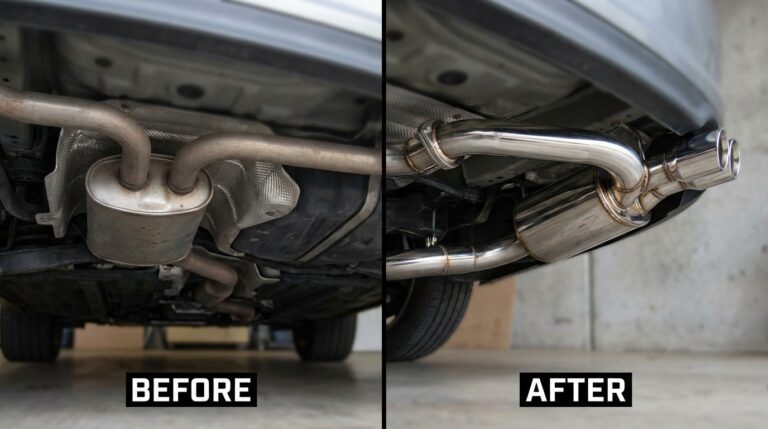
The engine is the foundation of any performance upgrade, and the Focus ST is no exception. Under the hood, this vehicle features a turbocharged EcoBoost engine capable of remarkable output straight from the factory, but which can reveal even more through targeted modifications. Engine tuning often begins with the installation of an improved air intake system and a sports exhaust, ensuring better engine breathing. These modifications are fundamental to maximizing combustion and optimizing airflow, a fact corroborated by numerous technical analyses described in this article on sports air filters.
Furthermore, engine mapping reprogramming is essential. This step involves reworking the engine control unit’s parameters to modify turbocharger management, fuel injection, and ignition timing. It allows for increased power while controlling fuel consumption and engine temperature. Conversely, overly aggressive remapping can compromise mechanical longevity, hence the importance of consulting a specialist capable of adapting the software strategy to the specific mechanics of the modified vehicle. In addition, installing higher-performance turbochargers or additional cooling systems helps ensure a more responsive engine and increased durability during intensive use.
For a complete upgrade, integrating a digital engine management system or an additional control unit is a wise choice. These modules allow for finer control of engine parameters via the OBD interface, also facilitating a return to the original configuration if needed. Let’s not forget the importance of fuel quality, especially high-octane fuels, which are essential for optimal performance of engine modifications.
Chassis and suspension: the foundations of a performance-prepared Ford Focus ST
Dynamic handling and safety are two key considerations when preparing a Ford Focus ST. Chassis optimization goes beyond simply increasing power; it also encompasses the vehicle’s ability to channel that power effectively through appropriate road holding and stability.
The choice of adjustable sport suspension is among the major modifications. By replacing the original shock absorbers with specific models, such as coil springs or coilovers, improved handling is achieved on winding roads or uneven surfaces. Variable damping allows the stiffness to be adapted to the driving mode, shifting from acceptable comfort to a firmer feel during sporty driving. Simultaneously, the reinforced anti-roll bars help reduce body roll in corners, which is a key aspect of the complete Ford tuning package.
The chassis modifications also include improvements to the suspension and a reduction in unsprung weight. Replacing the original wheels with lightweight alloys improves acceleration and braking. The use of specific high-performance tires completes this optimization, enhancing grip on both dry and wet surfaces.
To ensure optimal control, the front and rear suspension geometry must be regularly recalibrated according to any mechanical or structural modifications made. A concrete example is adjusting negative camber, which increases the tire contact patch with the road in tight corners. Automotive tuning professionals also recommend integrating chassis reinforcement kits, particularly at the suspension mounting points, for increased rigidity during intensive sport use.
Aesthetic and aerodynamic personalization: the visual signature of the Focus ST
The Ford Focus ST wouldn’t be complete without aesthetic customization that reflects its mechanical power and the driver’s individuality. Aesthetic tuning encompasses several areas just as essential as the mechanics, blending visual innovation with aerodynamic functionality.
The choice of vehicle wrapping, offering a protective and customizable coating, is now a popular solution. This is based on innovations in the adhesive film sector, as specialists have mentioned in This article is about KPMF and wrapping.The Ford Focus ST can be finished in matte, glossy, or chameleon-effect finishes for a unique look. This process also protects the original paint from external damage while allowing for easy removal if needed.
Aerodynamics is also a key focus, with the addition of elements such as wings, diffusers, or front splitters, which improve downforce without adding weight. Choosing the right tuning wing is a balancing act between aesthetics and performance, as detailed in this guide dedicated to tuning spoilersA well-designed aerodynamic insert can even reduce drag, which positively impacts fuel consumption and top speed.
The custom-designed LED headlights contribute to this unique look, as do the wider, lighter racing wheels, which enhance the silhouette without compromising performance. To create an interior ambiance that complements the exterior, personalized seats, trim, and steering wheel complete the experience, transforming every journey into a sporty and stylish immersion.
Braking and transmission systems: securing power in the Ford Focus ST preparation
The increased power resulting from engine modifications necessitates rigorous adaptation of the braking and transmission systems. Without adequate braking, safety is compromised and performance cannot be fully realized. Choosing high-end equipment specifically designed for the Focus ST is crucial.
Sport brake kits often include larger, ventilated discs paired with high-performance brake pads. The aim is to increase the friction surface area and heat dissipation, thus preventing a loss of efficiency during repeated braking, especially during sporty driving or on the track. The installation of optimized ABS systems and braided stainless steel brake lines further enhances braking precision and consistency.
On the transmission side, the gearbox can benefit from reprogramming or conversion to a six-speed manual to improve gear ratios and responsiveness. Adding a limited-slip differential (LSD) is also essential to fully utilize engine power in corners and improve traction. This reduces wheel spin and stabilizes handling.
The table below summarizes the key components to consider for improving braking and transmission during a complete Focus ST upgrade:
| Component | Function | Expected effect |
|---|---|---|
| Sport ventilated discs | Optimized cooling | Reduced degradation during repeated braking |
| High performance inserts | Increased braking force | Better grip and efficiency on the road |
| Limited slip differential (LSD) | Power distribution to the wheels | Improved traction and cornering stability |
| Optimized manual gearbox | Improved responsiveness | Faster and more precise gear changes |
Electronic management and modularity of modifications for controlled Focus ST tuning
Modern Ford Focus ST tuning undoubtedly relies on electronic management. This technical dimension, facilitated by the centralization of digital controls, allows for fine-tuning of all engine, suspension, and even driver assistance parameters. Thus, a “stage 1” or “stage 2” remap corresponds to a series of software-calibrated modifications.
Using reprogrammable control units or connected tools facilitates modular modifications. The driver can thus choose the power level or throttle response according to the specific needs of the moment, alternating between road use and a track session, for example. This flexibility greatly enhances car tuning by offering an adaptive experience.
Electronic fuel injection and integrated turbo management prevent the risks associated with overheating or operating outside of its rated range. Multiple sensors in the Focus ST continuously transmit data to the ECU, ensuring real-time performance optimization. These technological advancements help protect the engine while maximizing power output.
Beyond mechanical aspects, customization can extend to the electronic mapping of driver assistance systems (stability control, traction control, etc.), allowing the car to be adapted to specific conditions and driving style. Mastering these electronic systems has become an essential skill for anyone considering a complete and safe preparation.
To draw inspiration from successful projects, it is helpful to consult case studies from other preparations such as that of the Megane RS Trophy R Tuning Preparation or the BMW M3 preparation stages 1, 2 and 3.
What are the main advantages of engine remapping on a Focus ST?
Engine remapping optimizes turbo management, fuel injection, and ignition to increase power, improve throttle response, and sometimes reduce fuel consumption. It enhances vehicle performance while maintaining its calibration to preserve reliability.
How to choose the right suspension for a modified Focus ST?
It is important to select adjustable sport suspensions that match the intended use: road, track, or mixed. The damping and spring settings must allow for a compromise between comfort and performance, while ensuring optimal road holding.
What role does the limited-slip differential play in performance?
The limited-slip differential improves traction by distributing power more effectively to the drive wheels, especially when cornering. It prevents excessive wheelspin and enhances control, which is essential in a tuned sports car like the Focus ST.
Why use a wrap rather than repainting the car?
Vehicle wrapping offers a quick, reversible, and protective way to customize your car’s bodywork. It’s a less expensive method than a full paint job, with numerous aesthetic options such as matte or chameleon effects. Furthermore, it preserves the original paint by limiting its exposure to external elements.
Can the power of the Focus ST be adjusted depending on the roads or tracks?
Yes, thanks to advanced electronic management, it is possible to adapt the engine mapping to different driving modes via reprogrammable units, offering options for smoother driving in the city or sportier driving on the track.