Removing Vehicle Wrap: How to Remove It Without Damaging the Paint

THE car covering has become a popular solution for customizing the appearance of vehicles or protecting them from external damage. However, when it comes to carrying out a removal coveringMany owners fear damaging the underlying bodywork. Indeed, removing a vinyl wrap without damaging the paintwork requires a methodical approach, a precise understanding of the materials used, and mastery of the appropriate removal techniques. This process, far from being trivial, impacts both the aesthetics and the value of the vehicle. For this reason, a thorough study of how the process works is essential. take-off covering is essential, particularly if one wishes to preserve the paint protection offered by the adhesive film over the long term.
In parallel, car maintenance plays a crucial role: the longevity of the finish and the ease of removal depend heavily on it. Modern vinyl wraps are now available in a multitude of textures – from matte to gloss, including satin and carbon fiber imitations – and each type presents its own specific challenges when it comes time to remove it. This diversity increases the technical complexity of the process and requires precise adaptation to the properties of the installed wrap. Other factors, such as the age of the wrap and the environmental conditions to which it has been exposed, will also influence the success of the removal.
In this article, we analyze in detail the proven methods for remove covering safely, avoiding common mistakes that can cause scratches, discoloration, or other permanent damage to the original paint. We also cover the best tips for maintaining a vehicle with a wrap to optimize its future removal, as well as the available tools for performing the operation, whether by professionals or DIYers. Finally, we’ll focus on the importance of choosing a high-quality wrap film to facilitate this essential process, preserving the car painting which forms the basis of all aesthetic personalization.
Understanding the specifics of the wrapping film is essential for successful removal without damaging the paintwork.
Vehicle wrap film, often called adhesive vinyl film, is designed to cover a car’s bodywork, providing both aesthetic and physical protection. However, not all vehicle wrap films are created equal, and their characteristics significantly influence the removal method. For example, a high-quality film, like those offered in specialized workshops, has a chemical composition and adhesion strength optimized to protect the paint underneath while allowing for easier removal.
One of the first concepts to grasp before tackling the take-off covering The nature of the original paint is a key factor. Some paints are more fragile or more sensitive to the solvents used for removal. Therefore, an unsuitable choice of chemical or technique can irreparably damage the bodywork. It is crucial to identify this factor beforehand. Furthermore, the type of finish – matte, gloss, or satin – influences how the film adheres and peels off. Some matte films tend to leave more residue, while gloss films often allow for cleaner removal.
The longevity of the wrap also plays a major role. A film applied several years ago will have hardened, and its adhesive may have dried out, making removal more difficult and risky. This explains why regular maintenance, based on car paint care and proper washing extends the lifespan while facilitating future removal. With this in mind, it is helpful to consult resources such as those offered on specialized websites that detail the reversibility of the wrap and how to restore the original paint.
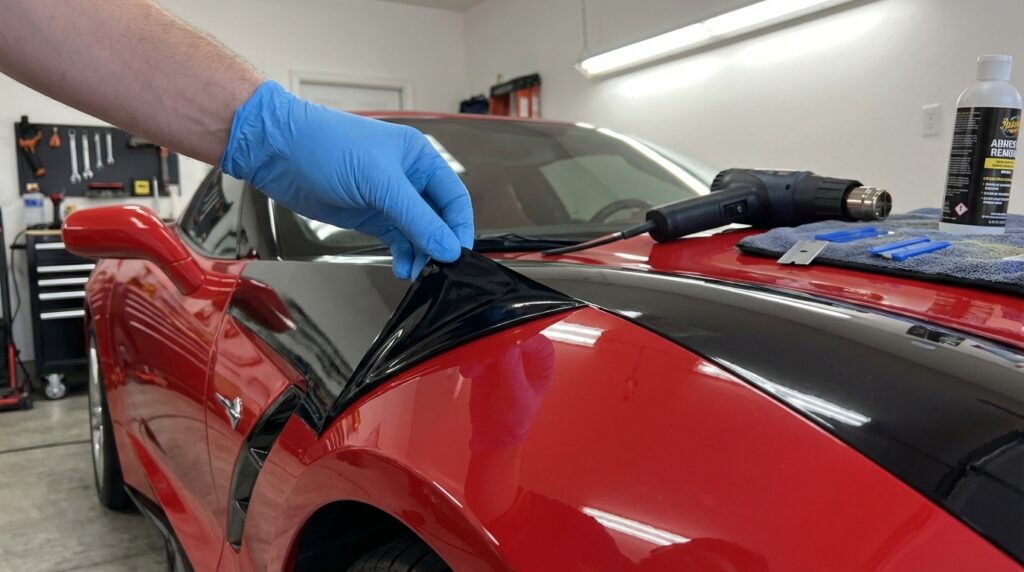
It is also crucial not to underestimate the importance of the tools used. Flexible plastic spatulas, professional heat guns, or sprays specifically designed for adhesive films are essential to avoid scratching the bodywork. Each tool has a specific function in the removal process: heating the film to soften the adhesive makes peeling easier, while the spatula allows you to gently lift the edge of the wrap without damaging the paint.
Mastering these technical parameters ensures a complete removal without damaging the bodywork, guaranteeing intact paint protection for the next step, whether for a new film application or a return to the original paint. Enthusiasts and professionals alike are advised to also study the differences between painting and wrapping to best adapt their methods, the elements of which are explained in analyses such as those described in What is the difference between a paint job and a wrap?.
Vehicle wrap removal techniques to peel off the film without damaging the paintwork
Choosing the right technique for remove covering This is a crucial step. Several methodologies are currently in use, varying according to the type of film, its age, and the conditions to which it has been exposed. The common principle remains the controlled application of heat to soften the adhesive and the manual or mechanical removal of the film. Here are the main steps and methods to follow:
- Gradual heating of the film Using a heat gun or a heat lamp to slowly heat the surface can help loosen the adhesive. The temperature should be moderate (between 40 and 60°C) to avoid damaging the underlying paint.
- Use of appropriate tools Flexible plastic spatulas can be used to gently lift the film, especially on curved areas and corners. Avoid metal tools that could scratch the paintwork.
- Application of specific solvents Some adhesives can leave residues that are difficult to remove. Solvents specifically designed for this purpose are available. take-off covering must be chosen carefully so as not to damage the paint.
- Progress and patience : Removal should be done slowly, pulling the film at an angle of approximately 45 degrees to maximize detachment without pulling abruptly.
Combining these techniques minimizes the risk of damage and ensures a clean job. It’s important to note that in some cases, particularly with aging or poorly maintained films, removal can be more difficult.
To illustrate these methods, we can examine the detailed procedure in installation without dismantlingwith its dedicated advice on the care involved in removing films specifically designed for complex surfaces. The use of heat and traction angles are particularly emphasized to optimize removal.
Here is a summary table of the techniques with their advantages and disadvantages:
| Technical | Benefits | Disadvantages |
|---|---|---|
| Moderate heat (hot air gun) | Softens the adhesive, makes removal easier | Risk of deformation or overheating if used incorrectly |
| Flexible plastic spatula | Protects the paint, easy to handle | Less effective with very sticky adhesives |
| Specific solvents | Removes adhesive residue | Pay attention to paint compatibility |
| Gradual manual withdrawal | Precise takeoff control | Longer time, requires patience |
Precautions and common mistakes to avoid when removing vehicle wrap to prevent damage to the paintwork
Removing a vehicle wrap, while seemingly simple, involves several pitfalls. The slightest inattention or the use of rough methods can lead to irreversible damage to the bodywork, including deep scratches, paint peeling, or adhesive residue that is difficult to remove. To effectively protect your car, it is essential to follow a strict protocol.
First, never force the film to peel off by pulling violently. This can damage the paintwork, especially on edges or curved areas where the seal between the wrap and the metal is delicate. Removal should always be controlled and gradual.
Also avoid using metal tools such as screwdrivers or knives, which are very abrasive to the bodywork. Similarly, the careless use of unsuitable solvents can lead to discoloration or degradation of the paint layer. It is therefore recommended to use only products that have been tested and are specifically designed for this purpose.
Finally, don’t neglect the post-removal maintenance phase. It’s essential to thoroughly clean the bodywork to remove all adhesive residue and apply a specific automotive paint treatment. This step will restore the shine and protect the surface, thus preventing premature deterioration.
The mistakes to avoid can be listed as follows:
- Pull abruptly on the covering without heating it beforehand.
- Use metal or abrasive tools.
- Neglecting the application of specific solvents for residues.
- Neglecting the cleaning and care of the paint after removal.
- Removing an old vehicle wrap without taking special precautions.
To delve deeper into these recommendations and understand the long-term implications, particularly how the coating ages, I invite you to consult the full analysis on How does the vehicle wrap age?You will also find advice on how to extend the life of the wrap and optimize the timing of its removal.
How to prepare your car before removing the wrap to ensure paint protection
Rigorous preparation before proceeding with the removal covering This is essential to successfully complete the operation without compromising the paintwork. It involves ensuring both the best possible adhesion of the film during its use and optimizing its future removal.
First and foremost, a thorough vehicle wash is essential. This removes dirt, dust, and wax, which could make the film porous or poorly adhered in certain areas. The accumulation of these elements can complicate the take-off covering because they promote stronger or more uneven adhesion.
Also, avoiding prolonged exposure to extreme heat or cold enhances the film’s durability and facilitates its removal. Protecting your vehicle from UV damage through regular maintenance, including the use of specific automotive paint care products, preserves the integrity of the paint and the wrap.
It is wise to plan the operation in spring or autumn, when temperatures are moderate, thus avoiding the peaks that are too hot or too cold and complicate the work.
Finally, keeping a log of the wrap’s condition (application date, film type, maintenance interventions) can help anticipate the optimal lifespan of the wrap before removal. For further information on this topic, see the study on How vehicle wrapping preserves resale value, where aspects related to paint protection and durability are extensively developed.
Key steps in preparation before withdrawal:
- Washing and decontamination of the bodywork.
- Application of an automotive paint treatment to strengthen the surface.
- Visual inspection of the overall condition of the covering film.
- Removal will be planned according to suitable weather conditions.
- Selection of specific tools and products for removal.
Professional vs. DIY solutions for removing car wrap without damage
The choice between professional vehicle wrap removal and DIY (do-it-yourself) removal depends on several factors: technical skills, available equipment, the condition of the film and paint, and also budget. The market has grown significantly in recent years, offering a wide range of options for removing vehicle wrap without damaging the paintwork.
Hiring an expert often guarantees impeccable results thanks to the use of high-end professional equipment and in-depth knowledge of various techniques. A specialist has perfect control over heat application, the use of appropriate solvents, and the handling of tools, which significantly reduces the risk of damage. Furthermore, their ability to diagnose the type of paint and vinyl wrap optimizes the choice of removal methods.
On the other hand, DIY removal appeals to many enthusiasts and homeowners looking for cost-effective solutions. To succeed, it’s essential to have the right equipment (a quality heat gun, flexible plastic spatulas, and specific solvents) and to meticulously follow the steps detailed above. You’ll also need to allow plenty of time and have the patience necessary to avoid fatal mistakes.
To choose the right professional, it’s advisable to consult customer reviews and experiences available online. Platforms like Customer reviews to find the best vehicle wrapping workshop help to make an informed choice based on the quality of service offered.
Here is a quick comparative table of the advantages and limitations of each approach:
| Option | Benefits | Disadvantages |
|---|---|---|
| Professional | Expertise, professional equipment, guaranteed results, time savings | Higher cost |
| DIY (Do It Yourself) | Economy, autonomy, personal satisfaction | Risk of error, time required, need for appropriate equipment |
Finally, it is advisable to be well-informed about the different film options and their specific characteristics, for example through articles dedicated to Wing wraps to accentuate the lines of your car or even chrome and metallic finishes for a premium and durable look chrome and metallic covering.