Tuning Civic Type R : Complete JDM Preparation


In the exciting world of automotive tuning, the Civic Type R embodies the very essence of a Japanese sports car ready to be enhanced by a complete JDM build. This approach, deeply rooted in Japanese culture, combines precise technical modifications with a distinct aesthetic style, paying tribute to the legacy of Japanese sports cars. The Civic Type R, already known for its outstanding performance and aggressive design, becomes a perfect canvas to express the personalization and technical mastery sought by enthusiasts. When it comes to tuning the Civic Type R, you enter a world where every modification—from the engine to the bodywork and suspension—is designed to maximize power, handling, and the unique look of this iconic vehicle.
This quest for performance goes through a series of steps, each crucial to ensuring consistency between efficiency, reliability, and compliance with current standards. Fans of a complete JDM build on their Civic Type R rely on technical know-how combined with genuine passion, which is reflected in meticulous choices of replacement parts, fine-tuning of the engine, and aerodynamic adjustments. Added to this is aesthetic customization that enhances the aggressive and sporty silhouette of the Type R while reinforcing its road presence.
By combining these elements, the result is a revamped Civic Type R that is more powerful, more precise, and above all faithful to the JDM spirit. In this article, we will explore these different aspects of Civic Type R tuning in detail to understand the technical and aesthetic levers that allow for a complete and balanced build. Whether it’s engine modifications, adapted suspensions, or aerodynamic improvements, each step deserves rigorous attention to transform this uncompromising sports car into an ultimate performance machine.
Engine Optimization for Increased Power on the Civic Type R JDM Tuning
The heart of any tuning build lies in the engine, and for the Civic Type R, this area is essential to fully exploit the potential of this Japanese sports car. The K20C1 block, a stock 2.0L turbocharged engine, already delivers very satisfactory performance. However, the pursuit of higher power leads to comprehensive modifications that respect both the mechanics and the sporting goals of the tuners.
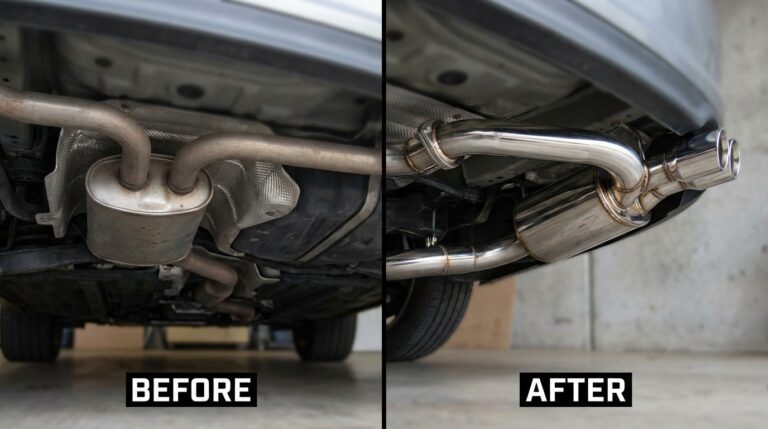
The first step often involves installing a decatted exhaust system, allowing for better gas evacuation and a notable power gain. However, questions remain regarding the legality of decatting on public roads: this article details the ins and outs of this practice in France. Once this system is optimized, the next step is ECU remapping, which precisely adjusts the engine map to fully exploit the new capabilities of your Civic Type R. Using a tuning ECU calculator allows harmonizing fuel injection, turbo pressure, and ignition timing, thereby generating a controlled increase in power.
Adding a more efficient intercooler is also a key element, especially to avoid overheating during sporty driving. This component improves the cooling of the air compressed by the turbo, which translates into better combustion and a smoother power increase. Finally, moving to a stage 2 often allows integrating an optimized turbo and adapted engine management to exceed 350 horsepower, compared to about 320 originally.
To summarize, engine preparation for the Civic Type R in JDM tuning relies on a coherent set of improvements:
- Installation of a decatted or adapted exhaust
- ECU remapping with an adapted tuning calculator
- Cooling enhancement with an oversized intercooler
- Stage 2 upgrade for increased and consistent power
- Use of reinforced parts like a lightened flywheel or high-performance injectors
This methodology guarantees effective engine preparation, avoiding risks of failure while maximizing delivered power. Each modification is designed with reliability and maximum optimization in mind, thus meeting the rigorous standards of JDM tuning.
Suspension and Handling: An Essential Pillar of Civic Type R Tuning
Improving the suspension plays a strategic role in the complete JDM build of the Civic Type R. Indeed, the increased power and driving precision demand exemplary road holding. The original suspension system, designed for an excellent compromise between comfort and performance, shows its limits once advanced tuning is undertaken. It is therefore crucial to revisit this aspect to ensure that the car responds perfectly to intensive demands.
Civic Type R suspension tuning generally involves adopting adjustable dampers and short springs, allowing height and stiffness adjustment depending on the intended use: track, daily, or rally. The integration of reinforced anti-roll bars also helps reduce body roll in corners, offering neutral and responsive handling. The importance of this technical optimization is reflected in the feeling of precision on winding roads and increased cornering speeds.
Coilovers are a preferred solution among JDM tuners. In addition to fine-tuning the suspension, they allow better weight distribution and optimal tire contact with the road. The quality of the dampers is also an essential factor; high-end models from reputed Japanese brands are favored for their durability and consistent performance.
Note that this build sometimes needs to be accompanied by complementary adjustments to the front and rear suspension geometry to maximize maneuverability and avoid understeer or oversteer phenomena. Adjusting caster, camber, and wheel alignment thus becomes an indispensable success factor.
A summary table of the main suspension improvements in a Civic Type R tuning:
| Modification | Objective | Expected Effect |
|---|---|---|
| Coilovers | Height and damping adjustment | Adjustable comfort and better grip |
| Reinforced anti-roll bars | Reduction of lateral roll | Increased stability in corners |
| Geometry adjustment (camber, caster) | Chassis behavior optimization | Improved directional precision |
| High-end dampers | Durability and performance | Consistent responsiveness on varied terrain |
A suitable suspension significantly strengthens the overall performance of the vehicle, especially in demanding sporty driving situations. This expertise is based on a delicate balance between necessary stiffness and enjoyable driving dynamics, which is fundamental in the context of a JDM build aiming for optimal performance on both circuit and road.
Aerodynamic Optimization: Keys to Improving Stability and Performance of the Civic Type R
Following the work on mechanics and suspension, aerodynamics represents a crucial step in the complete JDM build of the Civic Type R. The goal is twofold: improve high-speed stability and reduce drag to increase top speed while maintaining energy efficiency.
Aerodynamic tuning on the Civic Type R primarily relies on better management of airflow around the bodywork. For this, aero kits inspired by race cars are commonly installed. They generally include a front splitter, rear diffuser, side skirts, and an optimized rear wing. These elements help generate increased aerodynamic downforce, ensuring firm road holding at high speed and improved braking.
The choice of materials plays a fundamental role: using carbon fiber or lightweight composites reduces weight while maintaining strength to withstand dynamic stresses. This weight reduction also improves the vehicle’s responsiveness and overall handling.
Furthermore, fine aerodynamic management involves studying air intakes dedicated to engine and brake cooling. A well-designed system prevents overheating while limiting airflow disturbance, contributing to overall performance. This technical approach has been demonstrated notably in high-performance builds of similar models, such as the Subaru WRX tuning turbo, which also benefits from advanced aerodynamic optimization for its sporty versions.
Essential list of key aerodynamic elements in a Civic Type R build:
- Front splitters and rear diffusers
- Rear wings with strong downforce
- Specific side skirts for airflow guidance
- Optimized air intakes for engine and brakes
- Use of lightweight and strong materials (carbon fiber)
JDM Aesthetic Personalization: Beyond Raw Performance on the Civic Type R
JDM style personalization is not limited to mechanics and pure performance. Exterior and interior design also contribute to creating a strong identity, unique to each tuner and enthusiast. In a complete build, the Civic Type R thus benefits from aesthetic enhancements that reinforce its character and its belonging to the family of modified Japanese vehicles.
Wrapping, in particular, is a popular technique to transform the appearance without committing to permanent modifications. This aspect is detailed in this price guide per m², useful for choosing the wrap according to budget. The wide range of colors, matte or glossy finishes, as well as patterns inspired by Japanese culture, allow for creating a unique visual signature.
Inside, fitting a sport tuning steering wheel is a highly sought modification, not only for its aesthetics but also for improved ergonomics, offering better grip and optimal feedback. This personalization continues with racing seats, aluminum pedals, and ambient lighting that enhance the sporty and warm atmosphere inside the car.
To complement this aesthetic work, exterior elements such as lightweight alloy wheels, colored brake calipers, or specific badges are chosen to affirm the build. The notion of personalization here goes beyond mere appearance: it expresses an approach where the car becomes an extension of the driver’s personality.
Key Steps and Regulations for a Complete and Approved Tuning in France
While the passion for tuning the Civic Type R is strong, it must also be accompanied by a thorough knowledge of current regulations to avoid any administrative or legal issues. A complete JDM build often involves sensitive modifications that can impact the vehicle’s approval.
It is essential to refer to the procedures for tuning homologation in France, which clearly define allowable modifications on points like engine, exhaust, suspension, and bodywork. Any change must be validated by the DRIRE or a specialized technical inspection center to ensure compliance with safety and environmental standards.
Moreover, certain tuning steps, notably the use of an additional control unit, must be approached with caution: as detailed in this article on the effectiveness of additional control units, these devices provide extra power but must be coupled with appropriate remapping to avoid compromising the engine’s reliability.
A serious look at the regulations also helps evaluate the implications of extreme modifications, such as those associated with stage 3 tuning, where power and build are pushed to their limits. Compliance with noise, emission, and safety standards is non-negotiable under penalty of sanctions.
Here are the key steps for successful and compliant Civic Type R tuning:
- Identify the intended modifications considering French standards
- Consult a professional to verify technical and legal feasibility
- Conduct a specific technical inspection if necessary after modification
- Proceed with homologation in case of major modifications (engine, bodywork)
- Prepare a complete file including invoices and certificates of conformity
Experienced tuners place great importance on completing these rigorous procedures to ensure that their modified Civic Type R is reliable, performant, and above all usable on open roads, combining passion and responsibility.
What are the most effective engine modifications for a Civic Type R?
The most effective modifications include installing a decatted exhaust, ECU remapping, improving the intercooler, and a stage 2 upgrade with an optimized turbo.
How to choose a suitable suspension for JDM tuning of the Civic Type R?
Opt for adjustable coilovers, reinforced anti-roll bars, and precise geometry adjustment to improve handling and stability in corners.
Is wrapping a good solution to personalize a Civic Type R?
Yes, wrapping offers varied and reversible aesthetic customization, allowing easy style adaptation while protecting the original paint.
What are the steps to homologate a complete tuning build in France?
You must undergo an adapted technical inspection, compile a complete file including invoices and certificates, and obtain validation from the DRIRE or a competent body.
Is an additional control unit enough to increase power?
The additional control unit can improve power but must be accompanied by ECU remapping to ensure engine balance and preserve reliability.