Stage 2 Tuning : Detailed Modifications and Prices


Stage 2 tuning represents a crucial step in improving automotive performance. This phase goes beyond simple software adjustments to include tangible mechanical modifications aimed at optimizing engine power and responsiveness. Despite the upscale trend of modern vehicles, achieving a balance between efficiency and robustness requires precise technical expertise. For enthusiasts and professionals, Stage 2 represents a technical but also financial investment, where each modification must be justified by a real performance improvement. Details of modifiable elements, analysis of associated costs, and explanations of expected benefits will be at the heart of this in-depth presentation, essential to better understand what a high-performance tuning entails at this level.
A first observation is necessary: Stage 2 tuning is not limited to a simple ECU remapping but integrates a set of often coupled modifications to maximize results, notably on turbochargers, intake, or exhaust. Thus, the electronic control adjusts its parameters following a major mechanical upgrade. At the same time, the budget aspect is often a source of questioning, with costs that can vary significantly depending on the vehicle model, chosen parts, and level of customization. Throughout this presentation, we will explore these aspects from various angles, also incorporating strategic advice for performance enthusiasts, while relying on concrete and current data.
Key Modifications of Stage 2 Tuning for Maximum Engine Optimization
Stage 2 tuning stands out by a set of technical modifications that directly impact engine performance. Unlike Stage 1, often limited to a simple ECU remapping, this step includes specific mechanical components allowing a noticeable improvement in engine efficiency.
Reinforcement of the intake system to increase airflow
One of the first indispensable modifications in Stage 2 concerns the intake system. The original air filter is often replaced by a high-performance tuning kit designed to promote a greater and cleaner air flow to the engine. The quality of intake air cooling is also essential, with frequent installation of more efficient intercoolers or optimized air ducts.
These improvements contribute to more efficient combustion, ensuring a better-dosed air/fuel mixture. For example, an Audi S3 prepared in Stage 2 will benefit from a new intake system that will improve not only power but also the responsiveness of its turbocharged engine (details on Audi S3 tuning).
Exhaust improvement for better gas evacuation
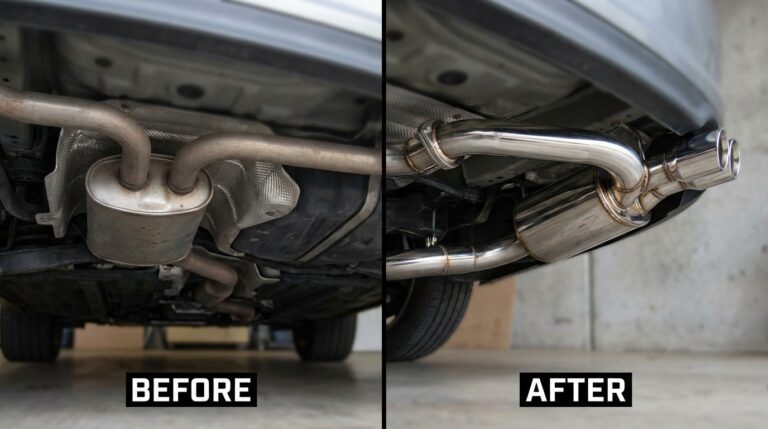
In parallel, the exhaust system is also revised in Stage 2. This step often involves replacing the complete line, the catalytic converter, or simply part of it with an optimized sport component, often made of stainless steel or titanium. The goal is to reduce back pressure and improve the exit of burnt gases, which allows the engine to breathe more freely and thus increase power.
The engine mapping adjustment then becomes crucial to exploit these new parameters, notably adjusting boost pressure, ignition timing, and fuel management. This is often where the real performance gains occur, with power increases ranging from 20 to 40% depending on the engines.
Turbo and electronic management optimizations
Stage 2 is not limited to peripheral elements but also invests in the engine’s core, with modifications such as a turbo upgrade. Turbochargers can be replaced by larger versions or recalibrated to deliver more pressure without introducing premature mechanical wear risks.
Electronic management is then indispensable: indeed, ECU remapping must take these modifications into account to ensure reliability while exploiting the additional potential. A clear explanation of this process is available on dedicated platforms such as the tuning calculator and ECU remapping explained.
It should be noted that these optimizations require precise expertise, as poorly calibrated boost exposes to risks of detonation and overheating. This advanced tuning is therefore a fundamental step for a successful Stage 2.
Practical example: For a BMW M3 owner, moving to Stage 2 involves replacing the sport air filter, a complete Akrapovic exhaust, and a full remapping. Torque and power gains are measurable and often exceed an additional 80 horsepower, a notable improvement for both road and track use (see BMW M3 Stage 2 tuning).
Detailed Price Analysis of Stage 2 Modifications
Stage 2 tuning, rich in mechanical and electronic modifications, requires a significant budget that must be analyzed meticulously. Prices vary depending on parts, labor, and specific tuning services. The targeted audience must therefore have a clear estimate of the costs associated with each component.
Cost of spare parts and specific tuning kits
The first budget item is dedicated to parts: tuning kits including air filter, intercooler, sport exhaust line, or high-performance turbo kit. These elements are not uniform and can show very different prices depending on brand quality and origin.
| Part / Modification | Average Price (€) | Description |
|---|---|---|
| Sport air filter | 80 – 200 | Improvement of airflow, generally made of cotton or high-performance foam. |
| High-capacity intercooler | 350 – 900 | Cooling of charge air to reduce intake temperature. |
| Complete exhaust line | 900 – 2500 | Reduction of back pressure, often stainless steel or titanium. |
| Stage 2 turbo kit | 1500 – 4000 | Replacement or upgrade of the turbocharger, adapted to target power. |
| Advanced ECU remapping | 400 – 1200 | Specific tuning to optimize engine parameters. |
These prices are indicative but provide a concrete overview of necessary investments. Each modification must be designed in synergy to ensure long-term reliability and avoid costly repairs related to poor configuration.
Labor costs and tuning
Beyond parts, labor accounts for an important share of the budget. Stage 2 tuning requires long and complex technical interventions, including disassembly, assembly, then dyno tuning for final adjustments. Engine management calibration is a critical phase, requiring specialized equipment and sharp expertise.
On average, labor costs range from 500 to 1500 euros depending on the region and professional level. Several specialized high-end tuning shops offer all-inclusive packages, which can simplify project management Mercedes AMG tuning stage comparison.
Examples of overall budget estimation
Let’s consider two concrete examples to illustrate the overall costs of a Stage 2:
- Peugeot 206 GTI: A complete kit including air filter, sport exhaust line, new mapping, and a turbo upgrade can cost around €3500, including parts and labor. More details on preparations are available in budget-friendly configurations (prepare your Peugeot 206).
- Subaru WRX STI: With an upgraded turbo, an equivalent sport intercooler kit, exhaust, and remapping, the total can rise towards €6000, considering the boxer engine complexity and specific parts used in Subaru tuning (Subaru WRX turbo preparation).
These examples help to better frame financial expectations while highlighting the diversity of prices depending on vehicle nature and mechanical architecture.
Advanced Adjustment and Calibration Techniques for an Effective Stage 2
Beyond the simple installation of parts, ECU tuning represents the decisive step of Stage 2 tuning. These electronic optimizations must consider each mechanical modification to fully exploit their potential.
The basics of ECU calibration in Stage 2
ECU remapping allows precise control of engine behavior, especially boost pressure management, ignition timing, fuel richness, and RPM limits. These parameters are closely linked to the physical modifications introduced.
Poor tuning can reduce engine durability, cause performance loss, or unpredictable behavior. That’s why Stage 2 requires state-of-the-art equipment, such as dynamic dynamometers where data is recorded in real-time to continuously adjust settings.
Optimization of power and torque curves
Advanced programming aims to obtain smooth power curves, without peaks, and maximize engine torque in usable ranges. For example, successful tuning exists on the Golf 7 R with an additional 80 horsepower thanks to precise balancing work between mechanical and electronic elements (Golf 7 R Stage 2 tuning).
Additional adjustments to ensure reliability
Besides engine mapping, other electronic components can also be adjusted or replaced: larger injectors, high-performance fuel pump, or even add-on boxes to refine parameters without modifying the original ECU (additional tuning box).
A perfect coordination between parts and settings thus ensures a balance between increased power and engine durability, guaranteeing an effective and safe Stage 2.
Tuning Kits and Complete Packages: Turnkey Solutions for Stage 2
To simplify procedures and avoid mistakes, several brands and integrators now offer complete tuning kits intended for Stage 2. These packages combine essential parts to improve power, with compatible ECU remapping.
Benefits of tuning kits in car improvement
Tuning kits are a practical solution for enthusiasts wishing to equip themselves quickly. They guarantee compatibility between parts, ensure harmonized performance, and sometimes offer technical support or specific warranties.
This approach is particularly popular for common models, such as the Focus ST, where kits are offered with dedicated exhaust lines, sport filters, and well-studied remapping (complete Ford Focus ST preparation).
Comparison between tailor-made solutions and all-inclusive kits
The choice between a complete kit and a custom preparation must be guided by the owner’s goals. Kits bring simplicity and laboratory-validated reliability, while personalized preparations allow going further in optimizations, for example by integrating high-end parts such as specific sport steering wheels (sport tuning steering wheels 2026).
The following table summarizes the advantages and disadvantages of both approaches:
| Criterion | Complete Tuning Kits | Custom Preparations |
|---|---|---|
| Compatibility | Guaranteed and tested | Tailored to each vehicle and need |
| Performance | Optimal for regular use | Maximum potential depending on budget |
| Cost | Often more affordable | Variable, often higher |
| Flexibility | Limited to kit components | Total, choice of parts and tuning |
| Installation | Facilitated, assisted | Requires an expert for assembly |
Real Impact of Stage 2 on Power and Overall Performance
The ultimate goal of Stage 2 is to immediately increase the car’s performance by optimizing engine power, transmission, and dynamic behavior. These gains are not just a simple addition of parts but the result of coherent and calibrated modifications.
Observed actual gains on the dynamometer
Tests on the dynamometer demonstrate the improvements made. For example, a Stage 2 on a Subaru WRX can result in a power increase of 50 to 100 horsepower, depending on the extent of modifications. This also improves torque, fundamental for responsiveness in sporty driving.
Specific preparations optimize turbo management, with better throttle response and more linear power delivery. These results are crucial for track use or dynamic driving in real conditions (Impreza WRX STI tuning budget).
Impact on handling and durability
Stage 2, by improving power, also influences handling. This often requires upgrading suspensions, brakes, and tires to manage the new dynamics. A coherent setup is essential to guarantee optimal safety.
Engine durability remains a major issue. Poorly done preparation can cause premature wear or failure. That’s why it is recommended to use experienced professionals, equipped with proven know-how who perfectly master the distinction between Stage 1, Stage 2, and even Stage 3 (details on Stage 3 tuning).
What are the main advantages of Stage 2 compared to Stage 1?
Stage 2 integrates not only advanced ECU remapping but also major mechanical modifications, such as the installation of an upgraded turbo, a complete sport exhaust system, and an optimized intake system, which allow for much higher power gains and better engine responsiveness.
Is Stage 2 tuning compatible with all types of vehicles?
Stage 2 is generally reserved for vehicles equipped with turbocharged engines and able to support significant mechanical modifications. One must consider the base mechanics, electronic management, and the engine’s capacity to handle a power increase.
What budget should be planned for a complete and reliable Stage 2?
The budget for a complete Stage 2 can vary between €3500 and over €6000, depending on the car model and the specifics of the parts used. It should include the cost of components, labor, and dyno tuning sessions.
Can the Stage 2 ECU remapping be done personally?
Stage 2 ECU remapping requires specific skills and appropriate equipment to ensure engine reliability and safety. It is therefore strongly recommended to entrust this operation to a professional equipped with a dynamometer.
What are the risks of a poorly done Stage 2 tuning?
Poorly executed Stage 2 tuning can lead to engine failures, premature wear, or even increased risk of damage. Inappropriate electronic settings can cause detonation, overheating, or improper air/fuel mixture.
It should be noted that these optimizations require precise expertise, as poorly calibrated boost exposes to risks of detonation and overheating. This advanced tuning is therefore a fundamental step for a successful Stage 2.
Practical example: For a BMW M3 owner, moving to Stage 2 involves replacing the sport air filter, a complete Akrapovic exhaust, and a full remapping. Torque and power gains are measurable and often exceed an additional 80 horsepower, a notable improvement for both road and track use (see BMW M3 Stage 2 tuning).
Detailed Price Analysis of Stage 2 Modifications
Stage 2 tuning, rich in mechanical and electronic modifications, requires a significant budget that must be analyzed meticulously. Prices vary depending on parts, labor, and specific tuning services. The targeted audience must therefore have a clear estimate of the costs associated with each component.
Cost of spare parts and specific tuning kits
The first budget item is dedicated to parts: tuning kits including air filter, intercooler, sport exhaust line, or high-performance turbo kit. These elements are not uniform and can show very different prices depending on brand quality and origin.
| Part / Modification | Average Price (€) | Description |
|---|---|---|
| Sport air filter | 80 – 200 | Improvement of airflow, generally made of cotton or high-performance foam. |
| High-capacity intercooler | 350 – 900 | Cooling of charge air to reduce intake temperature. |
| Complete exhaust line | 900 – 2500 | Reduction of back pressure, often stainless steel or titanium. |
| Stage 2 turbo kit | 1500 – 4000 | Replacement or upgrade of the turbocharger, adapted to target power. |
| Advanced ECU remapping | 400 – 1200 | Specific tuning to optimize engine parameters. |
These prices are indicative but provide a concrete overview of necessary investments. Each modification must be designed in synergy to ensure long-term reliability and avoid costly repairs related to poor configuration.
Labor costs and tuning
Beyond parts, labor accounts for an important share of the budget. Stage 2 tuning requires long and complex technical interventions, including disassembly, assembly, then dyno tuning for final adjustments. Engine management calibration is a critical phase, requiring specialized equipment and sharp expertise.
On average, labor costs range from 500 to 1500 euros depending on the region and professional level. Several specialized high-end tuning shops offer all-inclusive packages, which can simplify project management Mercedes AMG tuning stage comparison.
Examples of overall budget estimation
Let’s consider two concrete examples to illustrate the overall costs of a Stage 2:
- Peugeot 206 GTI: A complete kit including air filter, sport exhaust line, new mapping, and a turbo upgrade can cost around €3500, including parts and labor. More details on preparations are available in budget-friendly configurations (prepare your Peugeot 206).
- Subaru WRX STI: With an upgraded turbo, an equivalent sport intercooler kit, exhaust, and remapping, the total can rise towards €6000, considering the boxer engine complexity and specific parts used in Subaru tuning (Subaru WRX turbo preparation).
These examples help to better frame financial expectations while highlighting the diversity of prices depending on vehicle nature and mechanical architecture.
Advanced Adjustment and Calibration Techniques for an Effective Stage 2
Beyond the simple installation of parts, ECU tuning represents the decisive step of Stage 2 tuning. These electronic optimizations must consider each mechanical modification to fully exploit their potential.
The basics of ECU calibration in Stage 2
ECU remapping allows precise control of engine behavior, especially boost pressure management, ignition timing, fuel richness, and RPM limits. These parameters are closely linked to the physical modifications introduced.
Poor tuning can reduce engine durability, cause performance loss, or unpredictable behavior. That’s why Stage 2 requires state-of-the-art equipment, such as dynamic dynamometers where data is recorded in real-time to continuously adjust settings.
Optimization of power and torque curves
Advanced programming aims to obtain smooth power curves, without peaks, and maximize engine torque in usable ranges. For example, successful tuning exists on the Golf 7 R with an additional 80 horsepower thanks to precise balancing work between mechanical and electronic elements (Golf 7 R Stage 2 tuning).
Additional adjustments to ensure reliability
Besides engine mapping, other electronic components can also be adjusted or replaced: larger injectors, high-performance fuel pump, or even add-on boxes to refine parameters without modifying the original ECU (additional tuning box).
A perfect coordination between parts and settings thus ensures a balance between increased power and engine durability, guaranteeing an effective and safe Stage 2.
Tuning Kits and Complete Packages: Turnkey Solutions for Stage 2
To simplify procedures and avoid mistakes, several brands and integrators now offer complete tuning kits intended for Stage 2. These packages combine essential parts to improve power, with compatible ECU remapping.
Benefits of tuning kits in car improvement
Tuning kits are a practical solution for enthusiasts wishing to equip themselves quickly. They guarantee compatibility between parts, ensure harmonized performance, and sometimes offer technical support or specific warranties.
This approach is particularly popular for common models, such as the Focus ST, where kits are offered with dedicated exhaust lines, sport filters, and well-studied remapping (complete Ford Focus ST preparation).
Comparison between tailor-made solutions and all-inclusive kits
The choice between a complete kit and a custom preparation must be guided by the owner’s goals. Kits bring simplicity and laboratory-validated reliability, while personalized preparations allow going further in optimizations, for example by integrating high-end parts such as specific sport steering wheels (sport tuning steering wheels 2026).
The following table summarizes the advantages and disadvantages of both approaches:
| Criterion | Complete Tuning Kits | Custom Preparations |
|---|---|---|
| Compatibility | Guaranteed and tested | Tailored to each vehicle and need |
| Performance | Optimal for regular use | Maximum potential depending on budget |
| Cost | Often more affordable | Variable, often higher |
| Flexibility | Limited to kit components | Total, choice of parts and tuning |
| Installation | Facilitated, assisted | Requires an expert for assembly |
Real Impact of Stage 2 on Power and Overall Performance
The ultimate goal of Stage 2 is to immediately increase the car’s performance by optimizing engine power, transmission, and dynamic behavior. These gains are not just a simple addition of parts but the result of coherent and calibrated modifications.
Observed actual gains on the dynamometer
Tests on the dynamometer demonstrate the improvements made. For example, a Stage 2 on a Subaru WRX can result in a power increase of 50 to 100 horsepower, depending on the extent of modifications. This also improves torque, fundamental for responsiveness in sporty driving.
Specific preparations optimize turbo management, with better throttle response and more linear power delivery. These results are crucial for track use or dynamic driving in real conditions (Impreza WRX STI tuning budget).
Impact on handling and durability
Stage 2, by improving power, also influences handling. This often requires upgrading suspensions, brakes, and tires to manage the new dynamics. A coherent setup is essential to guarantee optimal safety.
Engine durability remains a major issue. Poorly done preparation can cause premature wear or failure. That’s why it is recommended to use experienced professionals, equipped with proven know-how who perfectly master the distinction between Stage 1, Stage 2, and even Stage 3 (details on Stage 3 tuning).
What are the main advantages of Stage 2 compared to Stage 1?
Stage 2 integrates not only advanced ECU remapping but also major mechanical modifications, such as the installation of an upgraded turbo, a complete sport exhaust system, and an optimized intake system, which allow for much higher power gains and better engine responsiveness.
Is Stage 2 tuning compatible with all types of vehicles?
Stage 2 is generally reserved for vehicles equipped with turbocharged engines and able to support significant mechanical modifications. One must consider the base mechanics, electronic management, and the engine’s capacity to handle a power increase.
What budget should be planned for a complete and reliable Stage 2?
The budget for a complete Stage 2 can vary between €3500 and over €6000, depending on the car model and the specifics of the parts used. It should include the cost of components, labor, and dyno tuning sessions.
Can the Stage 2 ECU remapping be done personally?
Stage 2 ECU remapping requires specific skills and appropriate equipment to ensure engine reliability and safety. It is therefore strongly recommended to entrust this operation to a professional equipped with a dynamometer.
What are the risks of a poorly done Stage 2 tuning?
Poorly executed Stage 2 tuning can lead to engine failures, premature wear, or even increased risk of damage. Inappropriate electronic settings can cause detonation, overheating, or improper air/fuel mixture.