Ethanol E85 Tuning Kit: Savings and Power

The use of E85 ethanol tuning kit has established itself as an essential solution for drivers looking to combine fuel savings with enhanced performance. As the price of fossil fuels continues to rise, the bioethanolE85, and more specifically ethanol, presents itself as an economical, ecological, and even power-boosting alternative. Indeed, this flex-fuel conversion not only reduces dependence on petroleum but also improves vehicle performance thanks to more efficient combustion. Thus, choosing an ethanol conversion kit is no longer simply a matter of CO2 reduction; it has become a true tool for modern vehicle tuning. From engine compatibility to specific adjustments, this article aims to explore in depth the many facets of a system that is increasingly attracting enthusiasts of both mechanics and the environment.
Given the current limitations of internal combustion engines, adapting to E85 via an ethanol conversion kit is a particularly technical tuning process. This article examines the mechanisms and challenges of a flex-fuel conversion, a process that combines performance and financial savings, now benefiting an increasingly large fleet of vehicles.
Understanding how an E85 ethanol conversion kit works to optimize engine performance
A E85 ethanol kit is a conversion system that allows a vehicle designed to run on traditional gasoline to use bioethanol E85 fuel is the predominant form of ethanol, which is composed of approximately 85% ethanol. This technical modification requires a precise understanding of engine operation to ensure optimal adaptation of the injection system and ideal combustion.
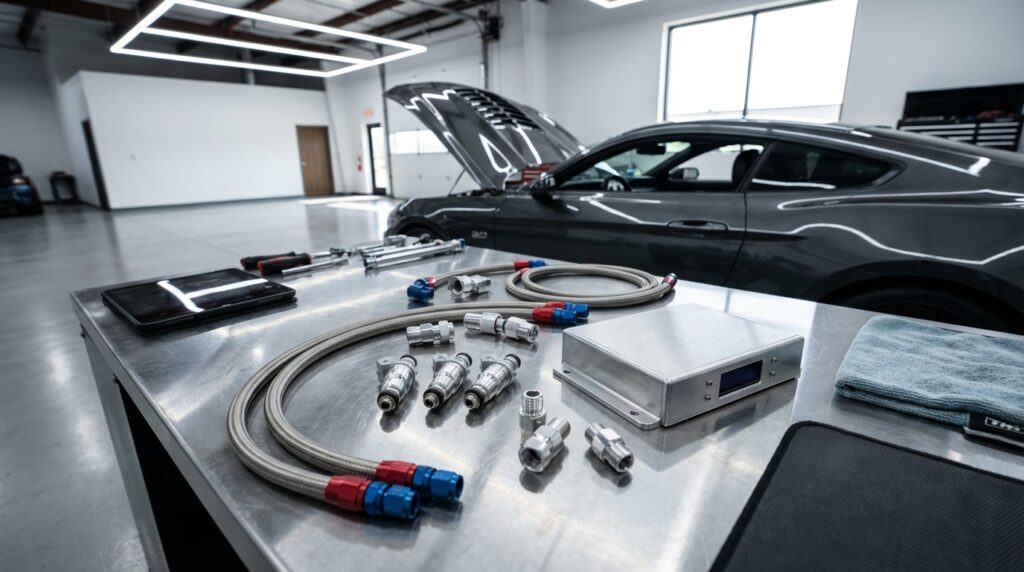
The basic principle is based on compensating for the difference in energy content between conventional gasoline and bioethanol. Ethanol has a lower energy value, which requires a larger volume of fuel to produce the same power. The ethanol conversion kit therefore includes more efficient injectors and ECU (electronic control unit) reprogramming to adjust the fuel flow according to the engine’s exact needs in flex-fuel mode.
At the engine level, this conversion optimizes combustion. Bioethanol has a higher octane rating, generally around 105, which provides increased resistance to knocking, a combustion defect that can damage engines. Consequently, engine remapping often incorporates advanced ignition timing, which promotes increased engine power and responsiveness. This results in a significant performance improvement, often smoother and more dynamic compared to an engine running solely on gasoline.
Another important technical aspect is engine compatibility with E85. All components in contact with the fuel must be resistant to ethanol, which is more corrosive than gasoline. Seals, hoses, and injectors often undergo specific treatment to ensure effective longevity. This adaptation prevents leaks and ensures optimal long-term performance, reducing mechanical wear associated with the conversion.
Finally, electronic management plays a key role. Sophisticated sensors in the kit automatically detect the ethanol content and adjust the engine mapping in real time. This flex-fuel system is efficient and seamless for the driver, who can switch from pure gasoline to E85 without any intervention. This operating mode ensures ease of use while fully exploiting the advantages of bioethanol.
Visible fuel savings thanks to the use of E85 bioethanol
One of the main advantages of the E85 ethanol conversion kit lies in the fuel savings that this conversion entails. The price per litre of E85 is generally lower than that of traditional petrol, sometimes up to 30 to 40% cheaper depending on the region, thus offering an immediate economic advantage for motorists.
However, this fuel economy is not guaranteed without careful vehicle modifications. Ethanol’s lower energy efficiency means that fuel consumption, by volume, is higher. Nevertheless, thanks to effective optimization with an ethanol conversion kit and precise tuning, the difference remains moderate, generally between 15 and 25% increased fuel consumption compared to gasoline.
Beyond the purely economic aspects, flexfuel conversion is part of a sustainable approach by reducing environmental impact. Bioethanol production relies on renewable raw materials such as sugar beets or corn, which significantly reduces the CO2 reduction related to combustion. This eco-responsible approach deserves to be promoted, especially in the current legislative context which favors less polluting vehicles through subsidies or ecological bonuses.
Furthermore, the savings aren’t limited to fuel. The more complete and cleaner combustion of bioethanol results in fewer deposits in the engine, which extends the lifespan of particulate filters and reduces wear on mechanical parts. This technical aspect is often underestimated but contributes to lower maintenance costs in the long run.
A list of the main economic advantages of the E85 ethanol tuning kit:
- Lower fuel price to the classic essence
- Partial reduction in fuel consumption via specific settings
- Reduced maintenance costs thanks to better combustion
- Tax incentives and ecological bonuses possible depending on the region
- Vehicle resale value thanks to a more environmentally friendly engine
The integration of bioethanol during car tuning has become a significant criterion for those seeking to optimize the power-to-economy ratio while participating in the energy transition.
Flexfuel conversion and detailed technical adaptation for optimal engine compatibility
Flexfuel conversion is at the heart of ethanol conversion in cars. It’s a technical solution that allows switching from one fuel to another (traditional gasoline to E85) without risk of degradation, while maintaining engine performance and safety. This process includes several key steps that guarantee impeccable reliability.
First, the physical installation of an E85 ethanol conversion kit often requires meticulous dismantling of existing components, such as the fuel rail, to integrate equipment compatible with bioethanol. For example, the injectors must be calibrated with ten times the capacity because ethanol requires a higher flow rate. These components are made of specific materials resistant to corrosion and moisture, characteristics of bioethanol.
Next, the electronic management system must be recalibrated. ECU reprogramming is standard practice, with a customized map that takes into account the energy density and high octane rating of E85. These software adjustments are essential to maximize engine power and prevent knocking. Oxygen sensors (lambda probes) provide constant monitoring of the air/fuel mixture, ensuring perfect combustion under all operating conditions.
Furthermore, all of this must be accompanied by a rigorous check of engine compatibility. Some high-pressure or direct-injection engines require more sophisticated kits to prevent premature wear. Switching to E85 can indeed cause accelerated corrosion on unprepared parts. A battery of tests is often carried out in specialized workshops to ensure a perfect fit for each engine type.
Here is a table summarizing the main technical elements adapted during a flex-fuel conversion:
| Element | Main changes | Objective |
|---|---|---|
| Injectors | Increased flow rate and anti-corrosion treatment | Ensure a sufficient supply of bioethanol fuel |
| ECU reprogramming | Adaptation of injection and ignition maps | Optimize combustion and engine power |
| Seals and hoses | Materials resistant to ethanol and moisture | Prevent leaks and corrosion |
| Sensors (lambda probes) | Flexible calibration according to bioethanol content | Ensure proper air/fuel mixture management |
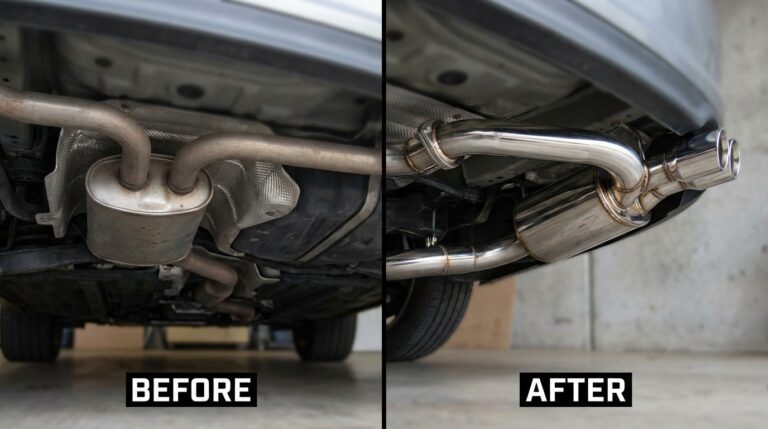
| Exhaust system | Adaptations as needed to manage increased combustion | Reduce emissions and maintain performance |
The technical expertise required to carry out this conversion explains the importance of choosing a quality and recognized ethanol kit, while consulting tuning professionals to guarantee perfect engine compatibility in the long term.
Impact on engine power: effective tuning with the E85 ethanol kit
THE tuning Using an E85 ethanol conversion kit is more than just a simple adaptation; it becomes a real lever for boosting engine power. The high octane rating of bioethanol allows for an increased compression ratio without the risk of knocking, resulting in more energetic combustion and increased power output.
In practical terms, most users notice a significant improvement in performance, often between 5 and 15% in maximum power. This improvement is linked to better thermal efficiency, with an adapted ignition system and optimized electronic management. These gains translate into more responsive acceleration and a more direct throttle response, sensations particularly appreciated during sporty or dynamic driving.
This performance enhancement technique is reminiscent of traditional engine tuning, but with the added benefit of reducing the environmental footprint. The air/fuel mixture, richer in oxygen, allows for more complete combustion, limiting pollutant emissions, particularly CO2. Bioethanol thus offers a dual advantage: economic and environmental benefits, while also delivering a superior driving experience.
Car tuning enthusiasts often adopt this system to benefit from increased engine power without necessarily resorting to major mechanical modifications. The ethanol conversion kit fits perfectly into a modern optimization philosophy, combining advanced engineering with respect for the environment. It is compatible with both gasoline vehicles and certain flex-fuel diesel engines, expanding its range of applications.
To illustrate this, here is a list of the specific advantages of tuning via an ethanol kit:
- Engine power gain between 5 and 15%
- Improved responsiveness at the accelerator
- Ignition timing optimization and cartography
- Reduction of polluting emissions and the pressure on the environment
- Compatibility with various engine types petrol and flexfuel diesel
This cocktail of benefits explains why the E85 ethanol kit appeals to a growing number of demanding drivers, keen to maximize their driving experience while making a beneficial flexfuel conversion.
Common practices and user feedback on E85 ethanol conversion kits in car tuning
In recent years, the popularity of E85 ethanol conversion kits has exploded, particularly among tuning enthusiasts and those committed to responsible automotive performance. This trend is based on numerous user experiences that help refine the settings and ensure ever-improving engine compatibility.
User testimonials highlight several key points: a significant reduction in fuel costs, a feeling of increased power, and greater environmental awareness linked to the use of renewable fuel. Several specialized forums report precise profitability calculations, demonstrating that the initial investment for the kit is recouped in less than 20,000 kilometers, thus reinforcing its practical appeal.
In the tuning world, enthusiasts highlight the ease of installation and the possibility of reverting to gasoline operation without major modifications, thanks to the flex-fuel system. This dual mode provides reassurance and opens the door to the gradual use of bioethanol, depending on local availability.
Some feedback, however, concerns the need for specific regular maintenance to prevent fouling, particularly of the injectors and sensors. These constraints remain minimal, however, if the technical recommendations are followed during the conversion.
Here is a statistical overview of user opinions expressed in several recent surveys:
| Criteria | Average rating / 10 | Frequently mentioned comments |
|---|---|---|
| Ease of installation | 8.2 | Clear instructions, quick assembly for professionals |
| Power improvement | 7.9 | More responsive performance, sensitive to sporty driving |
| Fuel savings | 8.5 | Effective savings despite a slight increase in consumption |
| Engine compatibility | 7.6 | Adaptations required depending on engine type |
| CO2 reduction | 8.0 | Ecological impact recognized by the majority |
Which vehicles are compatible with an E85 ethanol conversion kit?
Most gasoline vehicles from the last 20 years can be converted, provided the engine components are compatible with ethanol, including injectors and hoses. Flex-fuel diesel engines are also eligible, but require specific kits.
Does the E85 ethanol kit lead to an increase in fuel consumption?
Yes, consumption by volume is generally higher, around 15 to 25%, because bioethanol contains less energy per liter than gasoline. However, the lower price of E85 fuel more than compensates for this, resulting in overall savings.
Is it necessary to reprogram the engine during installation?
ECU reprogramming is essential to adapt the electronic management to the new fuel. This ensures correct injection flow and optimal combustion, maximizing engine power and durability.
Is bioethanol really environmentally friendly?
Bioethanol is produced from renewable plant matter, which significantly reduces net CO2 emissions compared to fossil fuels. Its use contributes to a more sustainable energy diversification.
Can you switch back to petrol without any problems after conversion?
Yes, flexfuel kits are designed to allow use with either petrol or E85. It is possible to fill up with either without manual adjustments, as the electronic management system automatically adapts the mixture.