Tuning fender flares: Legal in France?

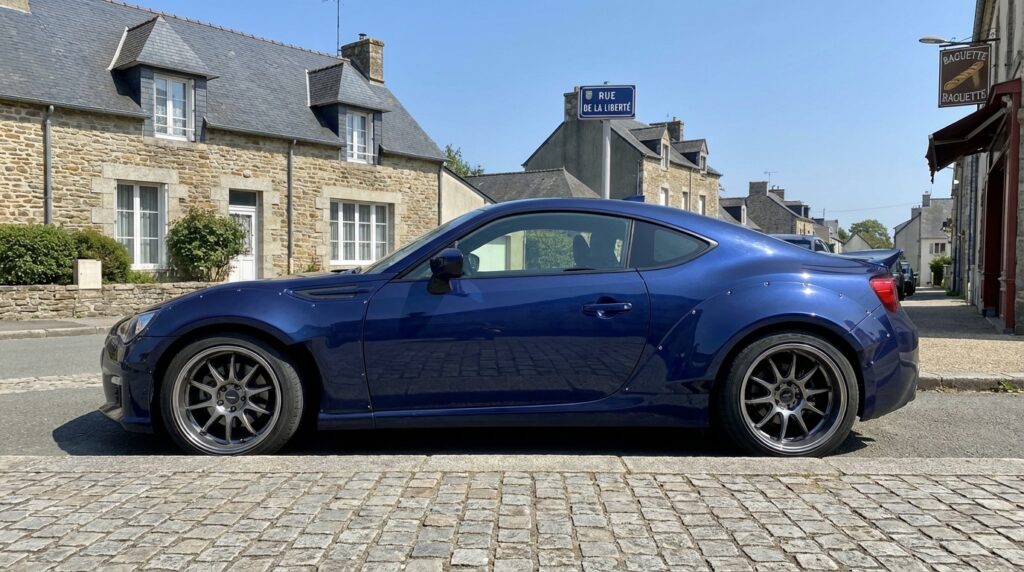
Car tuning is a passion that appeals to many enthusiasts seeking originality and performance. Among the most visible modifications, fender flares play a key role in a vehicle’s aesthetics and aerodynamics. However, beyond their attractive appearance, these car accessories raise important questions about their legality in FranceGoverned by the Highway Code and regulations concerning vehicle modifications, they can also impact road safety and the success of the vehicle inspection. Hence the importance of fully understanding the applicable rules before embarking on the installation of tuning fender flares.
This debate is all the more relevant given that recent legislative changes have strengthened the requirements for the approval and conformity of accessories. Drivers must therefore carefully navigate between the desire for personalized car aesthetics and the need to comply with strict standards to avoid any disputes or penalties. This is why a detailed technical analysis is essential to understand what the law allows or prohibits regarding fender flares and how to ensure the safety and conformity of a modified vehicle.
The legal rules governing fender flares in France
Firstly, it is important to understand that the Traffic Laws French law defines a strict framework regarding modifications made to a vehicle. Adding aftermarket fender flares can be considered a modification to the bodywork, potentially impacting the vehicle’s overall width. However, the maximum permitted width is precisely limited to 2.55 meters for most passenger cars.
Beyond this measure, Article R311-1 of the French Highway Code stipulates that any added equipment must not dangerously increase the vehicle’s dimensions, nor obstruct visibility, lighting, or signaling. Consequently, fender flares that significantly exceed this limit require specific approval from the Regional Directorate for the Environment, Planning and Housing (DREAL).
When the widening remains moderate, generally less than 3 cm per side, it is often tolerated provided the installation is clean, does not create sharp edges, and maintains the vehicle’s aesthetic harmony. Conversely, non-approved kits can lead to a violation during the vehicle inspection or in the event of a police check. In particular, an excessively large widening kit can result in a fine for non-compliance with the Highway Code.
To go further, here is a list of the main regulatory parameters to check before installing fender flares:
- Maximum width allowed: less than or equal to 2.55 meters.
- Absence of sharp edges: safety for pedestrians and other users.
- Respect for visibility: Do not cover the lights or turn signals.
- Approval requirement: if the enlargement exceeds the minimum tolerance.
- Impact on vehicle inspection: Vehicle presentation as described.
In some cases, owners use wheel spacers approved by the manufacturer or certified by a vehicle inspection body. This approach guarantees optimal safety and avoids legal issues. Therefore, it is strongly recommended to consult a professional or a VTR (Road Touring Vehicle) center before making any modifications.
Influence of fender flares on road safety and mechanics
Beyond legal considerations, installing aftermarket fender flares can alter a vehicle’s dynamic handling and mechanical safety. By definition, these accessories increase the effective width of the wheels, which can improve vehicle stability under certain conditions, but can also pose risks if they are improperly sized.
Indeed, fender flares often increase the wheel offset relative to the body, which alters the center of gravity and affects the suspension geometry. Flares that are too wide or improperly fitted can lead to:
- Additional constraints on the suspension fixings and the running gearincreasing premature wear of mechanical components.
- Reduced maneuverability in certain tight turns, especially during emergency responses.
- An increased risk of wheel lock-up with wheel spacers if these do not conform to the dimensions of the vehicle.
Road safety is paramount. Therefore, it’s important to note that fender flares, while aesthetically pleasing, require precise installation specific to the vehicle model. In the event of a collision or loss of traction, changes in tire pressure can affect braking and trajectory. Drivers should therefore prioritize compatible and approved accessories.
These aspects also demonstrate the importance of verification at technical inspectionIndeed, a vehicle with non-compliant wheel spacers risks a critical defect that could lead to a failure to pass inspection, thus obliging the owner to an expensive repair.
Furthermore, the prohibitions also concern the proliferation of protruding elements that could injure other road users in the event of an accident, especially pedestrians or cyclists. This is why regulations often stipulate that fender flares must not have sharp or angular edges.
The different categories of fender flares and their impact on homologation
There are several types of fender flares available on the market, each with its own characteristics influencing their regulatory integration.
Clip-on fender flares (simple extensions)
These accessories are generally additional strips attached to the existing fenders by screwing or gluing. Intended for aesthetic purposes, they only slightly alter the overall width in most cases. Their simplicity often facilitates homologation since they do not significantly modify the bodywork.
Complete wheel arch extension kit or widebody kit
These kits cover a larger area, with widened fenders integrated into the bodywork. They significantly alter the vehicle’s silhouette and effective width. Consequently, they must be approved before use on public roads. Installing an unapproved widebody kit can result in penalties and failure to pass the vehicle inspection.
Custom manufacturing and composite materials
This category includes custom-made wheel spacers, often made of fiberglass, carbon fiber, or composite resin. These accessories must undergo a strict homologation process, often more complex than for standardized products, due to the lack of manufacturer certification.
Comparison of technical and legal characteristics
| Type of spacer | Impact on width (cm) | Ease of approval | Average price (€) | Common use |
|---|---|---|---|---|
| Clip-on spacers | 1 to 3 | Easy | 100 – 300 | Light aesthetic |
| Complete widebody kit | 5 to 15 | Complex | 2,000 – 10,000 | Advanced tuning |
| Composite custom manufacturing | Variable | Very complex | Variable, often high | Competition / Show |
This table highlights the importance of carefully selecting the right type of wheel spacer based on the desired outcome, as well as the time investment and compliance requirements. In 2026, controls will be strengthened, particularly in densely populated urban areas where the risk of pedestrian accidents is higher, thus increasing the monitoring of road safety compliance.
Procedures and steps to ensure the conformity and approval of wheel spacers in France
Owners wishing to add fender flares must follow a number of steps to ensure the compliance of their vehicle.
Preliminary inspection and technical study
An analysis of the car’s characteristics and the wheel spacers being considered is necessary. An expert can perform a diagnostic assessment to verify the impact on width, visibility, and safety. At this stage, it is best to choose products that are approved or already used in collective homologation processes.
Application for individual approval
If the wheel spacers exceed the standard width or are custom-made, an individual approval application to the DREAL (Regional Directorate for the Environment, Planning and Housing) is mandatory. This procedure requires the submission of technical files, plans, and proof of laboratory tests. Processing time can vary between 2 and 6 months depending on the complexity.
Presentation for technical inspection
After installation, the vehicle must undergo a specific technical inspection, focusing on:
- Measurement of the effective width to verify compliance with the approval.
- Checking the fasteners wheel spacers.
- Visibility compliance inspection lights and turn signals.
- General condition assessment of the widened bodywork.
Refusal to undergo inspection means the removal of the wheel spacers or a return to the original condition, which can be costly. Hence the importance of choosing suitable and certified accessories.
Insurance and civil liability
Modifications to the vehicle’s exterior structure must also be reported to the insurer. Failure to declare these modifications may result in a denial of coverage in the event of an accident related to the modified equipment.
The comprehensive approach ensures increased safety, strict legal compliance, and peace of mind while driving. In 2026, the authorities are paying particular attention to the rigor of these processes.
Aesthetic and practical impact of fender flares on car tuning
Car tuning isn’t just about technical improvements; it also aims to enhance the vehicle’s visual identity. Fender flares fit perfectly into this trend, offering an aggressive and dynamic look often sought after by enthusiasts.
These accessories visually correct proportions, particularly on cars with narrow fenders, creating a more muscular and imposing appearance. For example, on a sporty compact car like a Peugeot 208 GTi, choosing wheel arch extensions can transform the car’s look by increasing its road presence and improving the perception of performance.
On classic models, they can also conceal certain wear and tear or bodywork imperfections, giving the vehicle a fresh, new look. Practicality is also a benefit, as some wheel spacers offer better protection against mud or stone spray thanks to increased tire coverage.
Here is a list of the most recognized aesthetic and practical advantages:
- Unique visual customization: creation of a distinctive and exclusive style.
- Improving visual width: enhanced stability and power effect.
- Increased protection: reduction of road debris projections.
- Ease of adaptation: ease of disassembly or replacement according to changing tastes.
- Resale value: a more attractive vehicle in the tuning market.
However, this aesthetic aspect should never overshadow the importance of compliance and safety. Harmonious tuning requires the careful integration of wheel spacers, finding a balance between visual boldness and adherence to regulations. The quality of the materials and the finish also play a crucial role in the final result, ensuring a durable and safe installation.
Are fender flares still legal on French roads?
They are legal provided they respect the maximum permitted width, do not obstruct visibility, and are certified if their dimensions exceed the tolerances. A non-compliant installation may result in penalties.
How to obtain approval for non-standard wheel spacers?
An application must be submitted to the DREAL (Regional Directorate for the Environment, Planning and Housing) with a complete technical file, including plans and test results. This procedure can be lengthy and expensive, but it is necessary to legally drive vehicles with significant modifications.
Do fender flares impact driving safety?
Yes, if they are poorly installed or too wide, they can alter road holding, suspension and handling, which can pose a risk when driving at high speeds or during sudden maneuvers.
Can fender flares be fitted to a newer vehicle without voiding the manufacturer’s warranty?
Generally, any modification not authorized by the manufacturer may result in the partial or total loss of the warranty. It is therefore advisable to consult the manufacturer or a professional before installation.
Do you need to inform your insurance company after modifying the wheel spacers?
Yes, it is mandatory to declare any significant modification to the external structure to the insurer to guarantee coverage in the event of an accident.