Rocker Panel Wrapping: Guaranteed Racing Finish

In the world of car tuning and customization, rocker panel wraps have emerged as an innovative solution combining aesthetics, protection, and a racing style. This specific area of the bodywork is often exposed to daily wear and tear: stone chips, impacts, and premature wear due to frequent driving on rough roads. The development of high-performance adhesive films now makes it possible to transform this vulnerable area with a guaranteed racing finish, ensuring both a bold look and enhanced protection. Rocker panel wraps are no longer limited to simple protection but have become a key element of the overall design, embodying a sporty spirit and impeccable visual quality.
The growing popularity of this technique is largely due to the variety of available options: matte, glossy, satin, or even carbon fiber effect films, each offering a distinct finish that enhances the vehicle’s lines. Investing in a high-quality wrap also meets specific expectations regarding durability and ease of maintenance. Furthermore, this method appeals to both passionate enthusiasts and professionals looking to add a racing touch to their fleet. By guaranteeing a perfect balance between protection and style, rocker panel wraps reflect a strong trend towards personalization without compromising the bodywork’s longevity.
Mastering the application of rocker panel wrap for a flawless racing finish
Rocker panel wrapping requires specific expertise due to the unique geometric and environmental constraints of this part of the vehicle. This area, often narrow and subject to complex angles, demands meticulous surface preparation, including thorough cleaning and complete degreasing to ensure optimal adhesion of the adhesive film. Choosing the right film for rocker panels is crucial: it must be impact-resistant, flexible to conform perfectly to the curves, and feature a UV-resistant coating to maintain its vibrant color over time.
A meticulous, multi-step application method guarantees a flawless racing finish. From the initial cutting, slightly larger dimensions than the target area are preferred to avoid tension during folding. The film is then heat-applied, allowing for precise thermoforming and millimeter-perfect alignment. This technique, essential for sculpting the film onto the bodywork, eliminates air bubbles and ensures long-lasting adhesion, even in harsh conditions. It is also recommended to work without disassembling the body panels, which optimizes working time while minimizing the risk of damage—a recent advancement that significantly improves the practicality of rocker panel wrapping, as explained in this article on applying vinyl wrap without dismantling.
To maximize aesthetic appeal and protection, the introduction of racing motifs – stripes, carbon fiber accents, or contrasting colors – is seamlessly integrated into the design. Every detail is meticulously crafted to reinforce the vehicle’s sporty identity, without ever compromising the quality or functionality of the wrap. It’s important to note that compliance with road regulations must be maintained, particularly regarding the legibility of license plates and other markings, an often overlooked but crucial aspect when applying decorative films to rocker panels.
The different types of adhesive films for a durable racing-style rocker panel wrap
Choosing the right adhesive film is a key factor in achieving a high-quality racing finish. On the market, films are primarily distinguished by their texture, thickness, and resistance to external damage. Among the most popular finishes is matte film, prized for its understated and modern look, capable of concealing minor scratches while offering a stunning visual effect. In contrast, glossy film provides depth and shine that accentuates the curves of the rocker panels.
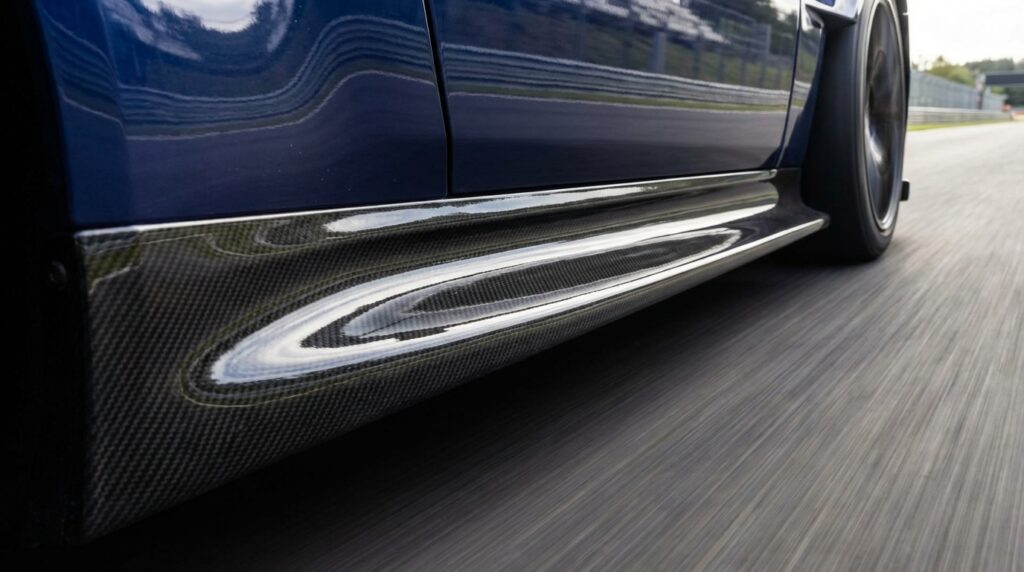
A very popular alternative is carbon fiber effect film, which explicitly enhances the racing style with its three-dimensional pattern mimicking carbon fiber. This type of film is particularly robust, making it an ideal solution for protection against gravel chips and other impacts, while also enhancing the overall design of the car. The film’s quality also translates into excellent resistance to UV rays and chemical damage, essential elements for maintaining the wrap’s vibrancy and performance over many years, as demonstrated in this article on the lifespan of a vehicle wrap.
The table below summarizes the main characteristics of the adhesive films used for rocker panel wrapping with a racing finish:
| Movie type | Finishing | Resistance | Aesthetic appearance | Indicative price |
|---|---|---|---|---|
| Matte vinyl | Mast | Good scratch resistance | A simple and modern effect | €€ |
| Glossy vinyl | Bright | Good UV resistance | Brilliance and depth | €€ |
| Satin vinyl | Satin | Intermediate resistance | Silky, elegant appearance | €€€ |
| Carbon effect | Texture | Very high impact resistance | Statement racing look | €€€€ |
Note that these films can be combined with protective varnishes or scratch-resistant treatments to enhance their durability. Using a professional-grade film guarantees the longevity of the racing look, while ensuring optimal protection, especially in the most exposed areas. To learn more about the specific thermoforming and heating methods used to perfectly conform to the complex shapes of the rocker panel, consult this dedicated guide. heating and thermoforming of the film.
Protection and aesthetics: the advantages of rocker panel wraps for a racing car
Beyond its impeccable style, rocker panel wrap offers essential protection, especially for racing-style cars often used in demanding conditions. The close proximity to the ground frequently leads to increased exposure to gravel chips, mud splashes, and friction against various obstacles. Thanks to its specific composition, the vinyl film acts as a barrier against these aggressions, protecting the bodywork from damage and scratches.
This protection also translates into easier maintenance: cleaning the covered undercarriage is simpler and less frequent, which is a considerable advantage for enthusiasts keen to maintain a clean and dynamic look in all seasons. Furthermore, the wrap guarantees an improvement in the vehicle’s resale value by limiting visible wear in this vulnerable area.
From an aesthetic point of view, rocker panel wraps allow you to create an authentic racing style, with meticulous finishes that can be customized to your liking. Design possibilities include:
- Stripes and contrasting lines to visually energize the silhouette.
- Carbon effect for an undeniable technical and sporty touch.
- Matte or glossy colors depending on the desired effect.
- Custom logos and designs to reinforce the identity of the driver or the brand.
Furthermore, vehicle wrapping can also be an effective communication tool for competition teams or amateurs who wish to display a unique style, easily modifiable, and without irreversible commitment, inviting creativity while guaranteeing the quality of the finish.
Maintain and preserve the guaranteed racing finish of the rocker panel wrap
The longevity of a rocker panel wrap depends on proper maintenance to preserve its visual quality and the protection offered by the film. The wrap should be cleaned regularly, avoiding abrasive products that could damage the surface or compromise the protective layer. Using neutral shampoos and microfiber cloths is recommended to maintain the shine of the finish, whether it’s matte, glossy, or textured.
It is also advisable to periodically check the condition of the film edges to prevent premature peeling, a phenomenon that can occur in particularly exposed areas of the rocker panel. Localized touch-ups are possible, especially thanks to the modularity of the films, which can be partially replaced without disassembling the entire section.
Car owners who have opted for rocker panel wraps often benefit from a warranty, frequently with a lifespan ranging from 3 to 7 years depending on the film quality and the environment in which it is used. This warranty is a guarantee of confidence in the product’s resistance to mechanical and climatic stresses. To better understand the warranty conditions and expectations in terms of durability, this guide on the protection and durability of the covering provides precise insights.
- Avoid high-pressure washing that is heavily concentrated on the undercarriage.
- Do not expose the vehicle to prolonged high temperatures without protection.
- Use specific products for adhesive films if necessary.
- Regularly check the angles and joints to anticipate repairs.
Following these recommendations ensures a guaranteed racing finish and optimal, long-lasting protection, making rocker panel wrap an aesthetic and functional investment.
Can you apply a wrap to scratched rocker panels?
Yes, a wrap can be applied to a car with minor scratches, provided the surface is carefully prepared. To learn more, see this article on applying a car wrap to a scratched car.
Does rocker panel wrapping really protect against impacts?
Absolutely. The films used for the rocker panels offer effective impact protection, similar to that of bumper protectors. You can learn more at impact protectors for bumpers.
What is the average lifespan of a rocker panel wrap?
Depending on the film quality and usage conditions, a vehicle wrap can last between 3 and 7 years. Consult this guide for more information on the lifespan of the covering.
Is it necessary to disassemble the parts before installation?
No, current techniques often allow for a installation without dismantlingThis simplifies the process and reduces the risk of errors.
Are there any disadvantages to rocker panel wrapping?
Like any technique, vehicle wrapping has some drawbacks, particularly in cases of poor preparation or the use of low-quality films, which can lead to premature peeling. To learn more, visit this link on the disadvantages of covering.