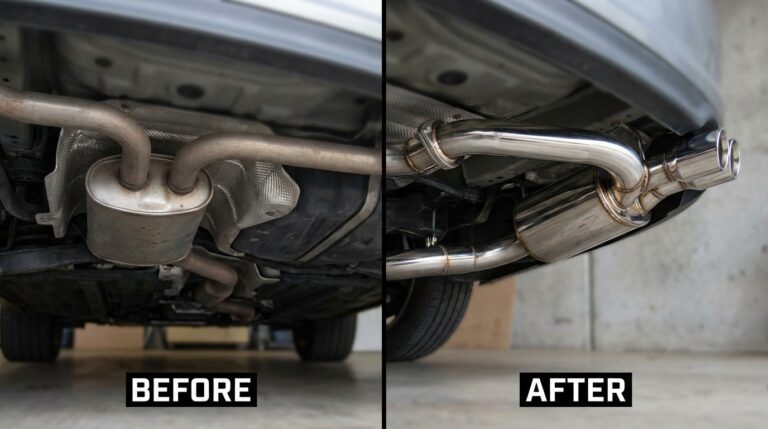
What is the average price of a vehicle wrap?

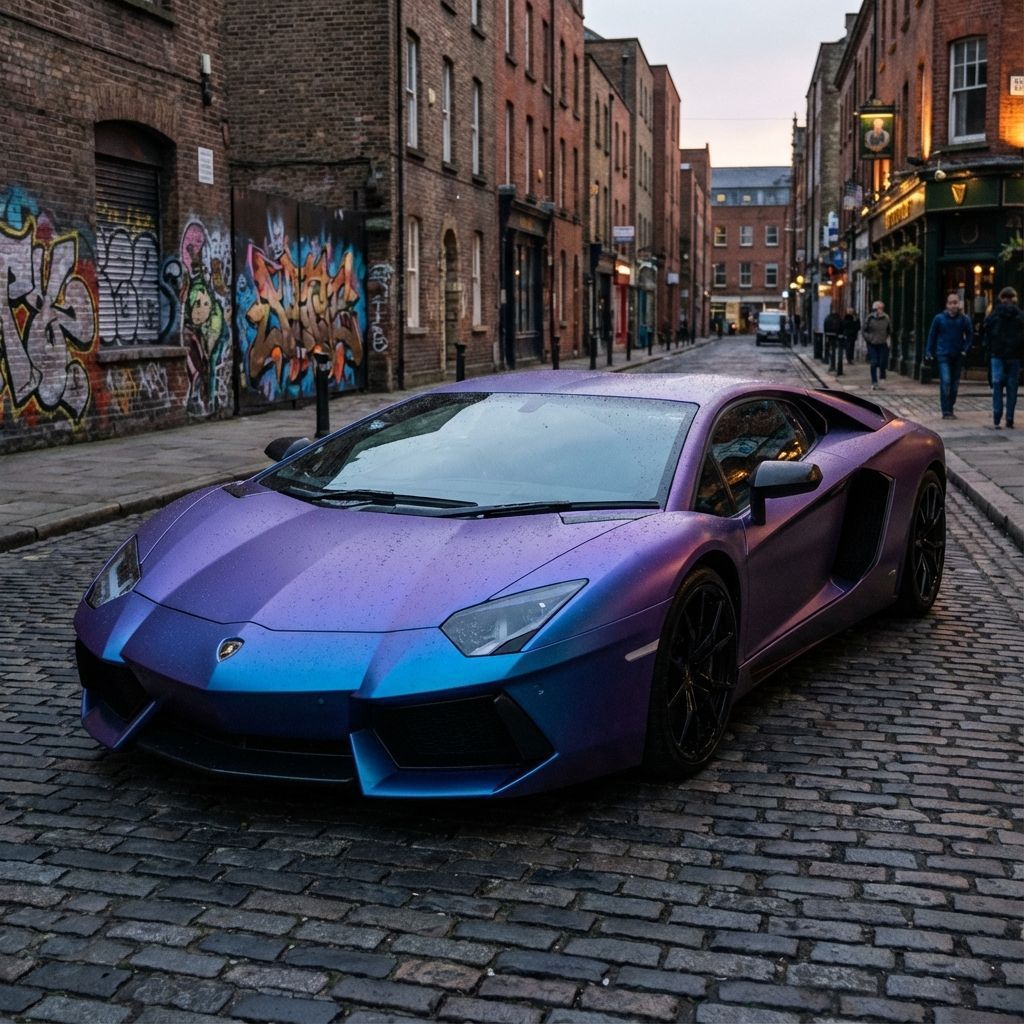
What is the average price of a vehicle wrap? In France, on average, you should expect to pay €1500 to €3000 for a full wrap on a standard car, and €250 to €800 for a partial wrap (hood, roof, mirrors, stripes).
THE average price of a vehicle wrap It depends primarily on the surface area to be covered, the quality of the film (entry-level, premium, carbon/matte effect, etc.), the level of preparation of the bodywork, and the application time. A wrap is rarely a “simple application”: durability and aesthetic results come mainly from preparation (degreasing, decontamination, partial disassembly, handling curves) and the skill of the installer.
For most drivers, budget is a primary concern, even before choosing a style: matte or glossy, solid color or textured effect, full or partial wrap. This makes sense: vehicle wrapping is a skilled and technical process that varies considerably from one vehicle to another. A simple city car, a sedan with numerous moldings, or an SUV with large surfaces and sharp angles all require different amounts of time. And if the bodywork has imperfections (deep micro-scratches, dents, damaged clear coat), the result will be directly affected… unless you plan ahead for repairs.
Below, you’ll find realistic price ranges, clear explanations of what affects the final cost, and tips for comparing quotes without getting ripped off. The goal: to accurately estimate the cost, choose the right film thickness, and achieve a clean, durable finish that meets your needs (aesthetics, protection, resale, marketing).
Average price of a vehicle wrap in France: reliable benchmarks (partial, total, finishes)
To establish a clear framework, here are some price ranges commonly observed in France. They can vary depending on the region, the reputation of the workshop, the complexity of the vehicle, and the film chosen, but they provide a solid basis for responding to What is the average price of a vehicle wrap?.
Partial roofing: typical prices per element
Partial wrapping involves covering only certain areas: roof, hood, mirrors, rocker panels, decorative stripes, or even a two-tone package (roof and mirrors, for example). It’s often the most cost-effective option if the goal is aesthetic (changing the look) without committing to the budget for a full wrap.
On average, a partial wrap costs between 250 and 800 € depending on the component, the size of the vehicle and the finish. Highly curved components (bumpers) require more work than relatively flat surfaces (roof).
- Roof (gloss black or matte black) ~€300 to €700
- Hood ~€350 to €800 (more if there are air intakes, raised areas, complex folds)
- Mirrors ~80 to 200 € per pair
- Stripes / edging / decoration ~€150 to €600 depending on design
- Two-tone wrap (roof + mirrors + a few accents) ~450 to 1200 €
Note: Some workshops offer attractive “package” rates. But always compare what’s included (antenna removal, seals, finishing with a cutter, post-heating, warranty). A price that’s too low for a partial repair is often linked to rushed finishing, and therefore a risk of peeling at the edges.
Full vehicle coverage: city car, sedan, SUV, utility vehicle
For a full (exterior) wrap, the average price of a vehicle wrap is generally between 1500 and 3000 € For a “standard” car (city car, compact, sedan). The majority of serious quotes fall within this range, with a large proportion around €2000–€2600 for a decent quality film properly installed.
Indicative price ranges:
- City girl ~1300 to 2300 €
- Compact / sedan ~1700 to 3200 €
- SUV ~€2000 to €3800 (more surface area + angles + height)
- Utility vehicle / van ~€2200 to €4500 (large stores, sometimes rivets/stamped pieces)
- Premium/complex car (coupe, many curves) ~€3000 to €6000
Why such a long timeframe? Because a complete wrap often takes between 2 and 5 days depending on the team, and the cost depends as much on labor as on the film itself. If the workshop has to remove handles, logos, repeaters, antennas, or adjust invisible finishes (1-2 cm returns behind the edges), the time takes a huge leap… but the result is significantly better.
Finishes and options that increase (or decrease) the budget
When we ask What is the average price of a vehicle wrap?The finish also needs to be specified. A glossy white film doesn’t cost the same as a chrome film, a premium satin finish, or a high-end carbon fiber effect. And certain options influence the final price:
- Matte/satin finish : often slightly more expensive than glossy (depending on the brand), because it is more susceptible to marks and requires very even application.
- Textured films (carbon, brushed, leather, camouflage) : +10 to +40% depending on reference and complexity.
- Chromes / special colors : often +30 to +70% (more expensive films + delicate installation).
- Opening of doors/entrances (legs) : some services cover door entrances (longer, more expensive).
- Removal/replacement of components (spoiler, wing, handles, trim pieces): may be included or charged separately.
A simple rule: all other things being equal, the most reliable quote is the one that details precisely what is included (preparation, dismantling, film brand, warranty). A “lump sum price” without details is more difficult to compare.
What affects the average price of a vehicle wrap: the real factors (film, labor, vehicle)
Two people can type the same question — What is the average price of a vehicle wrap? — and receive two quotes that are completely different. This isn’t necessarily a scam: it’s often the result of very concrete variables. Understanding these factors allows you to anticipate the real cost and avoid unpleasant surprises (raised edges, bubbles, shrinking film, color variations).
Vinyl film: brand, range, lifespan and finish
The film is the primary “material,” but it’s not just about color. The brand and product line also have an influence:
- dimensional stability (less shrinkage over time),
- ease of installation in curves,
- UV resistance (colorfastness),
- ease of removal (important for returning to the original paint),
- the manufacturer’s warranty and the lifespan.
Premium films (often cast rather than calendered) cost more, but generally offer a better finish and durability. On the scale of an entire project, the difference in material cost may seem modest… yet it can make all the difference over 3 to 5 years of use.
To put things in perspective: for a full vehicle wrap, the cost of the film itself is often less than the labor. So, “saving” €200-300 by choosing a mediocre film can end up costing more later (peeling, color fading, difficult removal).
A quote that sums up the issue well, often repeated in aesthetic preparation workshops:
“Quality is remembering the result long after you’ve forgotten the price.” — attribution often given to Aldo Gucci (widely circulated quote).
Labor: preparation, dismantling, installation, finishing (where everything happens)
Labor is the core of the cost. Two poses can appear identical in a photo but be very different in reality, especially over time. The service typically includes:
- Washing and decontamination (resins, tar, road films)
- Degreasing meticulous (sensitive areas: edges, handles, joints)
- Disassembly partials (logos, repeaters, antenna, sometimes headlights/taillights depending on the vehicle)
- Laid (Management of large panels, alignment, tension)
- Post-heating (essential for “memorizing” the shape and limiting elastic rebound)
- Quality control and retouching
The most time-consuming areas are rarely the main doors: it’s the bumpers, corners, recesses, and edges. A conscientious installer will take the time to make clean returns and minimize visible cuts. This also explains why the average price of a vehicle wrap can be mounted on vehicles with complex surfaces.
The vehicle and its condition: size, curves, paintwork, history
Size is obvious: more surface area = more film + more time. But other parameters are just as important:
- Complexity of shapes : air intakes, ribs, sculpted bumpers
- Number of accessories : wheel spacers, roof bars, badges, trim strips
- Condition of the paint Peeling or fragile paintwork increases the risk of removal
- Presence of defects : impacts, deep scratches (the film doesn’t “fill” them in, it often reveals them)
Vehicle wrapping isn’t a bodywork repair. If you want a “like new” finish, you’ll sometimes need to plan for some localized repairs before application (localized sanding/varnishing, or touch-ups). This can add a few hundred euros to the cost, but it avoids covering up a defect… that you’ll still see.
How to read a quote and accurately estimate the cost (without getting ripped off)
To respond intelligently to What is the average price of a vehicle wrap?It’s also important to know how to compare quotes. Two quotes at €2200 can be completely different: one might include dismantling and a premium brand, while the other doesn’t. Here’s a simple method to assess the value for money.
Essential information to include on a reliable quote
A professional quote should allow you to understand what you’re buying. At a minimum, look for:
- The brand and the film reference (not just “matte black vinyl”): essential for durability and warranty.
- The exact perimeter Exterior only? Doorways? Thresholds? Interior of openings?
- Preparation included : washing, decontamination, degreasing, defect correction?
- Planned dismantling : badges, handles, antenna, repeaters.
- The workshop guarantee : duration, what is covered (peeling, bubbles, installation defects).
- Deadlines : immobilization period, return conditions.
If it’s not written down, ask for it. A good workshop always prefers to clarify things rather than deal with a dispute later.
Warning signs (price too low, vague promises, lack of details)
A full “all cars” wrap for €900–€1200 might exist in very specific cases (small city car, entry-level film, minimal installation), but it’s often a sign that something is being cut corners: preparation, pre-heating, finishing touches, or film quality. The most common problems observed when the budget is reduced are:
- bones that lift after a few weeks,
- bubbles and folds in concave/convex areas,
- color variations between panels (poor batch management),
- visible cuts in the paintwork
- film that shrinks and reveals the original color at the edges.
Another point: be wary if you’re promised “no cutting” or “indestructible film.” Controlled cutting is part of the job, and no film is indestructible (aggressive washing, sun, permanent outdoor parking… everything takes its toll).
Anecdote: the “correct quote” that prevents a disaster at the time of withdrawal
A typical case in a workshop: a customer comes in for a full wrap on a black sedan, convinced by a very low quote seen online. During the inspection, the professional installer notices repainted areas (subtle differences in orange peel and micro-variations in shade) on the rear fender and bumper. He explains that the film will adhere, but that upon removal, on fresh or poorly prepared paint, there is a real risk of damaging the clear coat.
The result: the client opted for a slightly more expensive quote that included a discreet adhesion test and a recommended waiting period (waiting until the paint was fully cured). Two years later, the wrap was removed cleanly, without any tearing, and the paintwork remained impeccable. Moral of the story: in the average price of a vehicle wrapThere is also the cost of the expert assessment… and this can prevent a much larger bodywork bill.
Optimize your budget: choose the right covering according to its use (aesthetic, protective, professional).
Vehicle wrapping is both aesthetically pleasing and functional. To optimize your budget, the best strategy isn’t to “look for the lowest price,” but to align the service with your actual needs. Otherwise, you’ll pay too much (unnecessary options) or too little (a fragile result).
Aesthetic vehicle wrapping: which options are truly worth the price?
If your goal is purely visual (changing color, switching to matte, unifying a shade), focus your budget on what matters:
- Premium movie (better hold and better removal)
- Edge finishes (clean returns, few visible cuts)
- Risk areas bumpers, handles, corners
However, some options must be chosen on a case-by-case basis:
- Door entrances : useful if you want a very consistent “full color change” rendering, but it increases labor costs.
- Very special films (chrome/ultra textured): beautiful, but more expensive, more demanding in maintenance and sometimes more delicate to remove.
Budget tip: a well-thought-out partial wrap (roof + hood + accents) can transform the car for a significantly lower cost than the total. For many, it’s the best value for money.
“Pro” vehicle wrapping: advertising, fleet, commercial vehicles (and ROI)
In a professional context, this is often referred to as advertising signage (printed decals) or partial vehicle wraps. Prices vary depending on:
- printing (quality, lamination, UV protection),
- graphic design,
- surface area covered and complexity of installation,
- campaign duration (repositionable film, easy removal).
For a commercial vehicle, a common strategy is to opt for partial wrapping (large visible areas) rather than full wrapping, and to invest in high-quality printing/lamination. average price of a vehicle wrap “Pro” only makes sense if we link the cost to the gain: visibility, credibility, brand consistency.
Protection: covering vs. PPF (do not confuse)
Many people confuse vehicle wrapping (color change) with paint protection film (PPF, often transparent). While vehicle wrapping offers minimal protection against micro-scratches and minor impacts, this isn’t its primary function. PPF is thicker, more expensive, and focuses on protection (against stone chips, scratches, and with some films even offer self-healing properties).
If your goal is front-end protection (hood, bumpers, fenders), a smart compromise is:
- Aesthetic covering of the entire surface.
- + Transparent PPF on exposed areas (more expensive option, but very effective).
In this case, the overall budget can increase significantly; therefore, a decision must be made based on usage (highway, outdoor parking, annual mileage).
Maintenance, lifespan and “real” cost: what the average price doesn’t tell you
Reply to What is the average price of a vehicle wrap? Not discussing lifespan and maintenance gives an incomplete picture. A €2,000 wrap that lasts 5 years costs “less per year” than a €1,400 wrap that deteriorates after 2 years. Here’s what influences the real cost.
Lifespan: outdoor, UV, washing, parking
Lifespan depends on actual conditions:
- Outdoor parking : the sun and UV rays accelerate aging.
- Colors and finishes : some matte/satin finishes show marks more and age visually faster.
- Washing Aggressive rollers and overly alkaline products shorten the lifespan.
- Climate : heat + large temperature variations put more stress on the edges.
Under proper conditions, a premium film can remain presentable for several years. But “presentable” doesn’t mean “new.” That’s why it’s helpful to ask the installer what they consider an acceptable end-of-life condition (loss of depth, micro-marks, edges, etc.).
Recommended maintenance (and what really causes damage)
A few simple rules can extend its lifespan:
- Hand wash, clean microfiber glove, mild shampoo.
- Avoid high-pressure jets too close to the edges (safety distance).
- Avoid strong solvents and unsuitable degreasers.
- On matte/satin: avoid incompatible “shiny” waxes (risk of stains).
What causes the most damage: repeated friction (rollers, brushes), excessive localized heat (pressure washer too close, steam improperly used), and contamination left for too long (bird droppings, resins).
Filing: an item often overlooked in the calculation
A key point: removal can be easy… or difficult, depending on the film quality, the age of the wrap, and sun exposure. Many people forget to include this cost in the “total cost of ownership.” Depending on the situation, removal can be:
- partially included (rare),
- billed by the hour,
- more expensive if the film fragments or leaves glue residue.
If you are planning to remove the wrap before reselling, ask from the outset: conditions of removal, recommendations (ideal time before removal), and risks depending on the condition of the paintwork.
FAQ: Car wrapping and prices
What is the average price for a full wrap on a city car?
In practice, the average price of a vehicle wrap The total cost for a city car is often between €1300 and €2300, depending on the film, the level of disassembly and the finishes.
Why does the average price of a vehicle wrap vary so much from one workshop to another?
The variation stems primarily from the labor (preparation time, disassembly, finishing), the movie brand used, and what is included in the warranty. Two seemingly identical quotes can cover very different services.
Does a vehicle wrap really protect the paintwork?
Yes, it offers light protection against micro-scratches and some everyday wear and tear, but it’s not the same as a paint protection film. A wrap is primarily a cosmetic change.
How long does a vehicle wrap last?
The lifespan depends on the film and the conditions (UV, washing, parking). Generally, a premium film, when properly installed and maintained, will last for several years, especially if the car is stored indoors.
Can you put a wrap on a car with damaged paintwork?
It’s possible, but risky: the film can reveal defects, and removing it can tear off the clear coat if the paint is fragile. A diagnosis and sometimes localized repairs are recommended.
Is it legal to wrap a car if I change the color of the car?
In France, a significant change in color may require an administrative update (depending on the extent of the change). Check with official sources/ANTS or ask your insurer.
What is the average price for a black roof wrap?
A black roof (matte or glossy) is often priced between 300 and 700 € depending on the size of the vehicle, the antenna, the presence of roof rails and the complexity of the edges.
Do I need to declare a vehicle wrap to my insurance company?
It is advisable: depending on the value of the vehicle and the cost of the wrap, informing them helps to avoid discussions in the event of an accident (especially if the wrap has a significant value).
Conclusion
THE average price of a vehicle wrap is most often located between 1500 and 3000 € for a total, and €250 to €800 For a partial wrap, but these figures only make sense when considered in light of the details: film quality, preparation, disassembly, and finishing. A good wrap is first and foremost a service provided by skilled labor: this is what determines its durability and the “original paint” appearance.
To pay the right price, compare quotes that specify the film reference, the exact area to be covered, the warranty, and the preparation steps. Tailor the service to your needs: a well-executed partial tint might suffice, while a premium full tint becomes relevant if you want a truly lasting color change. If you’d like, provide the exact car model, year, desired finish (matte/satin/gloss, special effects), and your region: I can help you estimate a realistic price range and provide a checklist of questions to ask the shop.