BMW M3 Tuning: Stage 1, 2 and 3 Preparation


Tuning a BMW M3 has become an art form in its own right for performance and thrill enthusiasts. Through targeted modifications such as stages 1, 2, and 3, it’s possible to radically transform this iconic sports car. Each level corresponds to a precise optimization of the engine, electronic management system, and sometimes even physical modifications to increase the vehicle’s power and reliability. Specialized engineers and mechanics offer tailored solutions that allow for significant performance gains while maintaining a pleasant and safe driving experience.
In today’s automotive landscape, where electronics and turbo tuning play a central role, engine remapping has become the essential tool for fully exploiting the potential of a BMW M3. Engine modification, through the addition of a tuning box or other accessories, complements this approach to optimize performance without compromising engine longevity. This quest for increased power comparable to that of top-level racing cars breathes new life into this already high-performing car.
Enthusiasts interested in Stage 1 tuning for a gentle and effective approach, or those who prefer to go further with Stage 3, will find a comprehensive and technical guide in this article. We will explore in detail the different stages, their benefits, and concrete examples illustrating the transformation of a BMW M3 through intelligent and controlled tuning. This technical journey opens up a fascinating perspective for performance optimization on this legendary model.
Stage 1 Preparation: The basics of BMW M3 tuning for delicate optimization
Stage 1 preparation is the first phase in the BMW M3 tuning process, primarily aimed at unlocking the engine’s potential without altering the main mechanical components. It essentially relies on optimized engine remapping and the addition of a tuning box to improve fuel injection and turbo management. The main goal is to deliver increased power while preserving the manufacturer’s warranty and long-term reliability.
This process generally involves modifying the original electronic mapping to extend the engine’s operating range, optimize torque, and refine throttle response. Stage 1 tuning is also known for improved turbo pressure management, which significantly enhances performance without requiring major mechanical modifications such as piston or cylinder head work. It’s aimed at drivers looking to gain a smooth but noticeable power boost, typically between 20 and 40 additional horsepower.
The key components involved in Stage 1
Engine remapping is performed using specific software that adapts to the different versions of the BMW M3. This software replaces or modifies the original engine map to optimize the air-fuel mixture and manage turbo pressure. The additional control unit, often installed in parallel, complements this optimization by adjusting engine data in real time.
In addition, some enthusiasts integrate high-performance air filters to improve engine breathing, thus enhancing the effect of Stage 1 tuning. This slight mechanical modification helps maximize the efficiency of the injection system and contributes to better responsiveness, without altering the powertrain.
Concrete examples and expected performance
A BMW M3 E92 owner, for example, noticing a 38-horsepower increase after a Stage 1 remap, observed a more responsive feel even at low revs. The driving experience becomes more spirited and dynamic, while remaining suitable for everyday use. Fuel consumption remains reasonable, proving that this upgrade strikes a balance between performance and economy.
This type of tuning is also popular with professional tuners looking to offer a quick and safe upgrade. Most use a dynamometer to perfectly calibrate the engine mapping for each M3 engine and version.
In summary, Stage 1 is an accessible and effective technical step for those who want a better sporty feel behind the wheel of their BMW M3, without going through heavy modifications.
Stage 2 Preparation: Enhanced performance through reinforced engine modification
Upgrading to Stage 2 tuning for a BMW M3 means undertaking a more extensive engine modification. This often requires replacing certain parts, particularly the intake and exhaust systems, in addition to a more aggressive engine remap. It aims for a significant increase in power and responsiveness, while ensuring the mechanical robustness is sufficient to withstand these changes.
Essential mechanical modifications for Stage 2
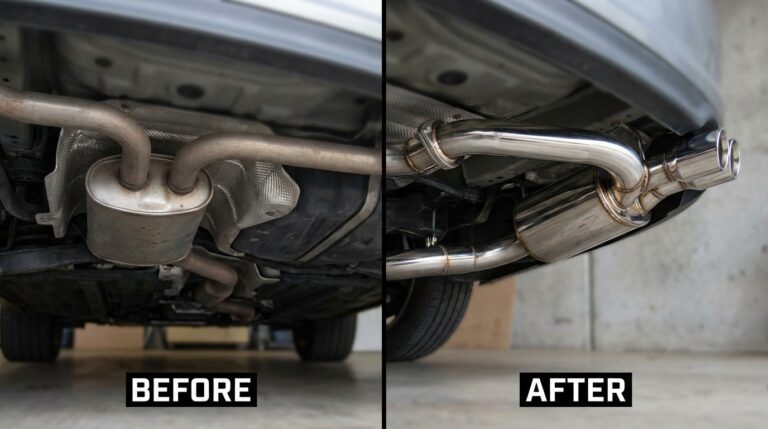
Stage 2 tuning relies on several key modifications. First, the intake system is typically replaced with a performance intake kit, improving airflow and allowing the engine to “breathe” better. Next, a complete exhaust system, or at the very least a stainless steel downpipe, is installed to reduce back pressure, which increases power and enriches the engine sound.
Turbo tuning becomes more advanced at this stage, with components adapted to increase boost pressure while ensuring the durability of mechanical parts. More advanced engine remapping is then essential to adjust fuel injection management, anticipate exhaust gas temperature, and balance combustion.
Technical performance and reliability optimization
Stage 2 tuning requires a delicate balance between increased power, engine reliability, and safety. This involves a rigorous analysis of mechanical and electronic parameters using dynamic test benches. Some tuners also favor the installation of a higher-performance intercooler to cool the compressed air and prevent overheating, a key factor in preventing engine damage.
A well-executed optimization can achieve a power increase generally between 80 and 120 horsepower, which profoundly alters the vehicle’s handling. This is a crucial step for those who want to transform their M3 into an even more extreme sports car, while maintaining a degree of drivability.
Here is a list of components generally modified in Preparation Stage 2:
- High-capacity air filter
- Forced intake kit
- Complete stainless steel exhaust or downpipe
- Large area intercooler
- Improved or optimized turbo
- Advanced engine reprogramming
Stage 3 Preparation: Ultimate BMW M3 Tuning for Unleashed Power
Stage 3 tuning on a BMW M3 represents a significant leap in quality, where engine modifications become a complete overhaul, often including reinforced internal components and optimization of all relevant systems. This stage is reserved for demanding enthusiasts seeking to exploit the full potential of the M3, particularly on the track or in high-performance driving.
Major technical works and adaptations
For Stage 3, the engine block undergoes significant modifications, with the pistons being replaced by forged models capable of withstanding high pressures and temperatures. The camshaft is often recalibrated to optimize the intake and exhaust phases, which noticeably increases maximum power.
Turbo tuning systems are also reaching extreme levels. Some installers fit larger or twin turbos, coupled with a completely redesigned electronic management system using dedicated control units. The fuel supply system is reinforced with higher-performance injectors and a high-pressure pump, ensuring sufficient flow for these high power outputs.
Impact on overall performance
Stage 3 tuning can boost the power of a BMW M3 well beyond 600 horsepower, transforming driving into a high-octane experience. These vehicles are then equipped with a reinforced clutch, adapted suspension, and often an upgraded braking system to manage this increased power.
Engine remapping at this stage is a technical work of art, completely bespoke. It must integrate all the data from the numerous modifications to ensure consistent performance and guarantee maximum safety. Driving thus becomes a discipline, with every mechanical element serving to harness this impressive power.
| Preparation | Extra power | Main changes | Recommended use |
|---|---|---|---|
| Stage 1 | +20 to 40 horsepower | Engine remapping, tuning box, air filter | Daily use, optimized |
| Stage 2 | +80 to 120 horsepower | Sport intake, stainless steel exhaust, intercooler, advanced ECU remapping | Sporty driving, semi-competitive |
| Stage 3 | +200 horsepower and more | Reinforced engine parts, larger turbocharger, dedicated ECU, reinforced clutch | Track, competition, extreme passion |
The advantages and limitations of engine remapping in BMW M3 tuning
Engine remapping is at the heart of BMW M3 tuning projects, offering often impressive performance optimization. This process involves modifying the electronic parameters that control the engine, including turbo management, fuel injection, and valve timing. The goal is to make the car more responsive, powerful, and sometimes more efficient.
The main advantage of engine remapping lies in its flexibility. It allows for performance adjustments without major mechanical modifications, and for reverting to the original settings if necessary. Thanks to technological advancements, remapping software is now capable of taking thermal and mechanical stresses into account to prevent premature wear.
Technical limitations and potential risks
However, if done incorrectly or taken to extremes, engine tuning based solely on remapping can lead to premature wear of components. The engine, turbochargers, and transmission can all be damaged if power is increased excessively without physical modifications. In cases of extreme modifications, reliability can be seriously compromised.
This is why a complete tuning package often includes the installation of a tuning box and regular monitoring through advanced electronic diagnostics. Balancing increased power and durability is crucial, especially for BMW M3 models, renowned for their robustness but susceptible to extreme use.
Here is a list of the advantages and limitations associated with engine remapping:
- Benefits : Fast and personalized optimization, improved responsiveness, easy adaptation
- Disadvantages: Risk of premature wear, dependence on the quality of the mapping, power limitation linked to the original mechanics
- Mitigation solutions: Installation of an additional control box, regular electronic monitoring, supplementary hardware upgrade
Focus on turbo tuning: the keystone of power in the BMW M3
Turbo tuning has become an essential component of Stage 1 to 3 preparations for the BMW M3. It is through the turbocharger, by optimizing its pressure and response, that the power is truly unleashed. The turbocharger combines air compression with rapid reaction time, crucial for achieving significant gains while maintaining driving comfort.
Turbocharger operation and optimization
The turbocharger works by using exhaust gases to drive a turbine that powers an air compressor. By increasing the density of the air entering the engine, it allows more fuel to be injected, thus increasing power. Turbo tuning involves recalibrating the electronic pressure control, modifying the variable geometry, or replacing the turbocharger with a higher-performance model.
Stage 2 and 3 modifications often rely on the installation of a larger or twin-turbocharger coupled with custom electronic management that maximizes boost pressure without risking engine damage. This technical upgrade requires rigorous monitoring and additional cooling components to prevent overheating.
Concrete example and testimony
An amateur driver who performed a complete turbo tuning on his BMW M3 F80 reports a 45% increase in maximum power, with the electronic management system recalibrated to take advantage of the increased boost pressure. Despite intensive sport use, the vehicle maintains high reliability thanks to the integration of a high-performance intercooler and revised fuel injection.
These results perfectly illustrate the major impact of well-executed turbo tuning in Stage 1 to 3 preparations. Turbocharging thus becomes the cornerstone of power increase, optimizing each engine component through advanced electronics.
What is the main difference between Stage 1 and Stage 3 preparation?
Stage 1 preparation focuses on engine reprogramming and minor modifications for a moderate power increase, while Stage 3 involves major internal engine modifications with a very high power increase, suitable for track or competition use.
Does tuning a BMW M3 affect engine reliability?
A properly executed engine remap doesn’t necessarily compromise reliability if accompanied by appropriate maintenance and regular monitoring. However, excessive modifications without mechanical support can increase the risk of premature wear.
Which parts are typically replaced during Stage 2 preparation?
Stage 2 modified parts include the intake system (sports intake kit), the exhaust (downpipe or full exhaust), the intercooler, and the turbo, which can be optimized or replaced with a higher-performance model.
Is it possible to revert to the original configuration after engine remapping?
Yes, engine remapping can usually be reversed to revert to the original mapping, allowing for some flexibility in vehicle use.