Car Customization: 10 Reasons to Choose Vehicle Wrapping

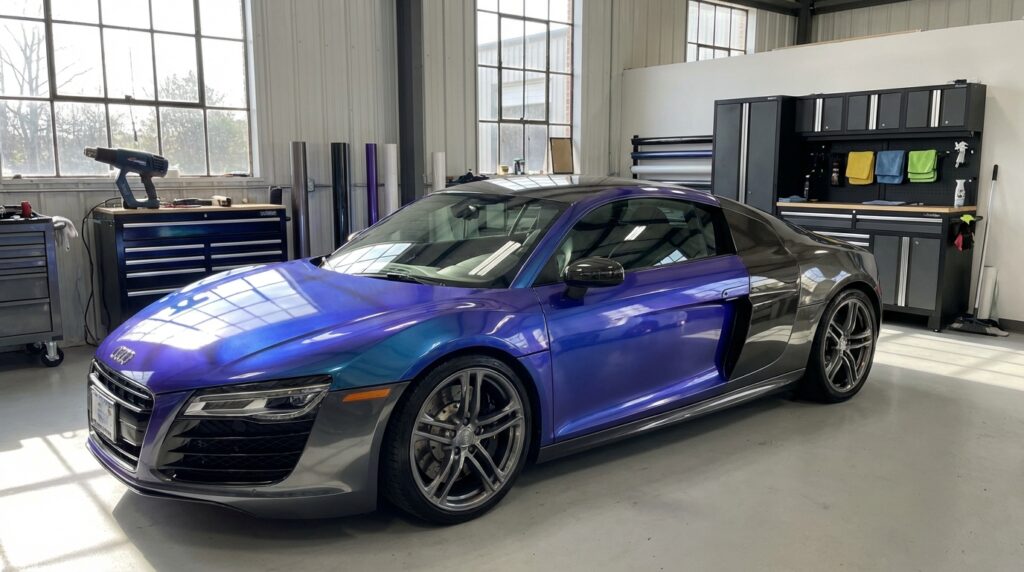
Car customization has become an essential trend for enthusiasts and vehicle owners looking to stand out. The rise of car wrapping allows for a quick, aesthetically pleasing, and innovative transformation, making a wide range of adhesive films available to everyone for reshaping car bodies and surfaces. Whether for a dramatic color change or effective paint protection, the solutions are now accessible, customizable, and reversible. Car wrapping continues to grow in popularity, thanks in particular to its ability to combine style, functionality, and preservation of resale value. Techniques are constantly improving, finishes are multiplying, and materials are offering new possibilities for creating a unique design.
This surge in popularity is also fueled by technological advancements in adhesive films, which offer improved scratch resistance and advanced aesthetic options such as carbon fiber wraps or temporary coatings with satin or matte finishes. Professionals offer solid warranties on these services, boosting customer confidence. In this competitive landscape, knowing how to choose the right adhesive film and understanding the advantages of vehicle wrapping is essential for achieving results that meet expectations. Furthermore, these services are suitable for both new vehicles and older models looking to revitalize their image without resorting to costly or irreversible traditional paint jobs.
Car wrapping: a revolution in automotive personalization
Car wrapping has revolutionized automotive aesthetics by offering a quick and reversible way to change a vehicle’s exterior appearance. More than just a cosmetic change, it’s a technical and design solution that relies on sophisticated adhesive films. These films are applied directly to the bodywork without damaging the original paint, allowing for temporary or long-term coverage as needed.
This technique significantly simplifies the car color change process compared to traditional painting, which requires lengthy preparation steps and offers uncertain durability. Vehicle wrapping allows you to go from a traditional color to a metallic, matte, or satin finish in a single day, or even to a texture that replicates materials like carbon fiber or brushed leather. For example, a driver wanting a unique design without a heavy financial commitment could opt for a carbon fiber wrap, which, while creating a racing look, will also effectively protect the bodywork from external damage, as seen on… this specialized article.
In short, adhesive film serves a crucial dual purpose: beautifying and protecting. This technology is appealing both for its aesthetic appeal and its ability to enhance bodywork protection, reducing the risks associated with minor scratches and impacts. Today, it’s possible to choose from various finishes and textures to best personalize each vehicle, reflecting the owner’s personality. This market has also become more professional, with specific training courses dedicated to vehicle wrapping installation, as presented here. this complete guide.
Optimal bodywork protection thanks to the wrap: a major advantage
Beyond its aesthetic appeal, vehicle wrapping stands out for its protective properties. The films used offer increased resistance to scratches, gravel chips, and environmental damage. For drivers keen to maintain their vehicle’s pristine condition, this temporary coating provides a valuable physical barrier that prevents costly bodywork repairs in the long run.
Some adhesive films incorporate advanced technologies, such as self-cleaning agents or UV-resistant treatments, which extend the lifespan of the wrap. This feature is particularly useful in areas exposed to harsh weather conditions or intense sunlight. It’s also important to note that these films can be replaced without damaging the original paintwork, making them ideal for high-value vehicles or classic cars.
The effectiveness of vehicle wrapping in terms of paint protection is often highlighted in the warranties offered by specialist workshops, particularly for professional installations. These warranties reinforce customer confidence and encourage them to choose this method over more traditional but less flexible solutions.
Let’s look at the main protective features of the vehicle wrap:
- Resistance to longitudinal and circular scratches : thus limiting micro-scratches caused by washing or contact with objects.
- Barrier against gravel chips : particularly useful for journeys on secondary roads or even in urban areas.
- UV protection preserving the original paintwork from discoloration and premature aging.
- Reduction of chemical impacts : protection against acidic or corrosive contamination, particularly in industrial areas.
To better understand the durability of these films, visit this analysis on the lifespan of the covering, which details the technical specifications according to the materials and conditions of use.
A range of finishes for a unique design and cutting-edge automotive personalization
The wide range of vehicle wrapping options caters to all types of drivers, from enthusiasts looking for a fresh new look to professionals seeking a distinctive design. This variety stems from the expanded selection of textures and finishes available today: matte, gloss, satin, chrome, metallic, carbon fiber, brushed leather, or velvet. Each finish lends a unique personality to the vehicle.
The choice of finish also influences visual and tactile perception, thus offering a highly precise tool for automotive personalization. For example, a satin film gives an elegant and sophisticated look, while a matte film emphasizes a modern and understated aesthetic. Understanding these distinctions is important for making an informed choice, which is what this comprehensive comparison aims to provide. between matte, glossy and satin.
More unusually, textures like brushed leather or velvet are popular for adding a touch of exclusivity and sensory refinement. As for chrome and metallic wraps, they provide an instantly recognizable premium look, highly valued in the world of high-end car customization, notably seen on… This article is dedicated to premium effects..
Here is a summary table of the main finishes and their characteristics:
| Finishing | Appearance | Typical use | Benefits | Disadvantages |
|---|---|---|---|---|
| Mast | Non-reflective, soft | Discreet design, luxury cars | Modern look, hides minor scratches | More difficult to clean |
| Bright | Intense brightness | Sports vehicles, visibility | Striking effect, easy to maintain | Highlights imperfections |
| Satin | Soft, silky effect | Elegant aesthetics, general use | Good resistance to marks | Higher cost than the mat |
| Carbon | 3D fiber texture | Racing look, protection | Technical and modern effect | Can be expensive |
| Brushed leather / Velvet | Exclusive tactile texture | High-end customization | Originality and refinement | Specific maintenance |
| Chrome / Metallic | Mirror or metallic finish | Luxury cars and show cars | Spectacular visual effect | Sensitive to scratches |
Choosing a finish should take into account the intended use, the desired aesthetic, and the available budget, bearing in mind that it’s possible to combine several finishes for a personalized and unique wrap. This wide range of options is one of the main attractions in the democratization of car customization through wrapping.
Car color changes made easy with wrapping: flexibility and innovation
Vehicle wrapping is revolutionizing the way we change a vehicle’s exterior color. Where traditional painting is a lengthy, expensive, and irreversible process, adhesive film offers a flexible and temporary alternative. This flexibility is a significant advantage for both enthusiasts who like to frequently change their vehicle’s appearance and professionals who need to adapt their fleet.
Applying a film allows not only for a solid color, but also for patterns, gradients, or complex graphics without the constraints associated with painting. This allows for increased creativity in car customization, with the possibility of regularly updating the look of your vehicle without damaging it or impacting its resale value.
Moreover, vehicle wrapping offers a wealth of modern technologies: heat-shrink films for easy application, repositionable adhesives for meticulous adjustment, and protective coatings to enhance pigment durability. This process also preserves the underlying paint, a crucial advantage for resale.
Furthermore, to better understand the limitations and advantages, it is also relevant to explore the disadvantages of covering and how they can be overcome using rigorous professional techniques. This type of in-depth analysis allows users to appreciate the true added value of vehicle wrapping compared to simple painting.
The possibility of shading, special effects, or vibrant finishes opens up a virtually unlimited range of possibilities. For example, one service company offers customized vehicles with matte wraps combined with carbon fiber accents for a unique and instantly recognizable design, while also providing enhanced paint protection.
Vehicle wrapping: a strategic investment to preserve resale value
Often overlooked, one of the main reasons for choosing vehicle wrapping is also related to increasing the vehicle’s resale value. A well-protected body, without any damage to the original paint, boosts buyer confidence and facilitates resale at a better price. This point deserves particular attention, given that the paint is one of the first components to show visual wear on a vehicle.
Adhesive films act like a second skin, protecting the bodywork from damage and thus extending the vehicle’s aesthetic lifespan. Many professionals offer official guarantees on the quality and durability of the films applied, perfectly illustrating the value of this investment, as detailed on This page is dedicated to warranties..
However, improper installation or an unsuitable choice can negate this advantage, highlighting the need to use qualified and reputable professionals. Therefore, checking customer reviews and knowing where to find the best vehicle wrapping shop near you is essential, as clearly explained in this article. on the search for experts.
Here is a list of the concrete benefits of vehicle preservation through wrapping:
- Maintaining the integrity of the original paintwork preventing degradation due to UV rays and mechanical damage.
- Option to return to factory finish by simply removing the adhesive film without leaving any trace or damage.
- Increase in perceived value at resale, thanks to an impeccable and well-maintained bodywork.
- Reduction in maintenance costs and repairs related to scratches and impacts.
- Commercial attractiveness enhanced by an aesthetically pleasing personalization.
What is the average cost of a car wrap?
The average price of a vehicle wrap depends on the surface area to be covered, the complexity of the installation, and the type of film chosen. Generally, it ranges from €1,500 to €4,000. For more details, see [link to relevant page]. this price estimate.
Does the wrap damage the original paintwork?
When applied and removed correctly by professionals, vehicle wrapping does not damage the original paintwork. It even helps protect it from external damage.
What guarantees are offered when installing a vehicle wrap?
Reputable workshops offer warranties covering the lifespan of the adhesive film, its resistance to peeling and deformation. More information about warranties is available on this link.
Can the color of the adhesive film be easily changed?
Yes, wrapping is a temporary coating that can be removed to change the color or design without damaging the bodywork.
What are the disadvantages of vehicle wrapping?
While very practical, vehicle wrapping has some drawbacks, such as potential wear and tear, sometimes high cost, and limitations in terms of local repairs. A clear analysis of the disadvantages is available via This item.