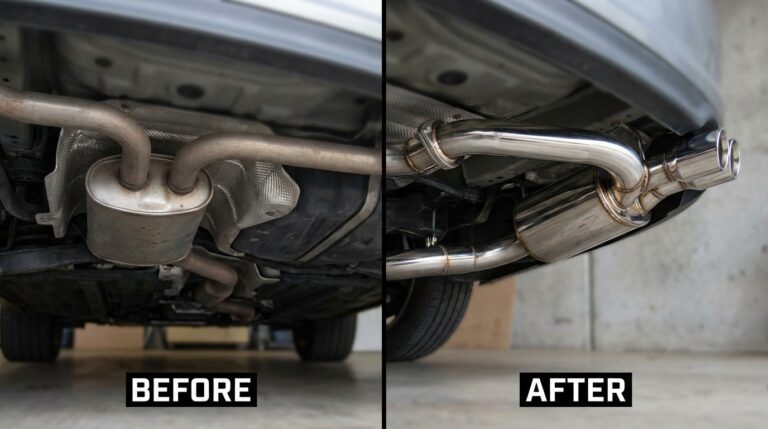
Stage 1 Tuning: What Is It?

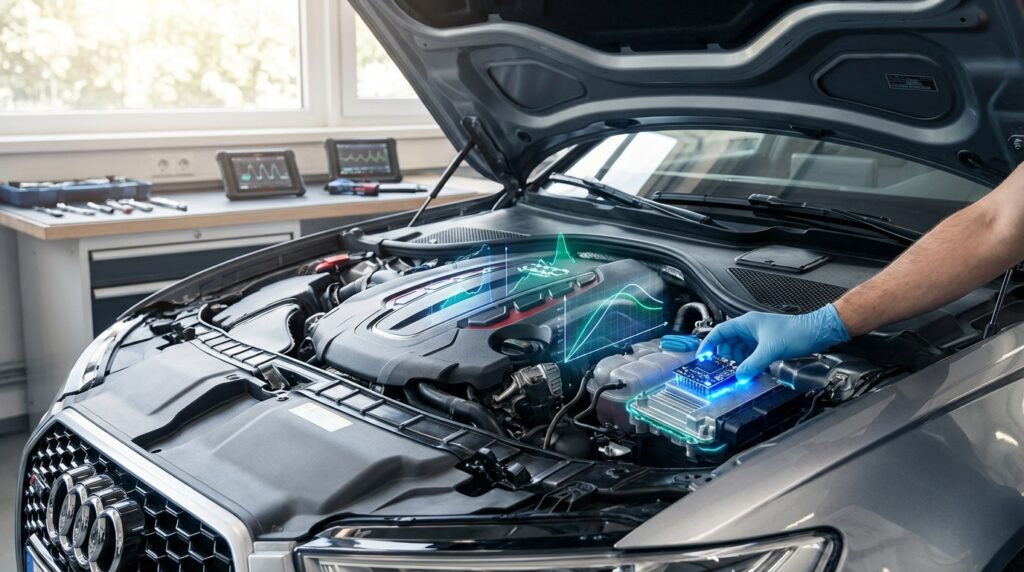
At the heart of the relentless quest for improved automotive performance, Stage 1 tuning has become an essential step for enthusiasts looking to unlock their vehicle’s latent potential. This accessible and often safe engine optimization relies primarily on ECU remapping to extract more engine power and torque while optimizing fuel efficiency. In a context where car modification sparks both enthusiasm and debate, understanding the ins and outs of Stage 1 tuning is crucial for anyone wishing to combine performance with adherence to technical constraints. Discovering this world means entering a sophisticated technical realm where engine mapping and automotive tuning intersect to reveal new driving sensations.
The Technical Foundations of Stage 1 Tuning and its Impact on Car Performance
Stage 1 tuning is primarily a software modification involving the reprogramming of the engine control unit, or ECU. This process modifies the engine mapping, meaning the electronic parameters that regulate combustion, fuel injection, ignition timing, and, in some cases, turbocharger management. By adjusting these parameters, the goal is to maximize available engine power without damaging the engine or compromising the vehicle’s reliability.
The tangible gains are visible through a noticeable improvement in engine torque, resulting in better acceleration and a more responsive feel from low revs. For example, a vehicle with a turbocharged engine can see its power increase by 15 to 30% after a Stage 1 remap, without any hardware modifications. This result is made possible by fine-tuning the boost pressure and ignition timing, thus unlocking the power hidden beneath the factory settings, often cautiously calibrated by manufacturers to meet emissions and sustainability standards.
The car’s performance is also improved by better management of the intake and exhaust systems, which, in synchronization with the ECU, allow for optimal air intake and efficient exhaust gas evacuation. This also reduces energy losses in the engine cycle, contributing to improved fuel efficiency—a significant benefit for those seeking to combine power and economy.
It is crucial to note, however, that Stage 1 tuning must be carried out by professionals capable of precisely calibrating the engine mapping according to the vehicle’s specific characteristics (engine type, fuel used, fuel consumption). This customization ensures that the increased performance does not compromise mechanical safety or compliance with environmental standards.
ECU Remapping: Techniques, Advantages and Limitations of Stage 1 Tuning
Understanding ECU remapping is fundamental to grasping the technical implications of Stage 1 tuning. The ECU controls engine operation in real time, adapting ignition, injection, and other parameters according to driving conditions. Remapping involves modifying these codes to adopt a more aggressive strategy, often unattainable with the original configuration.
The main methods used include direct ECU flashing via an OBD-II interface or the use of pre-configured maps tailored to the model and the rider’s preferences. Even today, the popularity of Stage 1 tuning is justified by its non-invasive nature, as it doesn’t require complex hardware modifications such as swapping parts or adding extra components. A simple software update is all it takes to unlock a new driving dynamic.
The advantages are numerous: in addition to the engine power gainThe optimization improves engine flexibility and the torque curve, offering better handling and a more intense acceleration experience. Engine responsiveness is also enhanced in the mid-range, a crucial area for both everyday driving and sporty performance.
However, the limitations of Stage 1 tuning must be considered. It is not universally applicable to all engines, and some configurations, particularly older naturally aspirated engines, may not offer a significant gain. Furthermore, while adapting the engine mapping for more power, fuel consumption may increase slightly during spirited driving, thus impacting fuel efficiency. Finally, it is important to verify compliance with legal standards and manufacturer warranties, which can sometimes be affected by ECU remapping.
A comparative study of reprogrammed engines shows that the balance between mechanical safety and performance improvement must be rigorously established, a point that demystifies the common misconception that car tuning is necessarily risky.
The Implications of Stage 1 Car Modification on Vehicle Durability and Maintenance
Approaching Stage 1 tuning requires understanding the consequences on the vehicle’s mechanical longevity. Any modification to an engine’s operation generates changes in the stress placed on its parts and increases component wear. However, in the case of a Stage 1 remap performed correctly, the impact is generally controlled and compatible with daily use.
The key lies in the very nature of the modification: unlike higher-level tuning involving heavy hardware additions (reinforced turbos, sports exhaust systems, intercoolers, larger injectors), Stage 1 tuning focuses on software optimization. The engine mapping is calibrated to remain within a framework where the original engine can evolve without experiencing excessive stress. For example, tests carried out on several models show that the engine power is increased while keeping operating temperatures under control, which reduces the risk of overheating and premature wear.
It is also recommended to complement Stage 1 tuning with rigorous maintenance, including regular checks of the injectors, spark plugs, and cooling system. This preventative maintenance helps extend the life of the modified engine and avoid failures related to increased internal stress. The quality of the fuel used also plays a crucial role, as optimized engine maps often benefit from higher-quality fuel (for example, premium unleaded 98 octane), which contributes to cleaner and more efficient combustion.
Here is a list of precautions to take after a Stage 1 car modification:
- Always check the recommended maintenance intervals.
- Use a fuel suitable for the new engine settings.
- Monitor engine temperature during intensive driving phases.
- Avoid prolonged acceleration without a cooling phase.
- Schedule regular electronic diagnostics for optimal monitoring.
Achieving a good balance between optimization and maintaining reliability therefore requires advanced technical expertise, while respecting the limits imposed by the original mechanics.
Engine Mapping and Advanced Customization as part of Stage 1 Tuning
Engine mapping is at the heart of Stage 1 tuning. By 2026, technological advancements in this field allow for highly precise and adaptive customizations tailored to the specific needs of the car owner. Rather than applying a generic solution, automotive tuning professionals use dynamometers and sophisticated software to precisely calibrate the engine management system.
This advanced customization allows for real-time adjustment of various parameters such as ignition timing, turbo pressure, air/fuel ratio, and even the management of electronic driver aids (ESP, traction control). This level of precision guarantees not only tailored power and torque gains, but also improved durability and optimized fuel efficiency.
A concrete example illustrates this approach: a Nissan 350Z, remapped to stage 1, benefited from a custom map that prioritized maximum engine torque around 3000-4000 rpm, the area most used during sporty driving on the track. The result was a significant improvement in responsiveness and a more engaging driving experience, without compromising fuel consumption or mechanical safety.
The table below compares key parameters between a stock map and a custom Stage 1 map:
| Setting | Original Mapping | Stage 1 Personalized |
|---|---|---|
| Maximum power (hp) | two hundred eighty | three hundred thirty |
| Maximum torque (Nm) | three hundred fifty | four hundred twenty |
| Combined fuel consumption (L/100km) | 8.5 | 8.0 |
| Time 0-100 km/h (s) | 6.0 | 5.5 |
This type of technical and meticulous intervention perfectly illustrates how Stage 1 tuning has become much more than a simple increase in raw power. It is now a tool for overall optimization, reconciling performance, safety, and economy.
Current Trends and Prospects for Stage 1 Tuning in the Automotive Industry
With the rapid evolution of embedded technologies and the tightening of environmental standards by 2026, Stage 1 tuning is positioning itself more than ever as a rigorous and regulated technical practice within the automotive tuning sector. Professionals in the field are investing in advanced tools to perform precise ECU reprogramming, capable of improving vehicle performance while contributing to better fuel efficiency.
Furthermore, the transition to hybrid and electric powertrains is disrupting traditional approaches. However, Stage 1 tuning remains relevant, particularly for internal combustion engines, which are still widely used. Innovation in digital engine mapping is also paving the way for hybrid solutions, combining reprogramming and intelligent energy management to maximize both engine power and durability.
We are also seeing a rise in online car tuning services, where custom engine maps are delivered directly via secure platforms, increasing the accessibility and personalization of this practice, which has become almost industrialized. The future of Stage 1 car modifications therefore lies in a trend of advanced technological integration and adaptation to ever-increasing performance demands, within a sophisticated and secure technical framework.
Here are some key industry trends to watch:
- Increasing integration of artificial intelligence to refine engine mapping.
- Development of adaptive software capable of modulating performance in real time.
- Stringent environmental standards that promote the optimization of fuel efficiency.
- Personalized and digital tuning offers for easy access.
- Predictive maintenance linked to ECU reprogramming to extend engine life.
In this integrated environment, the practice of stage 1 tuning is emerging as a complex technical discipline, where expertise and experience play a fundamental role in guaranteeing reliable and lasting results.
What is stage 1 tuning?
Stage 1 tuning is an ECU reprogramming aimed at optimizing the engine’s electronic parameters to increase power and torque, without hardware modification.
What are the concrete benefits of stage 1 tuning?
Improved engine power, engine torque, better responsiveness, and potential fuel efficiency gains depending on driving style.
Does stage 1 tuning affect the manufacturer’s warranty?
Yes, generally ECU reprogramming voids the manufacturer’s warranty, unless it is carried out by an authorized center or under certain specific conditions.
Does stage 1 tuning increase fuel consumption?
In normal driving, fuel efficiency can be slightly improved, but in sporty driving, consumption may increase.
Is stage 1 tuning compatible with all types of engines?
Stage 1 is more suitable for recent turbocharged engines; naturally aspirated engines may not benefit from a significant gain.