What is vehicle wrapping?

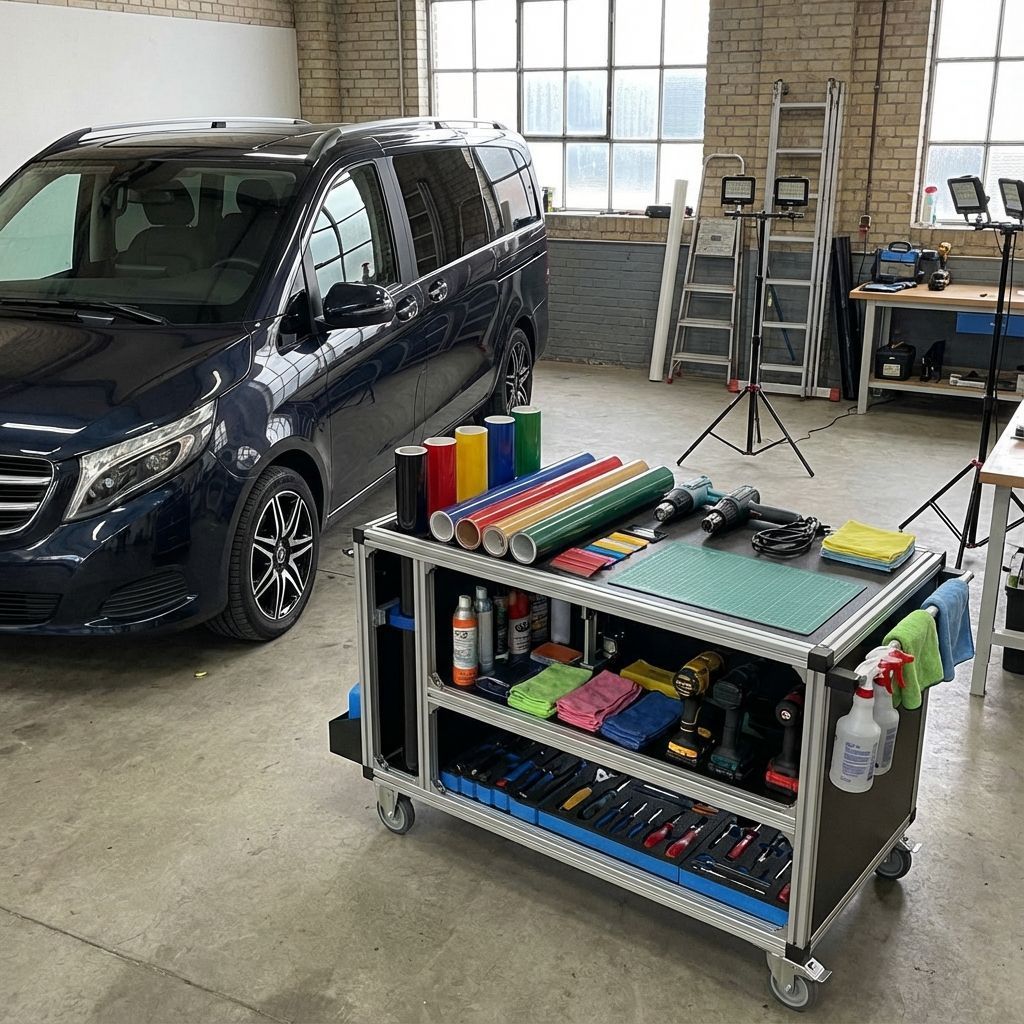
What is vehicle wrapping? This technique involves applying an adhesive film (vinyl) to a surface—most often a vehicle’s body—to modify its appearance or protect it. Vehicle wrapping can be partial (roof, hood, mirrors) or total (full wrap), with various finishes available: matte, satin, glossy, carbon fiber, chrome, textured, etc.
While vehicle wrapping initially gained popularity in the advertising world (signage and company fleets), it has established itself as a credible alternative to paint for customizing cars, motorcycles, vans, and even certain interior elements. Its success stems from an appealing balance: a quick aesthetic transformation, protection of the surface, reversibility (when applied and removed correctly), and a cost that is generally more controlled than high-end paint.
But not everything is created equal: film quality, surface preparation, application technique, environment (temperature, dust), usage (highway, salt, parking in the sun), and maintenance all significantly influence the finish and lifespan. Vehicle wrapping also raises practical questions: how much does it cost? how long does it last? is it legal? how do you maintain it? how do you avoid bubbles, visible seams, or shrinkage?
Here is a comprehensive, educational, and actionable overview to understand the covering, its benefits, its limitations and best practices for a clean and sustainable result.
Definition of vehicle wrapping and its operating principle
THE covering (often called “wrapping”) refers to the application of a thermoformable vinyl film to a surface. On a vehicle, the film is applied in panels (hood, fenders, doors, etc.) and conforms to the shape using heat (heat gun) and pressure (squeegee). The film adheres via a pressure-sensitive adhesive, designed to reposition itself during application and then bond permanently.
The key point: vehicle wrapping is not simply “sticker paint” in the simplistic sense, but a technical material. Premium films incorporate technologies that facilitate application:
- Air exhaust ducts (air release) to limit bubbles.
- Repositionable glue during installation, then more stable after smoothing.
- Dimensional stability to limit the withdrawal over time.
- UV protection variable depending on the range and finishes.
Full wrap, partial wrap, and PPF: don’t confuse them
Several similar concepts are often confused. However, the objectives and materials differ.
Full coverage All visible bodywork elements are covered. The objective is primarily aesthetic (change of color, finish, effect). This is the most spectacular solution, but also the most demanding in terms of preparation and application: the slightest dust, inadequate degreasing, or a poorly aligned corner will be quickly noticeable.
Partial coverage Only certain areas are wrapped. Examples: glossy black roof, carbon fiber hood, decorative stripe, side skirts, mirrors. It’s often a good budget compromise and an excellent way to “try out” a wrap. You can also visually alter a car (a black roof to “slim down” the silhouette, satin elements for a sportier look).
PPF (Paint Protection Film) PPF: A transparent (or slightly tinted) protective film primarily designed to protect the paintwork from impacts, micro-scratches, and other damage (gravel, insects, scuffs). PPF is thicker and more elastic than colored vinyl wraps. Some PPFs are self-healing (heat helps to reduce micro-scratches). Remember: PPF focuses on protection, while vinyl wraps are primarily for style (although vinyl wraps also offer some protection, but less so than PPF).
In practice, a common strategy is to make a covering colour + a transparent PPF on exposed areas (front bumper, hood, mirrors) if the vehicle is driven a lot.
How does a vehicle wrap installation work (key steps)?
A successful wrap starts even before the film is unrolled. The application relies on a strict method, otherwise defects quickly appear: bubbles, dust, peeling edges, visible seams, or film that shrinks.
- Media inspection The bodywork must be in good condition. Peeling paint, active rust, or a varnish at the end of its life increases the risk of damage during removal.
- Washing + decontamination : thorough washing, then decontamination (tar, resin, metallic particles). The aim is to obtain a perfectly clean and “smooth” surface.
- Degreasing Isopropyl alcohol (IPA) or dedicated products. Sensitive areas: handles, seals, edges, headlight surrounds, rocker panels.
- Partial disassembly (Depending on the level of finish): logos, certain seals, handles, repeaters… The less you disassemble, the more visible the cutouts will be. The more you disassemble, the more the result can be “paint-like,” but this requires expertise and time.
- Installation and smoothing : installation, controlled tension, smoothing from the center outwards to expel air.
- Heating / thermoforming The film is heated to conform to the curves. Overheating can weaken it; underheating can cause the film to “rebound”.
- Post-heating : controlled heating on stretched areas (corners, hollows) to stabilize the film and reduce the risk of peeling.
- Finishes : clean cuts, folding over on returns, checking edges.
Credible anecdote On a black compact car, an individual had chosen a glossy vinyl roof installed “dry” in an unheated garage. At first glance, the result was impeccable. Two weeks later, after alternating periods of frost and sun, two corners shrank, revealing a paint stripe. The cause wasn’t “a bad film” but the lack of post-heating on the corners, combined with installation in temperatures that were too low. This type of detail explains why a wrap can look superb… or age very quickly.
What is the purpose of vehicle wrapping? Advantages, limitations, and use cases
THE covering It’s not just a “tuning fad.” It addresses real needs: personalization, visual communication, relative paint protection, fleet uniformity, or aesthetic enhancement of a vehicle without repainting. Its appeal depends primarily on the context: the condition of the paint, the objective (style vs. protection), the expected duration, and the budget.
Here are the main reasons for choosing a vehicle wrap, with an honest reading of the benefits and limitations.
The advantages of vehicle wrapping (aesthetics, protection, reversibility)
Quick customization Changing the color of a car with a full paint job is a lengthy, expensive, and sometimes administratively burdensome process. Vehicle wrapping allows for faster transformations, with a wide variety of finishes:
- Deep matte (“stealth” look);
- Satin finish (a visually easy-to-maintain compromise);
- Glossy (similar to paint but more susceptible to micro-scratches depending on the film);
- Special effects: pearlescent, metallic, chameleon, carbon, brushed, glittery…
Protection of the original paintwork The wrap protects against light micro-scratches, UV rays (depending on the film), minor scuffs, and small everyday wear and tear. Note: against heavy stone chips, a vinyl wrap offers less protection than a paint protection film (PPF). However, the film can act as a “sacrificial layer”: the film can be replaced instead of repainting.
Reversibility : one of the main arguments of covering is the possibility of reverting to the original paint finish. In practice, reversibility depends on three factors:
- Quality and age of the paint (a weakened paint may come with the film).
- Film quality (stable adhesive, premium film).
- Duration of exposure and conditions (sun, outdoor parking, aggressive washing).
Communication and visual identity For businesses, vehicle wrapping is a mobile advertising medium. It allows them to brand a fleet (utility vehicles, vans, cars) with a consistent visual identity: logos, contact information, services. It’s often referred to as… advertising covering or vehicle marking (partial or total).
Resale value In some cases, protecting the original paintwork (especially on delicate colors) helps maintain its good cosmetic condition. Removing the film when reselling can reveal better-preserved paint. Conversely, a damaged or poorly applied film can worry a buyer.
Limitations and drawbacks: what vehicle wrapping doesn’t do (or does poorly)
It’s not a miracle cureA film applied to a car body with defects does not hide everything: dents, deep scratches, cracks in the varnish will remain visible, sometimes accentuated by certain finishes (glossy, metallic).
Variable lifespan A vehicle wrap doesn’t last “10 years” under normal conditions, especially outdoors. Manufacturers often advertise theoretical lifespans (e.g., 5 to 7 years) which depend on the climate, orientation, maintenance, and color (some shades and finishes age faster). A car parked in direct sunlight in the south won’t age the same way as a car stored in a temperature-controlled garage.
Sensitivity to bad practices :
- High-pressure cleaning too close to the edges;
- Aggressive products (solvents);
- Prolonged parking under resin/sap;
- Repeated friction (doors, brambles, poorly secured bicycle wheels).
A wrap does not “repair” a paint jobIf the surface is damaged, the film will only be temporary and removal risky. A good installer will sometimes refuse to install it or recommend localized repairs beforehand.
Visual differences On some cars, complex areas (highly sculpted bumpers, air vents, door handles, trim strips) can lead to more visible joins or cuts. A high-end installation minimizes these effects, but this increases labor time (and therefore the price).
Quote “The quality of a wrap is judged less by what you see in a parking lot than by what you don’t see on the edges and returns.” — a workshop maxim often shared by installers specializing in wrapping.
How much does a vehicle wrap cost? Pricing factors, service levels, and examples
The price of a covering The cost varies primarily depending on the surface area to be covered, the complexity of the vehicle, the desired level of finish, and the quality of the film. Two cars of similar size can have very different costs: a highly perforated bumper, moldings, complex door handles, or significant disassembly quickly increases the installation time.
It is therefore more useful to understand the price variables than to look for a “single” price.
The main factors that affect the price of a vehicle wrap
- Type of covering partial (cheaper) vs total (more expensive).
- Vehicle size : city car, sedan, SUV, utility vehicle, van.
- Complexity of shapes : sharp angles, large curves, inserts, spoilers, sporty bumpers.
- Movie quality : premium films (more stable, better rendering) vs entry-level.
- Finishing : some effects (chrome, chameleon, textures) cost more and are more delicate to apply.
- Preparation : decontamination, light correction, removal of old films, intensive cleaning.
- Disassembly Removing badges, handles, lights, seals… increases time but improves the finish.
- Guarantees and conditions : installation environment (clean workshop), monitoring, after-sales service.
A “budget” vehicle wrap is often one where cost-cutting is achieved by cutting corners: basic film, minimal preparation, little disassembly, and quick finishing. This might be suitable for temporary use (events, short-term advertising) but is riskier for those seeking a premium look.
Examples of price ranges (indicative)
Prices vary depending on the region and the workshop. Here are some realistic guidelines (order of magnitude):
- Partial coverage (roof, hood, mirrors): often a few hundred euros to around €1,000 depending on surface area and finish.
- Total city/compact coverage : often between ~€1,800 and €3,500 depending on the film and level of finish.
- Full wrap for sedan/SUV : frequently ~€2,500 to €4,500.
- Utility vehicle / van Depending on the surface area and markings, this can exceed ~€4,000.
- Special films (chrome, highly technical effects): potentially significant additional costs, and more demanding maintenance.
These prices generally include the film and labor. Be wary of extremely low prices for a full wrap: either the film quality is poor, the finishing and preparation will be limited, or the installation is done too quickly (and problems will appear later).
Quotes: what to ask to properly compare two offers
To evaluate a quote from covering, asks for concrete elements rather than an “overall price”:
- Brand and film reference (range, finish, conformity for automotive use).
- Estimated duration of vehicle placement and immobilization.
- Disassembly level planned (logos, handles, seals…).
- Treatment of complex areas (bumpers, corners, recesses).
- Warranty conditions (peeling, bubbles, shrinkage) and exclusions (washes, parking, products).
- Maintenance tips handed over upon delivery.
A good quote explicitly states these points, as they are what determine the final result and its durability.
Lifespan, maintenance, and mistakes to avoid for a durable vehicle wrap
The longevity of a covering It depends as much on the film itself as on the actual use of the vehicle. A premium film can be ruined in 18 months if poorly maintained, while a properly maintained film can remain presentable for several years.
The right approach: consider the covering as a “coating” which requires simple but regular hygiene, and avoid practices that attack the edges and the glue.
How long does a vehicle wrap last (and why does it vary)?
Typical lifespan depends on:
- UV exposure Direct sunlight, altitude, and hot climate accelerate discoloration and drying.
- Color and finish : some matte/satin finishes show wear more quickly; some light or highly saturated pigments may change more rapidly.
- Parking : garage vs permanent outdoor space.
- Washing frequency and method : aggressive rollers = micro-scratches and weakened edges.
- Installation quality : post-heating, edge treatment, controlled tension.
On a daily driver, the goal is often to maintain a “very clean” appearance for several years if the film is of high quality and maintenance is consistent. Beyond that, it can remain in place, but the aesthetics (micro-scratches, fading) may necessitate removal and replacement.
Recommended maintenance: simple steps that make all the difference
To maintain a covering :
- Hand wash with pH neutral shampoo, clean microfiber glove, rinse thoroughly.
- High pressure : possible, but keep a reasonable distance, avoid focusing on edges and corners, do not direct the jet “under” the film.
- Avoid the rollers (especially brushes): they create micro-scratches and can catch on edges.
- Drying : soft microfiber to limit marks (especially on matte/satin).
- Suitable products : some quick detailers and waxes are compatible, but be careful with polishing products on matte films (they can create shiny areas).
On matte or satin film, the golden rule is to avoid any polishing or abrasive products. For glossy film, you can sometimes use gentle, vinyl-compatible products, but aggressive polishing is always a bad idea.
Common mistakes: bubbles, peeling edges, streaks and discoloration
Here are the typical causes of problems:
- Placement on contaminated surface : wax, silicone, dust, tar residue → poor adhesion and bubbles.
- Excessive tension in the hollows → retraction, detachment on edges.
- No post-heating → the film “returns” to its original shape, especially in the thermoformed areas.
- Cuts made with a craft knife on the paint (uncontrolled) → trademarks and risks of filing.
- Aggressive washing repeated → edges damaged, tarnished appearance.
If you notice a corner lifting up, it’s better to act quickly (return to the workshop) rather than letting water and dirt seep in: this increases the detachment and complicates the repair.
Regulations, insurance and best practices before getting a vehicle wrap
Before modifying a vehicle’s appearance, two aspects must be considered: legality (color, visibility, markings) and administrative requirements (insurance, vehicle registration, depending on the country/case). covering is generally tolerated because it is reversible, but some modifications can be problematic if they affect vehicle identification, safety, or compliance.
Colour change: what does the regulation say (and when to declare)
Depending on the jurisdiction, the vehicle’s “primary color” may have to match the official registration information. In France, this issue comes up frequently: a significant and lasting change in color may require administrative procedures (for example, if the dominant color changes). In practice, many vehicle wraps are approved without formalities, but this is not guaranteed.
The most careful:
- Check local requirements (ANTS / vehicle registration document, etc.).
- Avoid colours/effects that could be confused with priority or regulated vehicles.
- Keep the invoices and film references (useful in case of inspection or resale).
If you make a covering Advertising (logos, contact information) does not change the administrative color, but it can alter the overall appearance. Here again, caution is advised to ensure that the markings do not obscure regulatory elements (license plates, lights, reflectors).
Insurance: Do you need to declare a vehicle wrap?
A cosmetic wrap (such as a color change) can be considered a significant modification. Some insurance companies require that modifications be declared, especially if they increase the vehicle’s value (premium film, full wrap) or if the vehicle has a special finish.
Good reflex:
- Send an email to the insurer with the description: covering total/partial, value, invoice.
- Check if the equipment/transformations are covered (theft, vandalism, damage).
- Ask how a claim will be handled: actual cost reimbursement, depreciation, limit, deductible.
For a company, the declaration is even more important: the advertising film represents a cost and the immobilization of the vehicle in case of vandalism can be critical.
Choosing a good workshop: concrete criteria and questions to ask
To avoid disappointment, evaluate the workshop based on evidence and practices, not just Instagram photos:
- Realistic portfolio : close-ups of edges, returns, complex areas.
- Clean workshop Dust is the number one enemy.
- Transparency on the film brand and the method.
- Warranty conditions written.
- Maintenance Tips supplied (and consistent with the finish).
Simple questions that quickly filter results:
- What is the exact film (brand/reference)?
- Do you systematically perform post-heating?
- What parts are disassembled on this model?
- How do you handle bumpers and highly thermoformed areas?
- How long should the treatment last before washing?
FAQ — What is vehicle wrapping?
Does the wrap damage the paintwork?
A covering Applying it to sound, original paintwork generally does not damage the bodywork. The risks arise mainly if the paint is fragile (repainted, peeling varnish, rust), if the film has been left on for too long, or if the removal is done too quickly and when the paint is cold.
Can you put a wrap on a car that’s already been repainted?
Yes, but it’s riskier. Non-original paint may have different adhesion and peel off during removal. A professional will check the condition of the clear coat and may refuse to work if the surface isn’t sound.
What is the difference between vehicle wrapping and painting?
The paint permanently alters the color, whereas the covering Apply a reversible film (under good conditions). Paint often offers superior depth and durability, but is more expensive and requires more downtime. Vehicle wrapping offers more visual impact and a faster transformation.
Can you wash a car with a wrap in a car wash using rollers?
This is not recommended. Rollers (especially brush rollers) create micro-scratches and can snag the edges of the film. Opt for hand washing or a high-pressure washer with caution.
Does a vehicle wrap hold up in the sun and in winter?
Yes, but aging accelerates with strong UV exposure and repeated hot/cold cycles. The quality of the film, the installation (especially post-heating), and the parking location (garage vs. outdoor) make all the difference.
How long does it take to install a full vehicle wrap?
Depending on the vehicle and the level of finish, this can take anywhere from one full day to several days. The time includes preparation, installation, finishing touches, and sometimes a period of immobilization for stabilization before certain washes.
Can you install a vehicle wrap yourself?
A covering A partial wrap (roof, small sections) is possible if you’re meticulous and well-equipped. A full wrap requires real experience: tension management, post-heating, complex surfaces, clean cuts. Failures often cost more than a professional installation.
Is it legal to use a vehicle wrap with a very flashy color or a chrome effect?
Legality depends on local regulations and the impact on safety (glare, confusion with emergency vehicles, visibility of license plates/lights). Before choosing an extreme effect (mirror chrome, highly reflective), check the applicable regulations and seek professional advice.
Conclusion
What is vehicle wrapping? It’s a technical and aesthetic solution that involves covering a surface—particularly a vehicle’s bodywork—with a vinyl film to change its appearance and provide light protection. Its advantages are significant: quick customization, a wide variety of finishes, reversibility, and relevant use in business communication.
To achieve a lasting result, everything hinges on three key elements: a flawless surface, a high-quality film, and expert application (including post-heating and clean finishing touches). The price largely depends on the level of service and the complexity of the vehicle: it’s best to compare detailed quotes rather than prices per meter. Finally, proper maintenance (gentle washing, attention to edges, and appropriate products) is essential for long-term durability.
If your goal is a premium finish that will last for several years, the best strategy is to choose a reputable workshop, ask for the exact film reference, and align your expectations (style, protection, budget) with the right solution: covering partial, total, or PPF.