Mercedes AMG tuning: Stage 1 vs Stage 2


The tuning of Mercedes-AMG models is increasingly captivating performance and engine optimization enthusiasts. Boost options such as Stage 1 and Stage 2 are generating growing interest among owners looking to fully exploit the potential of their vehicles. Focusing primarily on a substantial power increase, these remapping stages vary in terms of technical modifications, results, and budget. The distinction between Stage 1 and Stage 2 rests on several key parameters, ranging from electronic reprogramming to the installation of additional mechanical components, all directly influencing the car’s overall performance. This duality is as intriguing as it is appealing, addressing the balance between reliability, tangible gains, and driving experience. Understanding the substantial differences between these two tuning phases will enlighten anyone considering a more advanced yet controlled modification of their Mercedes-AMG.
A clear understanding of the benefits and limitations of Stage 1 versus Stage 2 is essential before making any investment. Whether it’s improving acceleration times, optimizing engine torque, or modifying the exhaust system, every technical detail deserves careful consideration. Legal issues and the impact on engine durability must also be taken into account, with the choice of spare parts and the quality of the engine remapping playing a central role in the decision-making process. Supported by specific examples and data analysis, this guide to the world of Mercedes AMG tuning aims to provide a comprehensive overview of Stage 1 versus Stage 2, enabling every enthusiast to make an informed decision based on their priorities. Accessing specialized resources will further enrich this topic with comparative perspectives on other brands and practical advice on the various stages of the tuning process.
Understanding Stage 1: Dedicated engine optimization and light remapping
Stage 1 in Mercedes AMG tuning generally corresponds to the first stage of engine optimization, characterized by targeted electronic reprogramming without major modifications to mechanical components. By modifying the engine control unit (ECU) mapping, a significant increase in power and torque is achieved, while maintaining an aesthetic and mechanical performance close to the original.
This phase is based on a precise and calibrated remapping which adjusts essential parameters such as boost pressure, ignition timing, fuel management, and sometimes throttle opening. The goal is to maximize the existing capabilities of the AMG engine without risking damage to mechanical components. For example, on a Mercedes-AMG C63, a Stage 1 tune often provides an additional 30 to 50 horsepower, significantly improving acceleration performance.
Furthermore, Stage 1 is frequently combined with simple, non-invasive modifications such as the installation of a sports air filter or optimizing the catalytic converter to reduce back pressure in the exhaust. These small adjustments help to smooth the flow of gases and maximize the effectiveness of the remapping.
Another advantage of Stage 1 is its cost-effectiveness and its ease of installationUnlike Stage 2, it doesn’t systematically require disassembly or replacement of expensive parts, significantly reducing labor hours. It’s a particularly popular choice for those who want to maintain their manufacturer’s warranty or who are looking for extra power without compromising engine reliability and durability.
Despite these benefits, Stage 1 doesn’t offer dramatic performance gains. It remains limited by the tolerances of the original components. Therefore, for ambitious drivers or those who participate in track days, it can quickly reach its limits, particularly in terms of thermal management and maximum boost pressure.
For comparison, discover how to begin your car preparation with tips on the Car tuning: where to start, a guide that offers a clear perspective on the setup and the steps to prioritize, relevant for any Stage 1 optimization.
Stage 2: Advanced modifications for a significant power boost
Unlike Stage 1, Stage 2 involves a series of more extensive mechanical and electronic modifications. Beyond remapping, this phase often includes replacing or upgrading key components such as exhaust systems, intercoolers, and even the air intake. This level of modification aims to deliver significantly higher power and torque outputs compared to factory specifications.
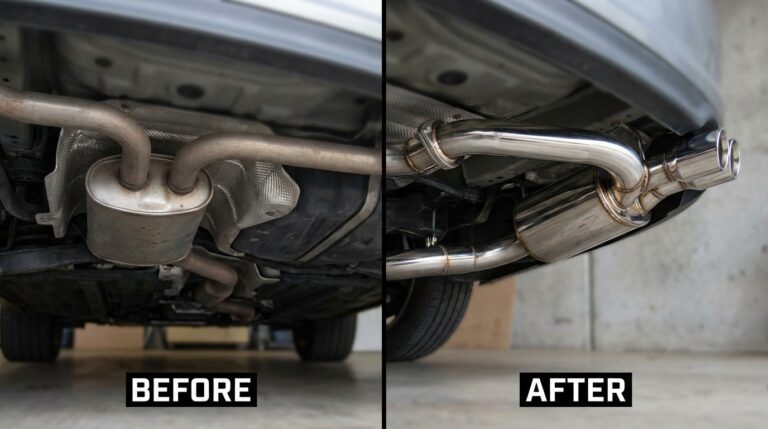
On a Mercedes AMG, Stage 2 is frequently accompanied by a specific and optimized exhaustThis drastically reduces back pressure and improves exhaust gas evacuation. Combined with a more efficient intercooler, this improves engine thermal stability and maintains a consistently high boost pressure.
The exact gains vary, but it’s not uncommon to see a power increase of 60 to over 100 horsepower compared to the stock model. On a Mercedes-AMG GT or E63, for example, upgrading to Stage 2 results in blistering acceleration and a noticeable improvement in responsiveness on the road or track.
These mechanical developments also accompany an evolution of the dump valve tuning which offers both a more assertive sound and better turbo pressure management, an aspect much appreciated by fans of auditory sensations linked to sports performance.
Stage 2 requires more in-depth work in terms of engine preparation and tuning. It often involves more rigorous combustion control, sometimes with ethanol injection to increase power while controlling temperature, a aspect that will be explained later. E85 ethanol tuning kit: savings and power.
This transition to an advanced stage also requires that the brakes, suspension, and transmission be adapted to handle this increased power without compromising safety or handling. The cost and preparation time involved must therefore be considered from a comprehensive perspective.
In summary, Stage 2 is primarily aimed at enthusiasts who want to push their Mercedes AMG to its extreme limits. It’s a truly strategic choice in a comprehensive and ambitious tuning project.
Comparative performance analysis between Stage 1 and Stage 2 Mercedes AMG
To better understand the tangible differences between Stage 1 and Stage 2, it is essential to examine concrete data relating to power, torque, acceleration, and the mechanical modifications involved. The following comparison provides a clear and pragmatic view of what each stage entails in terms of results and technical investments.
| Criteria | Stage 1 AMG | Stage 2 AMG |
|---|---|---|
| ECU reprogramming | Minor optimization of the original mapping | Advanced reprogramming with multi-parameter management |
| Power gain | +30 to +50 horsepower | +60 to +100+ horsepower |
| Mechanical modification | Sport air filters, catalytic converter optimization | Full exhaust system, intercooler, upgraded intake |
| Average cost (€) | 1000 to 3000 | 4000 to 8000 |
| Technical complexity | Low to moderate | Raised with the need for specific adjustments |
| Impact on warranty | Often preserved | Very frequently canceled |
| Recommended use | Road & daily use | Track day & intensive sports use |
While Stage 1 prioritizes a gentler, more balanced approach, Stage 2 clearly shifts the focus towards raw performance. However, this increased power requires greater attention to detail.legal and regulatory aspect as well as preventive maintenance to avoid significant mechanical costs. Choosing between these two levels therefore depends on the driver’s objectives and the planned investment.
Key technical aspects in the implementation of Stage 1 and Stage 2
The success of a Stage 1 or Stage 2 optimization depends on a thorough understanding of several technical factors. It’s not just about gains in raw power, but also about fine-tuning turbo pressure, cooling, and combustion.
In a Stage 1 tune, the modification focuses primarily on the ECU software. Parameters such as ignition timing, fuel injection mapping, and torque limiting are recalibrated, creating a delicate balance between performance and reliability. A good tuning module must adhere to safety margins to avoid compromising components like pistons or injectors.
However, Stage 2 imposes additional technical constraints. The addition of a more efficient intercooler is crucial to maintain the intake temperature at a low level, thus limiting the phenomenon of engine knocking which is very harmful during high pressures.
Another key element is the exhaust system, which must offer better evacuation to avoid back pressure and maximize flow. Integrating a specific exhaust system, for example a stainless steel model with a larger diameter, will enhance the feeling of more responsive acceleration and a sportier sound.
These modifications must be accompanied by dynamic testing on a test bench to fine-tune the engine mapping and guarantee the durability of the components, ensuring, for example, that the fuel injection precisely matches the engine’s needs under extreme conditions. The combination of rigorous specifications and high-performance equipment is key to avoiding unpleasant surprises.
It is also relevant to consider the synergy between the system E85 ethanol and the tuning stages which offer another lever for optimization, especially at Stage 2. The use of an ethanol kit can further increase performance while improving engine protection against high temperatures.
Impact of Stage 1 and Stage 2 tuning on vehicle handling and durability
Modifying a Mercedes AMG through Stage 1 or Stage 2 tuning directly impacts its dynamic handling, driving feel, and engine longevity. The challenge lies in balancing driving pleasure, safety, and maintenance.
At stage 1, the evolution is generally gradual. The power gains provide improved engine responsiveness without sacrificing comfort. Handling remains intuitive, and with limited mechanical modifications, reliability is often maintained. After-sales service and maintenance remain manageable, with minimal impact on fuel consumption.
In contrast, Stage 2 radically transforms the driving experience. The raw power can thrill demanding enthusiasts but requires enhanced control. The vehicle becomes more demanding in terms of brakes, clutch, and suspension, which must be adapted to handle the increased power.
From a technical standpoint, regular monitoring is essential to control turbo pressure, engine temperatures, and component wear. Impeccable maintenance is imperative to avoid compromising durability. Certain settings require more technical driving skills, especially on the track.
The improved performance also results in a modified sound, often amplified by the installation of a specific exhaust system, which appeals to some customers but can raise compliance issues. Furthermore, choosing to equip a fin tuning to complement Stage 2 can improve aerodynamic downforce and high-speed stability, highlighting the importance of a comprehensive approach in preparation.
For those who wish to fully benefit from the performance offered by Stage 2, the complete vehicle preparation, encompassing rolling stock management or transmission, are essential steps.
What is the main difference between Stage 1 and Stage 2 in Mercedes AMG tuning?
Stage 1 focuses on light electronic reprogramming without major mechanical modifications, while Stage 2 involves advanced adjustments including mechanical parts such as the exhaust and intercooler for much greater power gains.
Does Stage 1 affect the manufacturer’s warranty?
Generally, Stage 1 retains the manufacturer’s warranty because it does not physically modify the engine, provided that the reprogramming is carried out by recognized professionals.
What are the advantages of a Stage 2 optimized exhaust?
An optimized exhaust reduces exhaust back pressure, improves engine heat and thermal flow, and provides a sportier sound, contributing to performance and driving feel.
Can an E85 ethanol kit be installed in addition to the AMG tuning?
Yes, installing an E85 ethanol kit increases engine power and thermal protection, making it an ideal complement to Stage 2 to maximize performance.
Does Stage 2 tuning require transmission preparation?
Yes, due to the high power gains, the transmission and suspension often need to be reinforced to ensure reliability and safety during a Stage 2.