UV Protection for Vehicle Wrapping: Prevent Premature Yellowing

In a context where car wrapping is becoming more widespread, the question of UV protection becomes central to maintaining a vibrant and durable adhesive film. Covering films exposed to ultraviolet rays Sun-damaged products undergo mechanical and chemical aging which can lead to premature yellowing or a loss of color vibrancy. While vehicle aesthetics and personalization are priorities for enthusiasts and professionals alike, mastering prevention and maintenance techniques is essential to ensure the durability of the covering under all operating conditions.
Thanks to the evolution of anti-UV materialsSome adhesive films now benefit from integrated protection, allowing for better color preservation even in situations of intense sun exposure. This article explores in detail the mechanisms of UV-related yellowing, protective film options, and recommended practices.covering maintenanceessential for combining aesthetics, resistance and longevity.
Understanding the impact of ultraviolet rays on the durability of car wraps
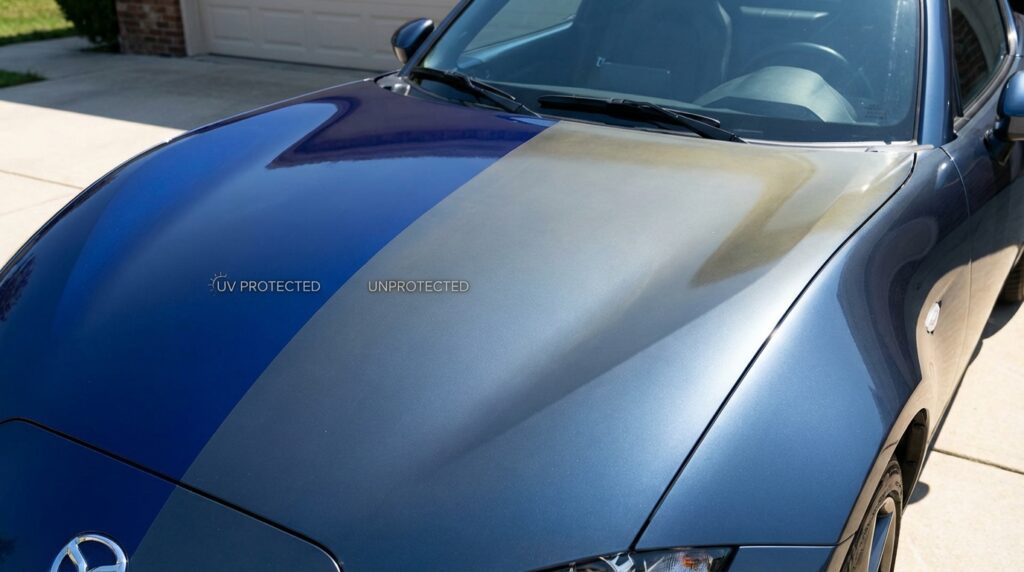
The phenomenon of premature yellowing of the vehicle wrap is primarily linked to the exposure of the adhesive films to ultraviolet rays (UV), which represent a significant portion of the solar spectrum. These rays act as a catalyst during photochemical reactions within the polymer materials composing the film. When a wrap is installed, the protective layers, surface lacquer, and pigments are susceptible to degradation under the effect of UV irradiation.
This degradation manifests as a change in color, progressive opacification, and, in some cases, a weakening of the film’s structure leading to cracking or loss of elasticity. Premature yellowing can therefore affect not only the aesthetics but also the protective function of the vehicle wrap. It is particularly noticeable on matte or satin films which, due to their more porous structure, incorporate fewer UV-blocking layers than their glossy counterparts.
The intensity of this degradation varies according to several factors:
- Movie quality: Not all adhesive films have the same anti-UV treatments.
- Duration and intensity of exposure: A car parked for an extended period in direct sunlight will suffer more damage.
- Climate and latitude: Regions near the equator experience greater exposure to UV radiation.
- Maintenance and servicing: A clean and well-maintained vehicle wrap provides better protection against the formation of micro-cracks and dust accumulation.
To illustrate these points, let’s take the example of a fleet of vehicles belonging to a delivery company based in the south of France, exposed daily to strong sunlight. After only two years, without enhanced UV protection, many of the films began to yellow, leading the company to invest in high-UV-resistant films, thus avoiding costly and premature replacement.
This concrete example highlights the need to opt for a film incorporating a scratch and UV protection to extend the lifespan of the covering while maintaining the original visual appearance.
UV-resistant materials: innovations and characteristics of modern wrapping films
The car wrapping market has radically evolved thanks to innovations in adhesive films, now incorporating anti-UV materials Advanced coatings whose role is to absorb or reflect ultraviolet rays. These films are designed to offer increased resistance to premature yellowing, but also to enhance resistance to abrasion, impacts and chemical attack.
Transparent “PPF” (Paint Protection Film) films are an excellent illustration of this evolution. In addition to protecting the original paintwork, they offer an effective barrier against UV rays, as explained in this article on the Vehicle wrapping vs. painting: why film protects your car’s bodywork betterThe combination of a high-end PPF film and an associated colored film provides dual protection: aesthetic and functional.
Recent innovations include films incorporating nanoparticle-based UV filters, capable of neutralizing up to 99% of UV rays. These films offer a color preservation exceptional even after several years of sun exposure. This capability is complemented by specific finishes such as matte or satin, which combine visual appeal with enhanced UV protection.
For enthusiasts who wish playing with textures and visual effectsTherefore, it is essential to choose films with these protections to prevent the original aesthetics from being altered.
It is also essential to compare the warranties offered by manufacturers, which often vary for UV protection treatments. For example, some films offer a warranty of up to 10 years against yellowing, which represents a guarantee of quality and a sound investment for the longevity of the wrap.
Effective vehicle wrap maintenance practices to limit premature yellowing
Maintaining a durability of the covering requires regular and appropriate maintenance, particularly for films subjected to high solar exposureCleaning should be carried out with specific non-aggressive products, avoiding degreasers or solvents which weaken the protective layer and accelerate premature yellowing.
Another crucial point is the frequency of maintenance. For a vehicle driven daily in an urban area or exposed to pollution, washing approximately every two weeks is recommended. In addition to cleaning, repairing dents and scratches helps to better preserve the film, in accordance with the advice given in bumper covering and impact protection.
Additional treatments, such as the application of specific protective waxes for vehicle wraps, enhance UV resistance. These waxes create an extra film that acts as a shield against external elements and fine dust, delaying visible signs of degradation. Proper application of these treatments significantly impacts the visual appearance and longevity of the wrap.
In the case of matte films, special care must be taken during maintenance as they are more susceptible to yellowing and watermarks. The use of soft microfiber cloths and suitable shampoos is recommended. Avoiding polishing, often advised for these finishes, prevents premature wear of the film and preserves its original color.
Here is a table summarizing the maintenance practices adapted to different types of vehicle coverings:
| Type of covering | Recommended maintenance frequency | Products to use | Specific precautions |
|---|---|---|---|
| Glossy film | Every 2 weeks | Neutral shampoo, microfiber cloth | Avoid solvents and degreasers |
| Matte film | Every week | Special shampoo for matte coatings, soft microfiber | No polishing, avoid hard water |
| Satin film | Every week | Dedicated satin products, non-abrasive cloth | Take care to avoid scratches and friction. |
| Carbon film or texture | Every 2 weeks | Gentle cleaners, microfiber | Gentle cleaning to preserve the texture |
Impact of sun exposure on longevity and the risk of premature yellowing
Prolonged exposure to sunlight is one of the most significant factors affecting the longevity of vehicle wrap films. Beyond a cosmetic effect, this radiation can structurally alter the film in the medium term, notably through the oxidation of polymer molecules. This oxidation causes a change in color and a visible decrease in transparency for both clear and matte films.
In areas with particularly sunny climates, such as the Mediterranean basin, vehicles covered with a wrap are often subjected to increased thermal and UV stress. This situation requires the implementation of suitable and robust solutions, as well as regular monitoring of the film’s condition.
Experience shows that the duration of direct exposure without additional UV protection can halve the lifespan of a film. As an alternative, using options such as PPF transparent films or tinted windows can help reduce direct exposure of sensitive surfaces while improving overall aesthetics, as explained in this article on… Additional options for tinted windows, rims and brake calipers.
Another illustration of this problem: a study conducted in 2025 among drivers in the Paris region and in southwestern France showed that vehicles exposed to natural light three times longer exhibited significantly greater visible yellowing, thus highlighting the key role of controlling…solar exposure in the protection of the covering.
Finally, it is interesting to note that the reversibility of the covering is a valuable asset for restoring the vehicle’s original appearance when the film has reached its protection limit. However, this does not eliminate the need to choose a suitable UV protector to delay this aging process as much as possible.
Future technologies and innovations for enhanced UV protection of automotive protective film
Applied research in vehicle wrapping continues to progress, particularly in the area of UV protection to limit the premature yellowingManufacturers are investing in new composite materials that are more resistant to ultraviolet rays and capable of self-repair or self-cleaning.
Among these innovations, the widespread adoption of films incorporating nanotechnology coatings stands out. These coatings enhance UV filtering capabilities while maintaining perfect transparency, a crucial factor for the transparent and invisible finishes of protective film. Further developments also focus on integrating photochromic pigments, allowing the wrap to adapt to ambient light by slightly altering its tint to minimize UV impact.
The combination of technologies, such as PPF with colored films saturated with anti-UV agents, promises a durability of the covering reinforced, offering owners increased peace of mind regarding the aesthetic and functional longevity of their installation.
Furthermore, innovative maintenance solutions are under development, including products that restore the protective layers of the film in worn areas, thus significantly delaying premature yellowing. These innovations aim to combine technical performance with ease of use for both professional and amateur users.
Enthusiasts who wish to stay informed about the latest trends are advised to follow the news from vehicle wrapping specialists, who regularly offer updates on the guarantees offered and new developments in UV protection films. The rapid evolution of the sector makes these resources essential for making informed choices and optimizing vehicle protection.
How can I tell if my vehicle wrap is UV protected?
Most high-quality films explicitly mention the presence of UV protection in their technical specifications. You can also consult the manufacturer’s documentation or the specialist who performed the installation to confirm the existence of a UV protection effective.
Can premature yellowing be repaired?
Once yellowing has set in, it is difficult to correct without replacing the entire film. However, proper maintenance can delay this phenomenon, and self-healing film options can limit its impact over time.
How to maintain a matte car wrap to prevent yellowing?
It is necessary to use specific products without harsh agents, avoid polishing, and clean regularly with soft microfiber cloths. Sun exposure should be limited whenever possible.
Are PPF transparent films effective against yellowing?
Yes, PPF films generally incorporate a high-performance UV barrier that protects both the paint and the film, thus improving the durability of the covering.
Why choose a wrap over a paint job for UV protection?
The wrap provides an additional protective layer that can be changed without damaging the paintwork. This makes it easier to manage the UV protectionand modern films are treated with specific processes to limit the premature yellowing.